
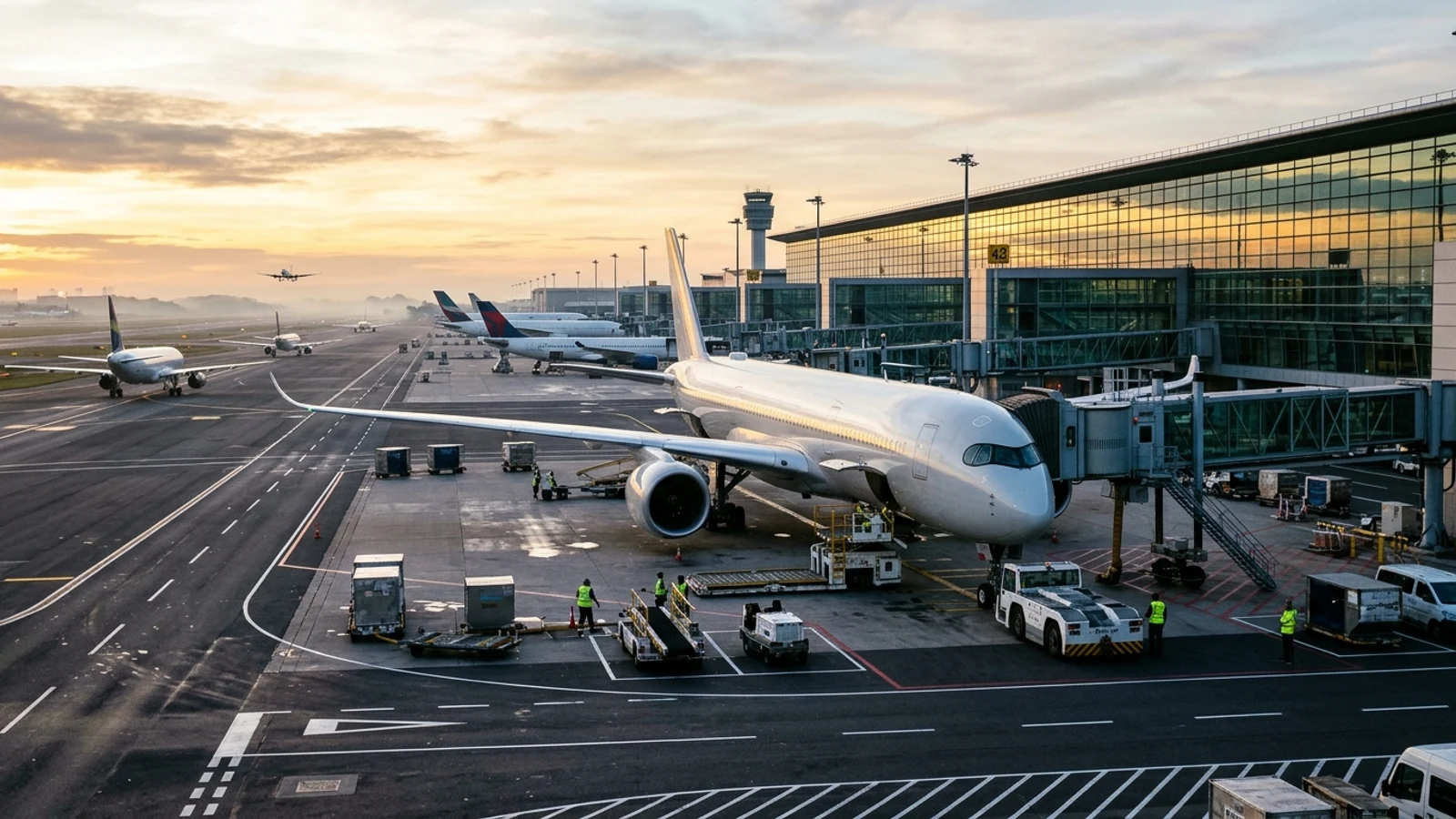
The 2026 global aviation market continues to rely heavily on key widebody platforms as airlines balance capacity, slot constraints, and fleet renewal. While the Boeing 787 Dreamliner and Airbus A350 represent the modern backbone for long-haul routes, older types like the Airbus A380 maintain a significant presence in high-density markets. As airlines address ongoing delivery delays for models like the Boeing 777X, the strategic importance of existing airframes remains a critical component of operator schedules and long-term network planning. Source
The Airbus A380 remains unique as the only widebody on the primary 2026 list no longer in production, with its final delivery occurring in 2021. Despite its retirement from some fleets, approximately 190 aircraft were active globally in spring 2026. Emirates operates 116 of these, utilizing the type on high-demand, slot-constrained routes where replacing the capacity with smaller aircraft would reduce passenger volume. Several other major carriers, including British Airways, Qantas, and Singapore Airlines, continue to deploy the superjumbo for international service. Source
Emirates has taken a proactive approach to maintaining the competitiveness of its A380 fleet by investing in cabin retrofits. In July 2026, the airline reported that its widespread refurbishment program, which includes the installation of Premium Economy cabins, had reached 100 aircraft across its A380 and 777 fleets. This effort includes converting older two-class A380s into three-class configurations. While Qantas plans to begin retiring its superjumbos in 2028, Emirates anticipates operating the type until approximately 2041 to support its massive network. Source
The Airbus A330neo continues to serve as a versatile option for carriers requiring lower acquisition costs compared to the A350 or 787. Powered by Rolls-Royce Trent 7000 engines, the A330-900 offers a 14% reduction in fuel burn per seat over its predecessor. With late 2025 market prices hovering near $120 million per unit, it provides a cost-effective alternative to more expensive modern widebodies. Airlines such as Delta, TAP Air Portugal, and Condor utilize this platform to address specific long-haul business models and seasonal demand shifts. Source
Boeing's 777 series remains a cornerstone of intercontinental operations, with the 777-300ER providing essential cargo and passenger capacity. Emirates, which maintains the world's largest 777 fleet, has committed to 270 Boeing 777X aircraft. Despite Boeing's current target for a 2027 entry into service, the program has faced significant delays, keeping older 777 models in operation longer than original transition plans anticipated. This delay has pushed carriers to invest in cabin upgrades for older airframes to maintain service standards. Source
The Airbus A350 has emerged as a premium-heavy flagship for carriers across the globe, with the A350-1000 variant effectively competing with the Boeing 777-300ER and the pending 777-9. Lufthansa recently took delivery of its first A350-1000 on November 10, 2026, featuring the carrier's new Allegris cabin. Additionally, Qantas is preparing 12 A350-1000ULR aircraft for its Project Sunrise program, aiming for ultra-long-haul nonstop services from Sydney to London beginning in October 2027 and New York in 2028. Source
The Boeing 787 Dreamliner family continues to facilitate new nonstop routes, with Boeing noting that the platform has enabled over 530 previously unserved connections. The FAA's approval in March 2026 for higher maximum takeoff weights for the 787-9 and 787-10 allows for significant payload or range increases. The 787-9 benefits from roughly 10,000 lbs of additional weight capacity, while the 787-10 gains approximately 14,000 lbs, enhancing operational flexibility for major operators like United Airlines, ANA, American Airlines, and Qatar Airways. Source
Avianca Group has announced a $3 billion investment to add 61 new aircraft to its fleet between 2027 and 2029. This expansion marks the largest capital deployment in the carrier's history. Deliveries are staggered with 18 aircraft scheduled for 2027, 23 for 2028, and 20 for 2029. The initial 2027 delivery includes 16 narrow-body jets and two wide-body planes, with the wide-body portion valued at approximately $200 million. This commitment serves to strengthen the carrier's presence on higher-yield, long-haul intercontinental routes. Source
The strategic expansion by Avianca is supported by its parent holding company, Grupo Abra, which also controls Gol Linhas Aéreas and maintains a stake in Wamos Air. Combined, the group manages a fleet of more than 300 aircraft serving 140 destinations across 25 countries. This scale provides leverage in negotiations with manufacturers to mitigate impacts from global supply-chain backlogs. As part of its growth, Avianca is preparing to launch direct Barranquilla-New York service, with commercial operations planned for February 2027. Source
Delta Air Lines, which traces its history back to the Huff Daland Dusters crop-dusting company in 1925, has been named the Best U.S. Airline by Forbes Travel Guide for the third consecutive year in 2026. The carrier also received top marks for its First Class, Business Class, lounge facilities, and mobile application. These awards highlight the carrier's continued focus on passenger experience, as the U.S. remains the world's largest air passenger market, recording 890.1 million total passengers in 2025. Source
The African aviation sector is preparing for substantial growth with a projected delivery of 1,165 new commercial airplanes between 2026 and 2045. The active commercial fleet in the region is expected to double from 755 in 2025 to 1,625 by 2045. Single-aisle aircraft are expected to account for 75% of these new deliveries, focusing on domestic and intra-African connectivity. Simultaneously, the number of widebody aircraft is projected to more than double, providing capacity for international competition. Source
India's aviation industry faces significant capacity constraints as domestic and international traffic continues to expand. Union Minister Piyush Goyal stated that the country requires more than 2,000 additional aircraft, following orders of over 1,200 planes already placed. To address these needs, the government is engaging with manufacturers to accelerate deliveries. Oliver Wyman forecasts that India's commercial fleet will grow at an annual rate of 7.1% through 2036, requiring improvements in aircraft financing and leasing to support the necessary infrastructure. Source

