
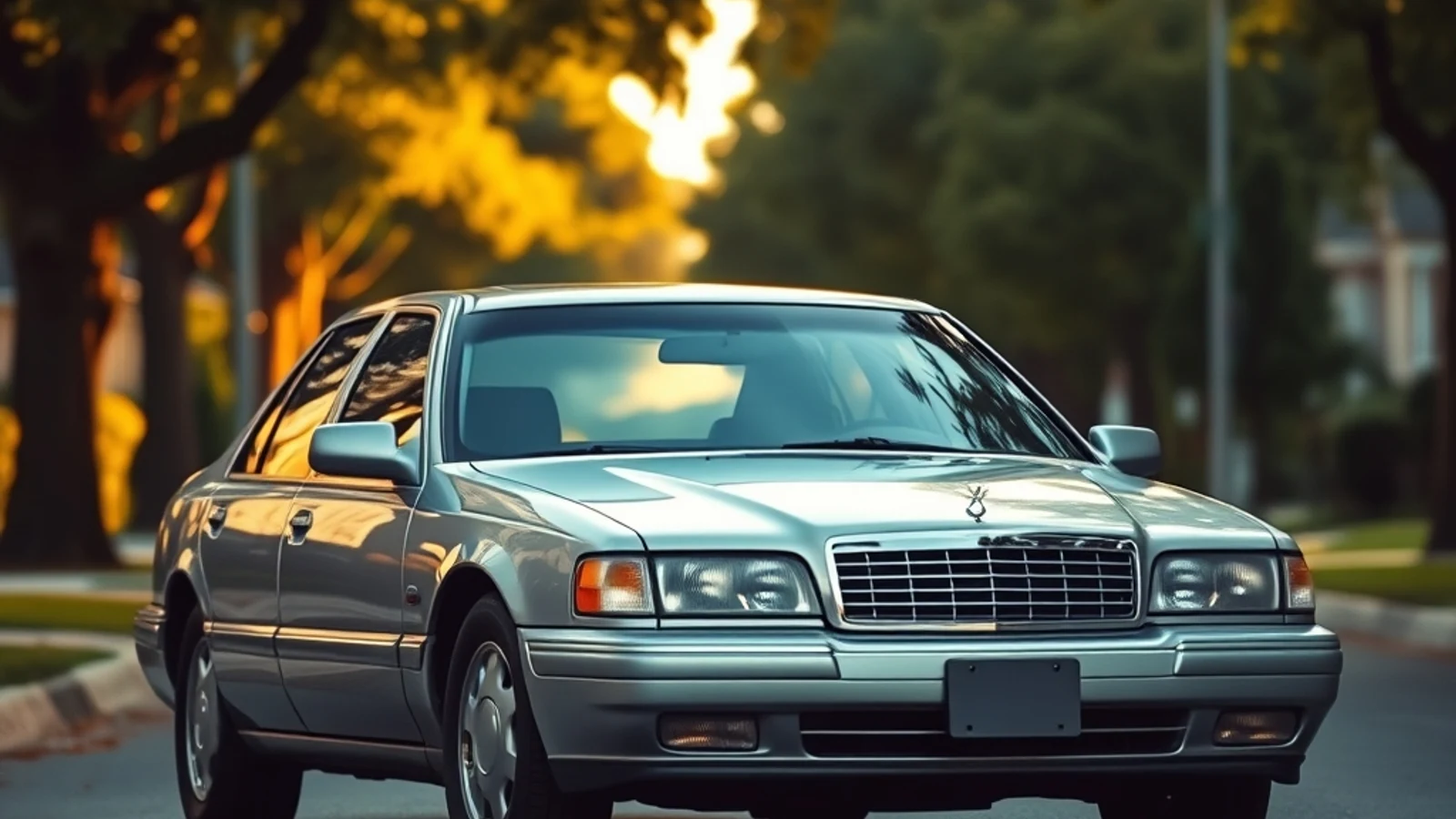
Fourth-Generation Platform Refinements
The fourth-generation Toyota Camry arrives in September 1996, marking a period of refinement for the popular sedan. Toyota has opted for an evolutionary approach rather than a complete reinvention of the model, maintaining the core platform and powertrain while implementing engineering improvements throughout the vehicle. The exterior dimensions have grown, with the wheelbase extended by 2.1 inches, and both length and width increasing, while the aerodynamic drag coefficient is now improved to 0.30. Source
Toyota has intentionally tightened the Camry's focus for the 1997 model year by simplifying the available configurations. The lineup is now restricted to a four-door sedan body style, available in three distinct trim levels: CE, LE, and XLE. This strategy involves the discontinuation of both the coupe and station wagon variants, which previously accounted for only five percent and three percent of total sales respectively. A Camry-based minivan is slated to begin production during the following spring. Source
Engineering updates for 1997 include modest power increases of 8 horsepower for the four-cylinder engine and 6 horsepower for the V-6 unit. The interior has also been updated to align with upcoming safety standards, encompassing requirements for both 1997 side-impact and 1999 head-impact protection. The suspension system is now mounted on isolated crossmembers at the front and rear, which contributes to a smoother ride by reducing overall harshness compared to the previous model generation. Source
Performance and Handling Characteristics
Performance for the 1997 Camry V-6 sees the addition of 6 horsepower, bringing the output to 194 horsepower at 5200 rpm. The model now features shorter final-drive gearing of 3.93, compared to the previous 3.43 ratio. Additionally, a manual transmission has been reintroduced for the V-6 engine, though it is limited exclusively to the CE trim level. During road testing, the LE V-6 automatic reached 0 to 60 mph in 8.3 seconds, while testers estimated a five-speed manual could improve that time by approximately four-tenths. Source
The driving experience of the 1997 Camry continues its predecessor's emphasis on subtle, controlled operation. Steering is described as light and easy, and braking remains straightforward. While the four-cylinder version provides a smoother ride using 195/70SR-14 tires, the V-6 models utilize 205/65HR-15 tires on six-inch-wide wheels, resulting in slightly more audible road noise. Optional traction control is now available for LE and XLE V-6 models, providing added stability for varying road conditions. Source
Passenger accommodation remains a priority, with rear-seat legroom and headroom both increased by a half-inch compared to the previous model. However, the integration of energy-absorbing side-impact padding has reduced interior space in specific areas. Owners opting for power-adjustable front seats on the XLE trim may encounter a transverse bar beneath the seat that limits toeroom. Furthermore, the optional integrated child seat fixed in the two-thirds rear section limits trunk access to a narrow passage. Source
Cargo capacity has seen a slight reduction, with the trunk volume now measuring 14.1 cubic feet, down from the previous 14.8 cubic feet. The trunk lid design still utilizes traditional hinges with sickle arms that swing into the luggage area. Interior convenience features have been updated, including a 29 percent larger glove box and audio controls relocated to a higher, more visible position on the dashboard. Climate controls now utilize turn-to-adjust knobs for improved ease of use. Source
The instrument panel has been redesigned to be more conventional, removing the previous model's heavy focus on a large black field in front of the driver in favor of an equal-opportunity padding layout. Some cost-cutting measures are evident, such as the use of an LCD odometer that features gray numbers on a gray field, which critics suggest is less readable than the displays found in some competitors. Additionally, the front bumper now incorporates the grille in a single-piece cover. Source
Toyota has implemented several weight-saving and cost-effective design choices that serve to improve the vehicle. The front bumper assembly now consists of fewer parts, reducing weight while increasing crash protection capability to 5 mph from the previous 2.5 mph rating. The antenna has been shifted to the rear glass, and the Bosch anti-lock brake system now weighs half as much as the previous iteration. Seat recline adjustments are now performed in stepless increments, simplifying the previous multi-knob configuration. Source

