
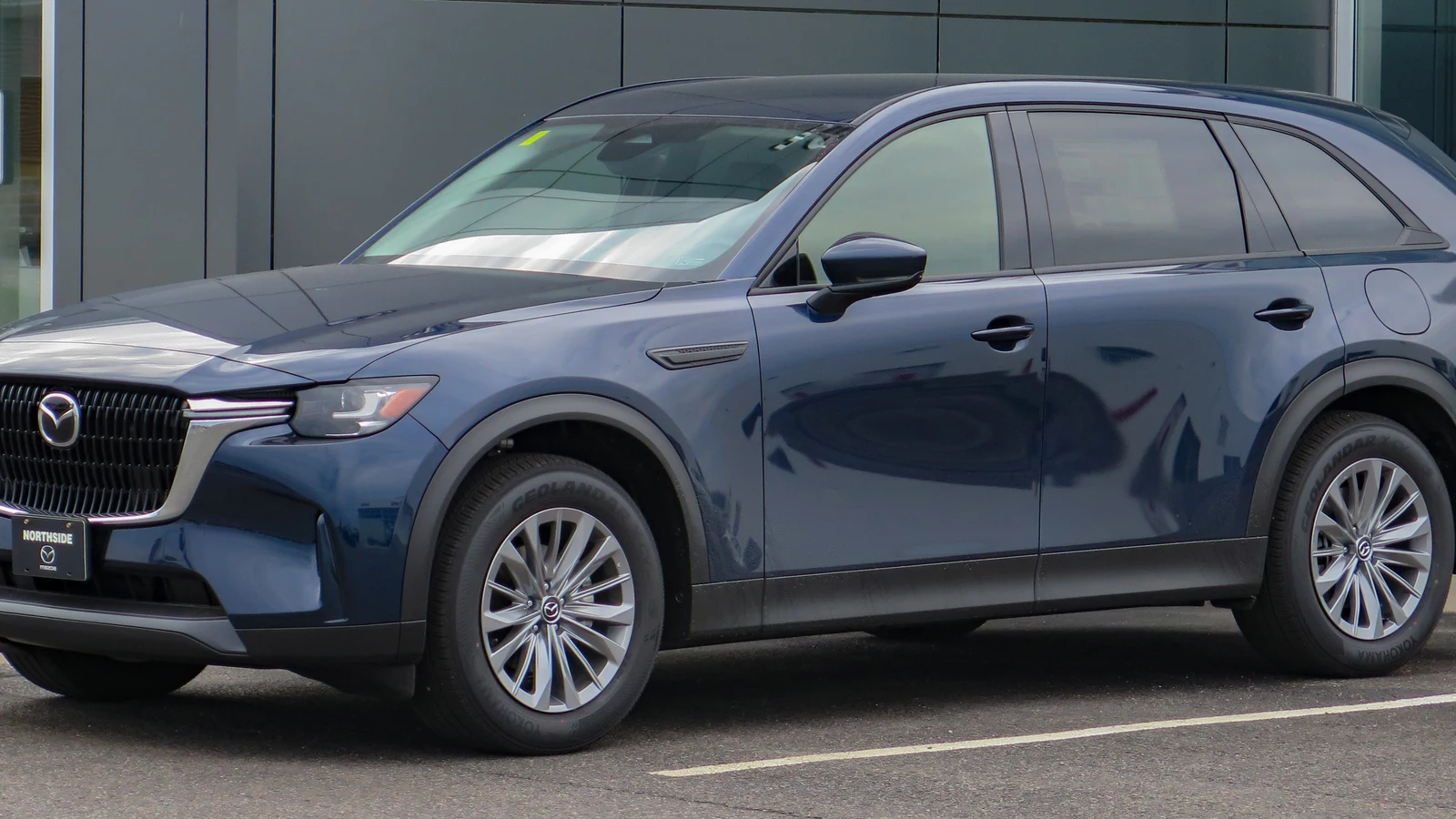
The 2026 Mazda CX-5 has arrived in American dealerships with a starting price of $29,990. Because Mazda manufactures this model at its facilities in Japan, the vehicle is subject to a 15% combined automotive tariff. This fiscal policy is a component of a specific US-Japan trade agreement that became effective in September 2025. According to reporting from CarBuzz, this rate represents a reduction from the temporary 27.5% duty applied earlier in 2025, yet remains significantly higher than the traditional 2.5% duty previously applied to Japanese imports. Source
The third-generation CX-5 has undergone a notable redesign, featuring an increased wheelbase of 110.8 inches to improve passenger and cargo capacity. The interior now incorporates Google-integrated technology, while the powertrain utilizes a naturally aspirated 2.5-liter inline-four engine. This configuration produces 187 hp and 186 lb-ft of torque, delivered through a standard six-speed automatic transmission and all-wheel-drive system. The 2026 model represents a price increase of $940 compared to the previous version. Source
Navigating these trade rules poses a strategic challenge for manufacturers like Mazda, which must decide how much of the 15% tariff to absorb versus passing costs to consumers. The financial landscape differs for older vehicles under the federal 25-year import exemption. Vehicles manufactured at least 25 years ago are exempt from the Section 232 automotive tariff. Consequently, these classic imports face a different duty framework under Section 301, resulting in a combined tariff rate of 12.5% upon entry to the United States. Source
To illustrate the financial variance, a new Japanese-built vehicle and a qualifying 25-year-old classic car, both holding an identical customs value of $30,000, would face different entry costs. The new vehicle is subject to the 15% rate, whereas the older classic is assessed at the 12.5% rate, creating a $750 difference in import duty. It is noted that these calculations are based on customs values, which do not necessarily align with the manufacturer's suggested retail price displayed on window stickers. Source
The distinction between calendar year and actual production date is vital for importers. The Section 232 tariff exemption relies on the calendar year of manufacture. In contrast, the National Highway Traffic Safety Administration requires a vehicle to be at least 25 years old from its specific date of production to qualify for federal motor vehicle safety standard exemptions. Prospective owners must carefully evaluate individual vehicle customs classifications and documentation to ensure eligibility for the lower tariff. Source
Beyond the CX-5, other Japanese-built models are feeling the effects of the current tariff regime. The 2026 Mazda MX-5 Miata starts at $30,730, marking a $900 increase from the previous year. Similarly, the 2027 Lexus GX550 Premium is priced at $69,085, while the Overtrail+ trim has seen a $1,565 increase. These vehicles are manufactured in Japan at the Hiroshima and Tahara plants, respectively, and thus remain exposed to the 15% combined Section 232 automotive tariff. Source
Mazda manages its tariff exposure by offering the CX-50, which is assembled domestically at the Mazda Toyota Manufacturing Facility in Huntsville, Alabama. The CX-50 2.5 S Select serves as an alternative with zero tariff exposure. While both the CX-5 and CX-50 share similar powertrain specifications, including a 187 hp 2.5-liter engine and standard all-wheel drive, the CX-50 is marketed as a more rugged, outdoor-oriented option compared to the comfort-focused design of the imported CX-5. Source
In April 2025, Mazda adjusted its production allocation by stopping CX-50 assembly for the Canadian market at the Alabama plant to prioritize the American market amidst changing trade conditions. Despite this, there is no evidence of plans to move CX-5 production to the United States. Consequently, the 15% tariff on the CX-5 persists, creating a unique market situation where a brand-new vehicle is subjected to higher import duties than specific 25-year-old classic performance cars. Source
Tariff Application by Vehicle Type Source
| Vehicle Status | Tariff Rate | Basis | Source
| :--- | :--- | :--- | Source
| New Japanese Import | 15.0% | Section 232 | Source
| 25-Year-Old Classic | 12.5% | Section 301 | Source

