
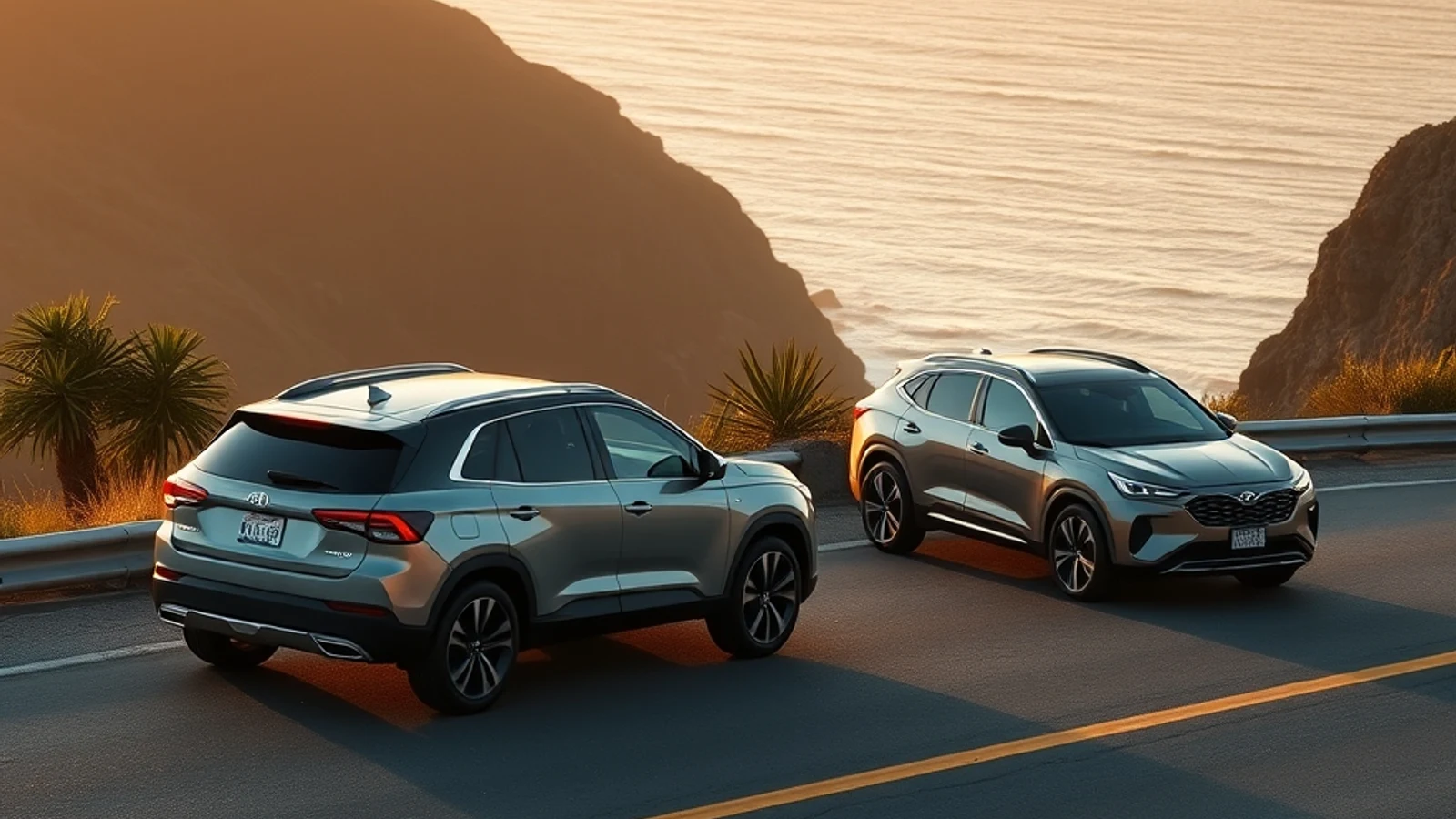
The 2026 Mazda CX-50 and the 2026 Volkswagen Tiguan represent high-performance, turbocharged options within the competitive landscape of modern compact SUVs. While many manufacturers rely on electrification to boost output, these two vehicles utilize gasoline-powered engines to deliver increased power. According to testing by Car and Driver, both vehicles occupy the top-tier of their respective lineups, focusing on balancing driver engagement with passenger comfort through distinct engineering and design choices. Source
Market Availability and Pricing
Pricing for these premium trims reflects their position at the pinnacle of their model ranges. The 2026 Volkswagen Tiguan SEL R-Line starts with a base price of $32,280 for the S trim, reaching $46,170 as tested. The Mazda CX-50 Premium Plus offers a slightly lower entry point for the series at $31,395 for the Select model, with the tested range-topper priced at $45,210. These figures include various factory-installed options and accessories that influence the final window sticker. Source
The CX-50 features a 2.5-liter turbocharged engine producing 256 horsepower and 320 pound-feet of torque. It utilizes a six-speed automatic transmission and comes with standard all-wheel drive. Conversely, the Tiguan employs a 2.0-liter turbocharged engine, which provides a higher output of 268 horsepower but lower torque at 258 pound-feet. The Tiguan also includes standard all-wheel drive and utilizes a modern eight-speed automatic transmission to manage power delivery for the 4023-pound vehicle. Source
When assessing performance, the lighter 3864-pound Mazda CX-50 demonstrates a slight edge in acceleration, reaching 60 mph in 6.4 seconds, compared to the 6.6 seconds required by the Tiguan. However, the Volkswagen exhibits faster in-gear acceleration in certain scenarios, such as the 50 to 70 mph sprint, where it requires 4.5 seconds versus the Mazda's 4.8 seconds. On the skidpad, the CX-50 maintained 0.84 g of lateral grip, while the Tiguan achieved 0.78 g. Source
Fuel economy metrics show a divergence between EPA estimates and real-world results. While both models are EPA-rated for 29 mpg on the highway, a 75-mph highway test conducted by Car and Driver revealed that the Tiguan achieved 31 mpg, exceeding its estimate, while the CX-50 reached 28 mpg. The Mazda maintains a slight advantage in city driving, earning a 23-mpg rating compared to the Tiguan’s 22-mpg, according to official EPA figures provided for the tested configurations. Source
Interior and Design Specifications
Interior design philosophies differ significantly between the two manufacturers. The CX-50 emphasizes a physical interface, featuring numerous buttons and dials, though its infotainment screen is positioned in a way that suggests an older design generation. The Tiguan focuses on a screen-heavy environment, incorporating a digital gauge cluster alongside a 15-inch center display. The Tiguan offers superior cargo capacity and interior storage, while the Mazda focuses on high-quality materials and distinct physical touch points. Source
Passenger comfort and ergonomics also vary. The Tiguan SEL R-Line includes massaging front seats, a feature currently unavailable on Mazda models. The Tiguan also provides a more comprehensive heated steering wheel, with heating elements distributed throughout the entire rim. In contrast, the Mazda's heated steering wheel is limited to specific sections at the 9-10 and 2-3 o'clock positions, leaving other areas of the wheel cold during operation. Source
Dimensionally, the Tiguan is wider by nearly four inches and taller by two to three inches, contributing to its larger interior volume. The CX-50 is longer, with a greater wheelbase by roughly one inch, which provides additional front legroom for the driver. Despite these dimensions, the Tiguan remains the superior choice for cargo-intensive needs, as its upright body structure maximizes vertical and horizontal space whether the rear seats are engaged or folded down. Source
Driving characteristics show that the Mazda CX-50 provides superior bump suppression, resulting in a ride quality that many find more luxurious over uneven road surfaces. The Tiguan exhibits a firmer, more traditional German suspension tuning, which some drivers may prefer for its composure. Steering feedback is heavier in the Volkswagen, whereas the Mazda offers a more refined pedal feel, with the Tiguan’s brake pedal noted as feeling slightly mushy in comparison during testing. Source
The evolution of the Tiguan into its current generation has allowed it to narrow the gap in interior luxury and driving dynamics compared to the CX-50. Although the Mazda previously won comparisons due to its superior cabin and handling, the latest Tiguan model effectively addresses these areas while maintaining advantages in fuel efficiency and interior volume. This shift in positioning makes both vehicles competitive, depending on whether a buyer prioritizes mechanical feedback or daily utility. Source
Both vehicles offer a robust set of standard safety and convenience features at their top trim levels. The CX-50 Premium Plus includes a 360-degree surround-view camera, rear automatic braking, and blind-spot monitoring. The Tiguan SEL R-Line complements its safety suite with distinct exterior design elements, including an aggressive front fascia and the removal of brightwork, contributing to a more modern, sport-oriented aesthetic that differentiates it from previous generations of the brand. Source
The final comparison highlights that the Tiguan achieves a slight overall lead in utility and fuel efficiency, while the Mazda remains a highly competitive choice for those seeking tactile controls and a composed, comfortable ride. As buyers choose between these two, the decision often depends on personal preferences regarding interface design, suspension firmness, and the need for maximum cargo space versus interior front-seat ergonomics. Source

