
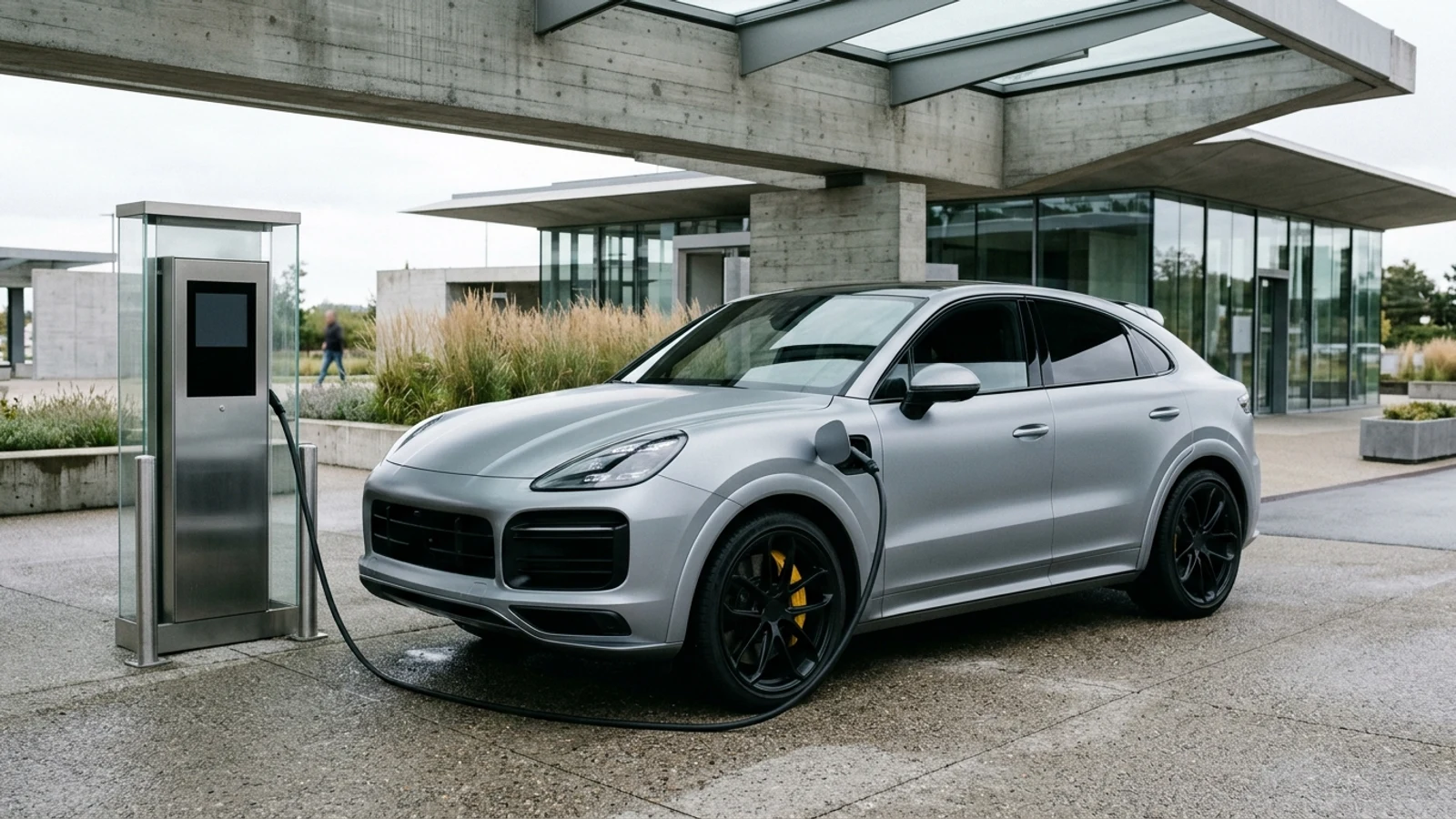
The 2027 Porsche Cayenne Coupe Electric represents a significant evolution in the brand's performance utility segment. According to Driving, this new battery-powered lineup will exist alongside traditional gasoline-powered and plug-in hybrid variants of the Cayenne. The flagship Turbo model of the electric variant is designed to produce 1,139 horsepower, positioning it as the most powerful option within the Cayenne range. This performance-oriented crossover utilizes an 800-volt electrical architecture to facilitate high-speed energy management. Source
Beyond the headline power figures, the electric crossover features a robust battery system. The vehicle is equipped with a 113-kilowatt-hour lithium-ion battery pack. Driving reports that this capacity supports a peak charging power of at least 400 kilowatts. When utilizing compatible fast-charging infrastructure, the vehicle is capable of transitioning from a 10 percent state of charge to 80 percent in approximately 16 minutes. This performance is intended to provide owners with efficient downtime during longer journeys. Source
Porsche has configured the charging interface to accommodate North American standards while maintaining global compatibility. The vehicle includes both a North American Charging Standard (NACS) port located on the driver’s side rear fender and a Level 2 J1772 AC charging port on the passenger’s side. This dual-port strategy ensures that drivers have access to a wide array of public and home charging equipment, moving away from reliance on a single connector format for the upcoming model year. Source
The performance specifications for the Cayenne Coupe Electric vary across the trim levels, as detailed by Driving. While the Turbo variant commands the most attention with its 1,139 horsepower, the entry-level and 'S' trims provide distinct performance profiles. The basic configuration outputs 435 horsepower and 616 pound-feet of torque, allowing for a 4.8-second acceleration time to 100 kilometers per hour. The 'S' trim features 657 horsepower and 797 pound-feet of torque, completing the same sprint in 3.8 seconds. Source
Engineering considerations for the 2027 model extend to towing utility and acceleration benchmarks. Driving highlights that the electric variant maintains a towing capacity of 3,500 kilograms, or 7,716 pounds, consistent with existing internal combustion versions. The top-tier Turbo model, meanwhile, achieves a 100-kilometer-per-hour acceleration time of 2.5 seconds. These figures illustrate the manufacturer's intent to maintain the brand’s performance reputation even as the powertrain transitions to electric-only architecture for these specific trims. Source
Market data from CarBuzz indicates that the 2027 Porsche Cayenne Coupe Electric is listed with an MSRP starting at $113,800. These figures are subject to change and vary depending on the selected configuration and optional equipment packages. Prospective buyers can monitor dealer availability through the manufacturer's regional websites or local automotive retail platforms. As the production ramp-up continues, dealer inventories are expected to reflect these specific MSRP bands as the retail rollout date approaches. Source
Comparison table for the performance metrics of the 2027 Cayenne Coupe Electric trims as reported by Driving: Source
| Trim Variant | Power (hp) | Torque (lb-ft) | 0-100 km/h (seconds) |
|---|---|---|---|
| Basic | 435 | 616 | 4.8 |
| S | 657 | 797 | 3.8 |
| Turbo | 1,139 | 1,106 | 2.5 |
Design language for the new electric coupe carries forward the manufacturer's signature aesthetic. According to the reporting by Driving, the design is deeply rooted in the iconic 911 flyline. This aesthetic choice is intended to distinguish the electric Cayenne from other luxury crossovers on the market. Despite the shift in mechanical underpinnings, the external appearance remains consistent with the brand's established visual identity, blending utility with the styling cues found in their performance sportscars. Source
Safety and driver comfort remain priorities for the new platform, though specifics on advanced driver assistance systems remain broad at this stage. The combination of the 800-volt electrical backbone and high-density battery cells is designed to minimize weight-to-power inefficiencies. All models within the electric Cayenne range utilize these standardized components, ensuring that even the lower trims benefit from the rapid charging speeds and peak power densities associated with the manufacturer's latest electric architecture rollout. Source
The decision to offer gas-only and plug-in hybrid models alongside the fully electric versions suggests a phased integration strategy. This allows the manufacturer to serve existing luxury SUV customers who may not be ready for a total transition to battery-electric propulsion. However, the performance metrics cited for the electric-only version indicate that the manufacturer intends to position its battery-powered offerings at the pinnacle of its performance hierarchy, outclassing their internal combustion counterparts in raw output figures. Source
Charging infrastructure compatibility is a major point of emphasis for the 2027 model year. By incorporating NACS as a standard feature, the manufacturer is aligning with the broader industry trend of adopting more standardized charging interfaces in North America. This change is expected to simplify the ownership experience for new buyers who rely on high-speed public charging networks. The inclusion of the J1772 port for AC charging provides the necessary flexibility for residential overnight charging solutions. Source

