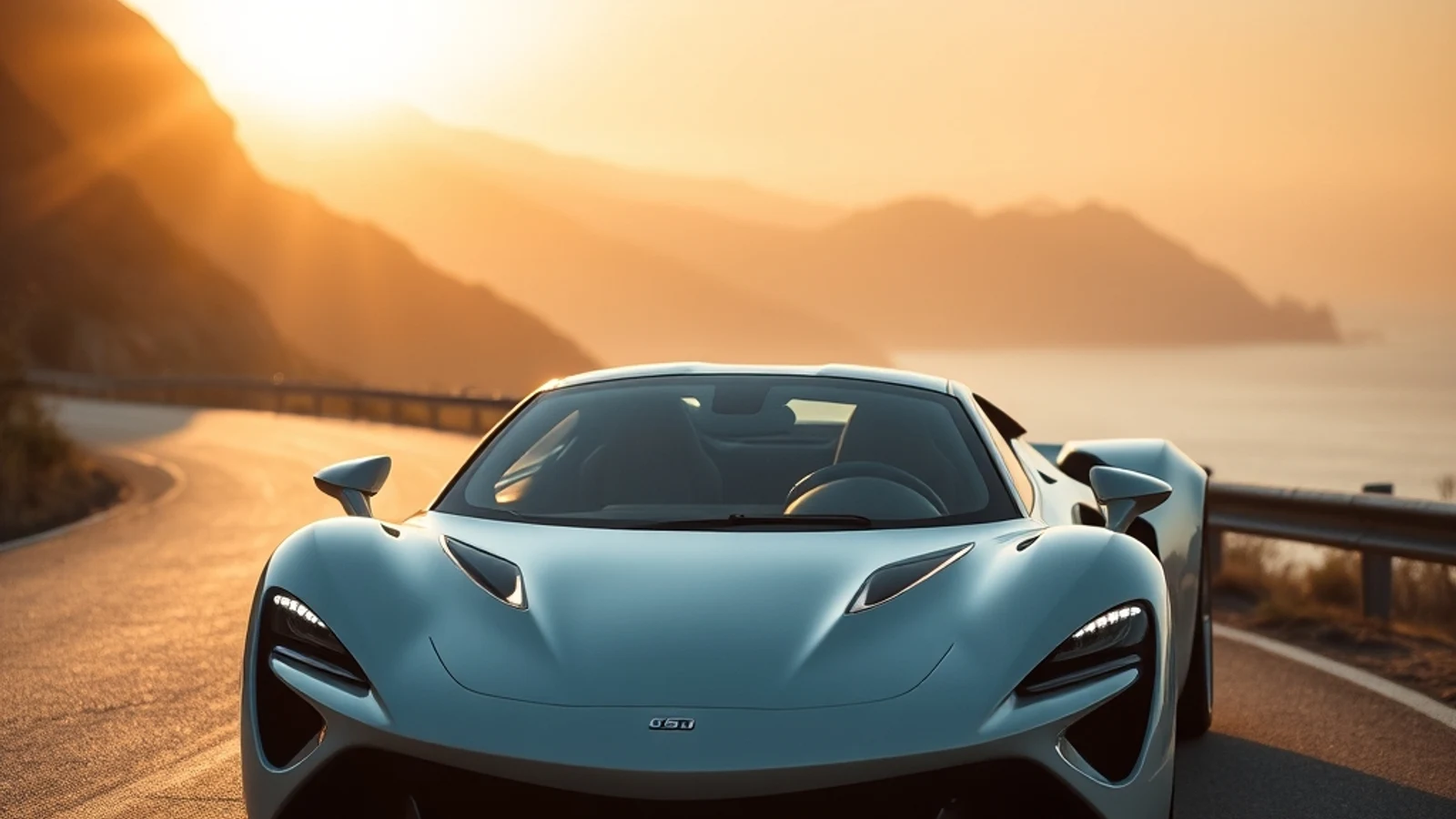
Performance and Engineering Comparison
The evolution of the eighth-generation Chevrolet Corvette represents a significant shift for the American manufacturer as it moved the engine behind the driver. The Z06 model, in particular, was engineered to challenge established exotic sports car performance benchmarks. Rather than simply increasing the output of existing small-block V8 engines, Chevrolet developed a new powerplant for the Z06, designed to compete with the world's most sophisticated supercars, according to reporting by CarBuzz. Source
Central to the Z06's character is its naturally aspirated 5.5-liter LT6 V8 engine. This motor utilizes a flat-plane crankshaft, a design more common in high-performance European machinery, allowing for higher rotational speeds and a different firing sequence. Chevrolet engineers specifically designed this engine to operate reliably at higher revolutions, necessitating solutions for vibration management that were addressed during the early development phase of the vehicle prototypes. Source
In contrast, the Ferrari 488 GTB utilizes a 3.9-liter twin-turbocharged V8. This engine delivers power differently, relying on forced induction to achieve high performance figures without needing to reach the extreme engine speeds of the American naturally aspirated V8. While the Corvette Z06 generates its peak 670 hp at 8,400 rpm, the Ferrari 488 GTB produces 660 hp with its maximum power arriving at 8,000 rpm, with significantly more torque available at lower engine speeds. Source
Track-focused capabilities are central to both vehicles. Chevrolet reports that the Corvette Z06 can reach 60 mph in 2.6 seconds when equipped with the optional Z07 Performance Package. Ferrari lists the 488 GTB as achieving 62 mph in 3.0 seconds. Beyond straight-line speed, the Z06 features an aggressive aerodynamic package, carbon-ceramic brakes, and a tuned suspension system, providing a platform designed specifically for the rigors of circuit use rather than just raw engine output. Source
Comparative lap times provide context for the evolution of these machines. Chevrolet recorded an official time of 1:22.12 at the Canadian Tire Motorsport Park in 2023 with Ron Fellows driving. While no directly comparable official Ferrari 488 GTB time exists for that venue, historical data from 2016 at the NCM Motorsports Park shows the previous C7 Corvette Z06 completing a lap in 1:58.25, while the Ferrari 488 GTB finished in 1:59.04 during identical testing conditions. Source
The acoustic profiles of the two vehicles also differ significantly due to their distinct engineering philosophies. A flat-plane-crank V8 does not produce the traditional deep rumble associated with American engines; instead, Chevrolet implemented a custom exhaust system to create an exotic, higher-pitched sound. Ferrari relied on its history with forced induction to balance the noise-dampening effect of its twin-turbochargers with a mechanical, high-performance character suitable for an Italian supercar. Source
Market Availability and Ownership
Maintenance and ownership experiences represent a divergence between the two manufacturers. Ferrari's seven-year Genuine Maintenance Programme, which accompanied the 488 during its production, has now expired for existing units. Prospective buyers of a used 488 GTB must account for potential costs related to specialist repairs. The Corvette Z06, while utilizing high-end components like carbon-ceramic brakes that require specific attention, is supported by a more conventional North American dealer network. Source
Financial considerations for these vehicles place them in different segments. The Chevrolet Corvette Z06 launched for the 2023 model year with an MSRP starting at $125,295, though selected options and performance packages increase this price. As a modern vehicle, it offers the benefit of a factory warranty. The Ferrari 488 GTB is no longer in production, and current used market asking prices in the United States generally range between $240,000 and $270,000, depending on age and condition. Source
The following table summarizes key performance metrics and data points for both vehicles as documented in the provided source material. Readers should note that testing conditions for acceleration and lap times may vary based on the specific circuits and equipment used during manufacturer or independent testing, and that these figures serve as a comparison of reported capability rather than standardized, universal performance metrics across all driving environments. Source
The decision between a new Chevrolet Corvette Z06 and a used Ferrari 488 GTB often comes down to an owner's priorities regarding brand prestige, heritage, and the specific driving feel offered by the engines. While the Corvette matches or exceeds performance benchmarks traditionally associated with European exotics, the Ferrari maintains the emotional and brand appeal associated with decades of industry history. Both approaches provide high-performance mid-engine configurations for drivers. Source
Further technical distinctions remain in the chassis and electronic integration of both models. The Z06 employs electronically controlled suspension and specific steering calibrations that emphasize a track-focused personality. Ferrari's chassis tuning for the 488 GTB is designed to provide a balance between precision and usability on public roads. These setups reflect the manufacturer goals for each vehicle, with the Z06 pushing towards track performance and the 488 focusing on long-standing exotic driving characteristics. Source
In summary, the comparison between the Chevrolet Corvette Z06 and the Ferrari 488 GTB highlights the success of General Motors in producing a vehicle that utilizes advanced engineering—such as a naturally aspirated flat-plane-crank V8—to bridge the gap with established European exotics. While the Ferrari offers a different, turbocharged driving experience and historical prestige, the Z06 provides modern technology, a factory warranty, and performance benchmarks that represent a new interpretation of the sports car formula. Source