
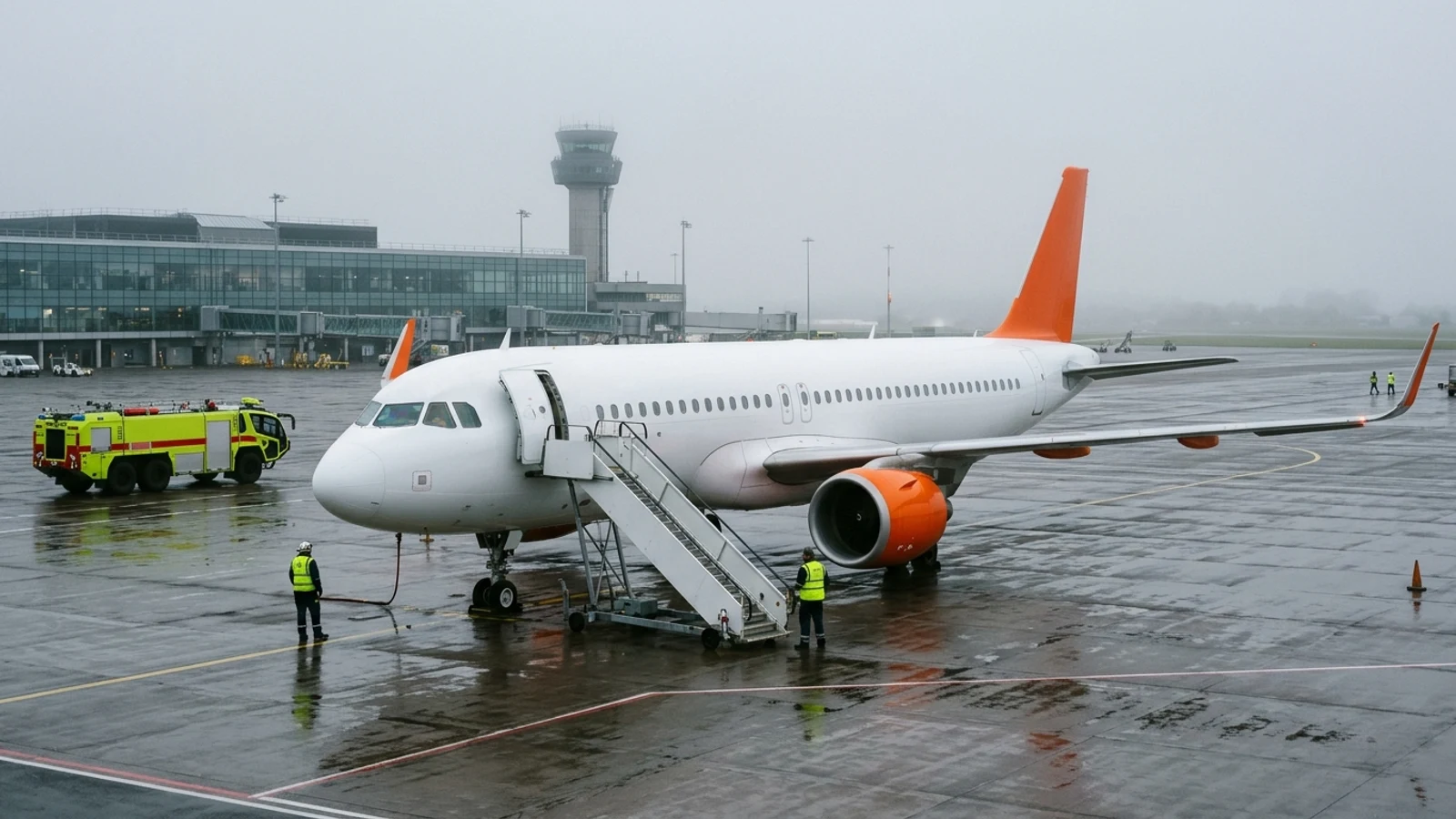
Edinburgh Incident and Passenger Delay
On November 26, 2026, easyJet flight U2-816 from Edinburgh Airport to London Gatwick experienced a significant mechanical disruption shortly after departure. The aircraft, an Airbus A321neo registered G-UZMC, lifted off from runway 24 at 8:46 PM. Approximately two minutes into the flight, the aircraft's number one engine suffered a stall. According to the Aviation Safety Network and data from ACARS, the crew leveled the aircraft at 5,000 feet, initiated an engine shutdown, and entered a holding pattern to prepare for an emergency return. Source
Witnesses on the ground reported hearing a loud bang and observing streaks of flame around the time of the flight's departure. Reports from residents in the West Lothian area, located approximately 27 kilometers west of Edinburgh, corroborated these accounts. Despite the gravity of the technical failure, the aircraft touched down safely back on runway 06 at Edinburgh Airport at 9:29 PM, exactly 53 minutes after its initial takeoff. Emergency services met the aircraft as a standard precautionary measure. Source
The operational impact for the passengers was significant due to the lack of spare aircraft at Edinburgh Airport. easyJet arranged for a replacement plane to be flown up from London Gatwick to facilitate the onward travel of the stranded passengers. The replacement vessel, an Airbus A320-200 with registration G-EZTH, departed London Gatwick at 12:51 AM on November 27 and arrived in Edinburgh at 1:52 AM. Following a one-hour turnaround, the flight finally departed for London at 2:56 AM. Source
Passengers eventually arrived at London Gatwick at 3:56 AM on Friday morning, resulting in a total delay of five hours and 41 minutes compared to the original scheduled arrival time of 10:15 PM. The airline noted that the aircraft involved in the incident, G-UZMC, was 8.16 years old and powered by two wing-mounted CFM International LEAP-1A32 engines. While the carrier operates 22 A321neos in its fleet, this specific unit remained grounded in Edinburgh as of Friday afternoon for further assessment. Source
Liverpool-Amsterdam Flight Emergency
In a separate event, an easyJet flight from Liverpool to Amsterdam declared an emergency on November 27, 2026. Flight U23443, operated by an Airbus A320-214 registered as G-EZTC, departed Liverpool John Lennon Airport at 6:19 PM. During the flight, the crew selected the 7700 squawk code, indicating a general emergency, after reporting a problem with the number one engine. Unlike the Edinburgh diversion, the crew decided to continue to their intended destination rather than diverting the aircraft. Source
The Airbus A320 crossed the North Sea and touched down at Amsterdam Schiphol Airport at 8:12 PM local time, which was 17 minutes ahead of the scheduled 20:30 arrival. Flight tracking data indicated that the 54-minute flight duration was consistent with the typical route average of 55 minutes. Airport fire services were prepared for the emergency arrival, though the aircraft landed safely without further incident. The crew handled the engine fault according to standard protocols. Source
The aircraft involved in the Amsterdam flight, G-EZTC, was approximately 17.6 years old and also utilized two CFM International engines. The vessel was originally delivered to easyJet in April 2009 after being built in Toulouse. Prior to the incident, the aircraft had completed a standard return service between Liverpool and the Isle of Man earlier that same day. The airline performed a cabin reconfiguration on this specific model in January 2019, increasing capacity from 180 to 186 seats. Source
A direct comparison of the two recent incidents highlights the variation in technical issues and pilot responses within easyJet's operations. While the Edinburgh flight was forced to return after an engine stall, the Liverpool flight experienced an indeterminate fault that allowed for continued operations to the destination. The technical specifications and operational histories of the affected aircraft, which vary significantly in age and capacity, underscore the diversity of the current easyJet fleet. Source
| Flight Date | Departure | Destination | Aircraft | Outcome |
|---|---|---|---|---|
| Nov 26, 2026 | Edinburgh | London Gatwick | A321neo (G-UZMC) | Returned to EDI |
| Nov 27, 2026 | Liverpool | Amsterdam | A320-214 (G-EZTC) | Landed at AMS |
The exact nature of the fault on G-EZTC remains unresolved. It is unclear if the crew formally shut down the engine or if they simply addressed an abnormal warning indication on the flight deck. easyJet has not provided specific commentary regarding the Liverpool incident as of late November 2026. Conversely, the Edinburgh incident prompted an immediate response from the airline and the grounding of the aircraft for inspection of its CFM International powerplants. Source
Regarding the passenger service implications, the airline maintains strict compliance with manufacturer guidelines for all engine-related technical issues. For the Edinburgh-London route, the delay was exacerbated by the lack of backup equipment, whereas the Liverpool-Amsterdam flight avoided passenger delays by proceeding to the destination. Passengers booked on subsequent flights using the same equipment in Liverpool were cautioned that delays or equipment swaps might occur due to necessary engineering inspections. Source
The contrast between these two emergency declarations emphasizes how flight crews and air traffic control differentiate between immediate safety risks and precautionary measures. A 7700 squawk does not inherently signify that a flight is in immediate peril, as illustrated by the safe arrival of the Liverpool flight. However, the combination of an engine stall and high exhaust gas temperatures on the Edinburgh flight necessitated a return to the origin airport to ensure the highest safety margins. Source

