
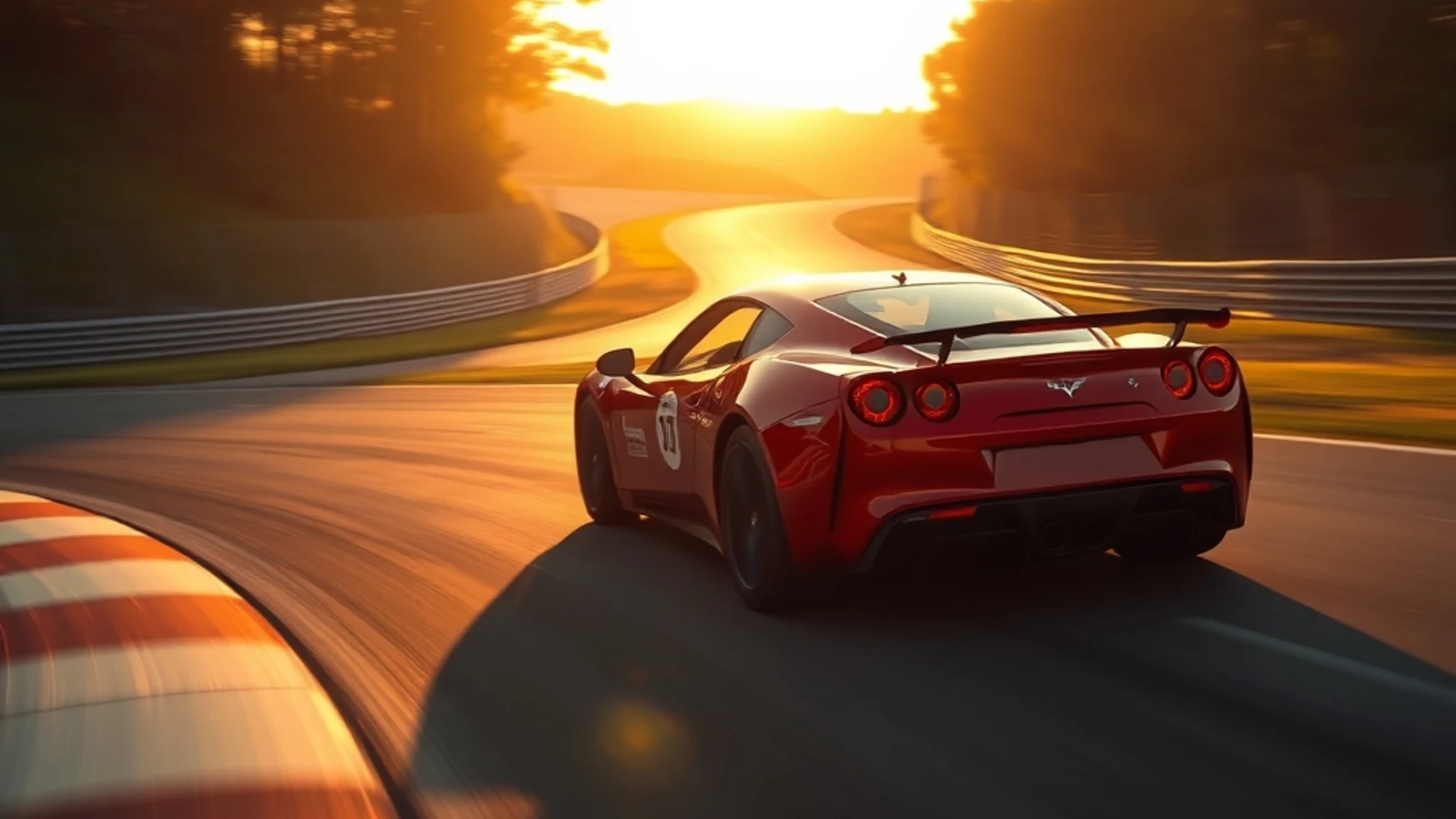
Ferrari has officially introduced the 296 Challenge Stradale, a new model that significantly alters the platform of its predecessor to emphasize a raw, track-oriented driving experience. Unlike the standard 296GTB, this iteration abandons the hybrid architecture, removing the electric motor and battery pack entirely to prioritize weight savings and mechanical simplicity. The manufacturer confirmed that this model serves as a bridge between the road-going 296 Speciale and the upcoming 296 Challenge Evo racing machine. Source
The powertrain modifications are extensive, featuring a twin-turbo 3.0-liter V-6 engine that operates without any electrical assistance. According to Car and Driver, this engine produces 670 horsepower, which is 149 fewer ponies than the base 296GTB model. However, Il Sole 24 ORE reports that the engine delivers 740 Nm of torque. The absence of the heavy hybrid system has allowed for a significant reduction in dry weight, with Ferrari claiming a loss of 328 pounds compared to the 296GTB. Source
To accommodate the removal of the electric motor, Ferrari engineers had to redesign the interface between the V-6 engine and the eight-speed dual-clutch transmission. This includes a structural spacer component designed to dampen vibrations. Because the car lacks regenerative braking provided by the hybrid system, the manufacturer has increased the size of the carbon-ceramic brake discs and optimized the ventilation ducts to maintain reliable stopping power during high-intensity track sessions. Source
The aerodynamic profile of the 296 Challenge Stradale is markedly more aggressive than previous track-focused Ferraris, incorporating elements directly from the race-only Challenge Evo. Key features include a carbon-fiber rear wing, adjustable front splitter, and a vented hood designed to channel hot air from the radiators over the windshield. This approach minimizes aerodynamic disruption from changing ground clearance while significantly increasing total downforce to 1360 pounds at 155 mph. Source
The interior of the vehicle reflects its minimalist, performance-driven mission. While basic features like climate control remain, the cabin has been stripped of storage pockets and armrests. Ferrari offers an even more extreme configuration that removes interior trim entirely, leaving parts of the chassis structure exposed to save weight. This stripped-back aesthetic, combined with carbon-fiber door panels and tubular seats, differentiates the car from more comfort-oriented models in the manufacturer's lineup. Source
Accessibility for buyers is a major point of distinction for this model. Unlike the limited-series 296 Speciale, which requires an existing relationship with the brand to secure an allocation, the 296 Challenge Stradale is considered a standard range model. Ferrari intends this strategy to appeal to new customers who desire a direct connection to the manufacturer’s racing heritage without the exclusivity barriers typically associated with special-edition Prancing Horse models. Source
Regarding availability and cost, the vehicle is expected to arrive in the United States in the third quarter of 2027. While official pricing for the U.S. market remains pending, the home market price is set at 291,000 euros, which equates to roughly $320,000. For potential owners, the lack of production limits represents a rare opportunity to purchase a high-performance track-inspired Ferrari model without competing for a restricted allocation slot. Source
The following table compares the foundational specifications of the 296 platform variants as documented in the provided sources: Source
| Feature | 296 Challenge Stradale | 296 Challenge Evo |
|---|---|---|
| Power Output | 670 hp | 700 cavalli |
| Transmission | 8-speed Dual-Clutch | 7-speed F1 |
| Availability | 2027 (US) | 2027 (Race debut) |
| Focus | Road-legal / Track | Racing / Track-only |
To further ensure the vehicle's capability, the suspension geometry has been revised to compensate for a 1.5 percent shift in weight distribution caused by the removal of the hybrid rear-axle components. The vehicle utilizes semi-active dampers and a dual-spring design derived from race-car testing at Fiorano. Coupled with specialized Pirelli P Zero R tires, the suspension setup is designed to improve rebound response and minimize body roll during extended sessions on the track. Source
The 296 Challenge Evo, which shares technical roots with the Stradale, is aimed exclusively at the Ferrari Challenge race series. It features a more powerful 700-cavalli engine and a seven-speed F1 transmission. Its aerodynamic package includes a Low Drag configuration that reduces aerodynamic drag by 4 percent compared to previous iterations. The car is slated to debut in the 2027 season, coinciding with the 35th anniversary of the Ferrari Challenge racing series. Source
Ultimately, the development of both the Stradale and the Evo highlights a shift toward using motorsport as a testbed for pure, internal combustion-driven performance. By integrating racing-grade cooling systems and chassis components into a production-adjacent model, Ferrari seeks to offer an enthusiast experience that bridges the gap between road and circuit. The Stradale stands as a representative model for those who prioritize handling and auditory feedback over the efficiency of hybrid electrification. Source

