
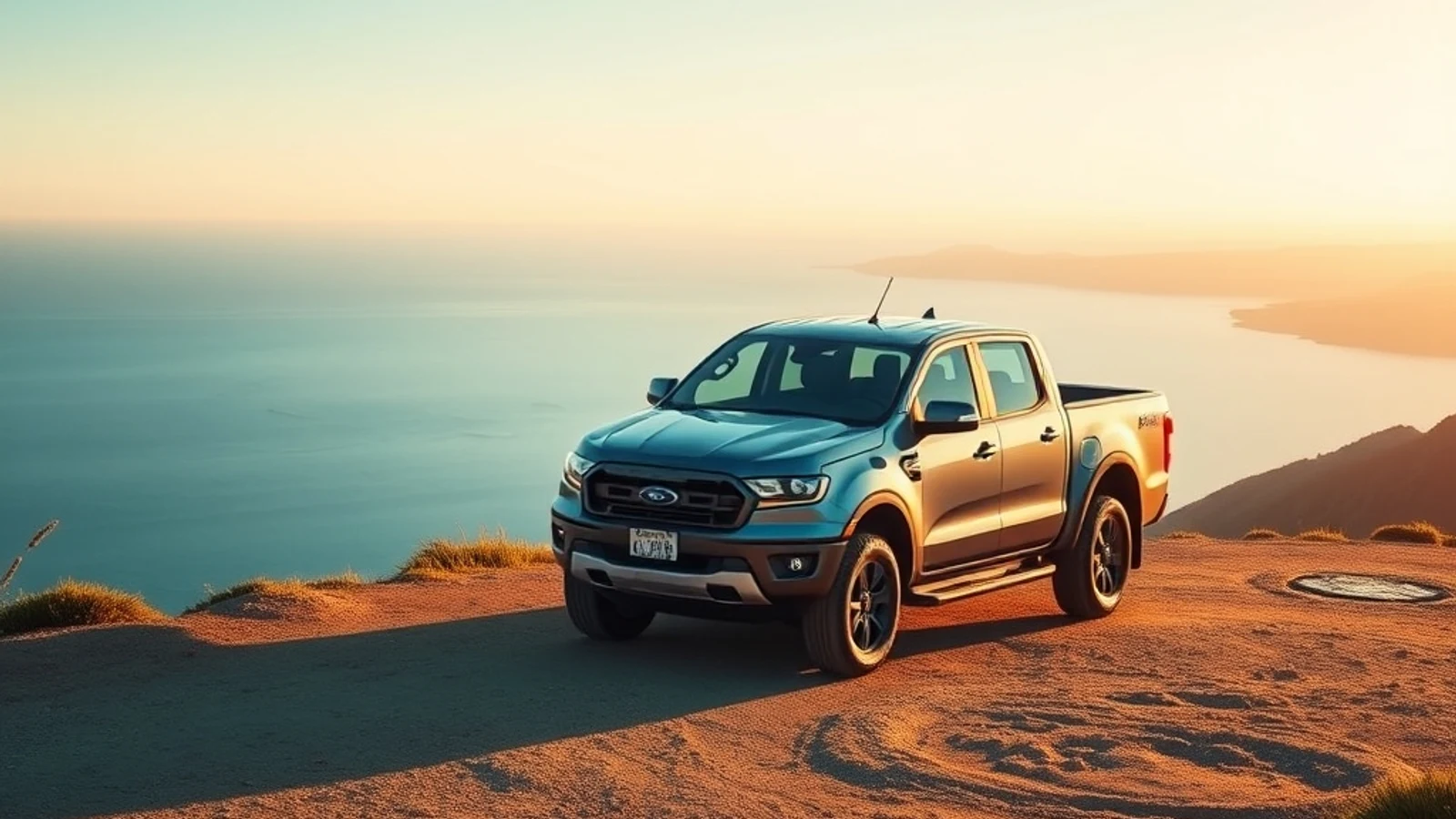
The Ford Ranger continues to be a central focus of Ford Australia's operations, currently serving as a primary sales driver for the automaker. As of late 2026, the company has implemented a strategic push to maintain market momentum through a seasonal promotional offer. This promotion provides eligible customers with a $5,000 fuel card alongside three complimentary scheduled services. These incentives are specifically available for select MY26.5 Ranger models, with the offer concluding on 30 November 2026. Source
Market Incentives and Powertrain Updates
The Black Friday incentive applies to several popular variants in the Australian lineup, specifically the XLT, Wildtrak, and Tremor models. This offer extends across both the 2.0-litre and 3.0-litre V6 engine configurations. The provided servicing benefit is capped at either 36 months or 45,000km, whichever threshold a vehicle owner reaches first. This initiative is designed to bolster sales in a competitive market where the Ranger faces close contention with other major manufacturers. Source
Technically, the 3.0-litre V6 turbo-diesel engine utilized in the Ranger provides a power output of 184kW. This stands in contrast to the 2.0-litre single-turbo diesel variant, which is rated at 125kW. The current market context involves comparison against rivals such as the 2026 Toyota HiLux SR5 48V mild-hybrid, which features a 2.8-litre turbo-diesel producing 150kW and 500Nm. Additionally, the BYD Shark 6 Premium AWD plug-in hybrid offers a higher quoted output of 321kW and 650Nm. Source
Looking toward future powertrain developments, Ford Australia has filed trademark applications for the 'Ranger Crosspower' and 'Crosspower' names. While a spokesperson stated that such filings are a normal course of business and not necessarily indicative of finalized product plans, industry observers suggest it may signal an intention to introduce an extended-range electric vehicle (EREV) setup. An EREV configuration utilizes an internal combustion engine strictly as a generator to power a high-voltage battery. Source
The potential shift toward EREV technology aligns with broader efforts to meet tightening emissions regulations in Australia. The federal government's New Vehicle Efficiency Standard (NVES) sets a headline limit for CO2 emissions, which is scheduled to decrease to 150g/km in 2027. Currently, the entry-level single-turbo diesel Ranger emits 179g/km, whereas the existing Ranger plug-in hybrid (PHEV) variant, introduced in 2025, is rated at 70g/km, placing it well within the future compliance requirements. Source
Production of the current Ranger plug-in hybrid is handled by the Silverton factory in South Africa, which supplies the vehicle to Australia, Europe, and New Zealand. Ford has also announced plans to begin production of the Ranger PHEV in Argentina in 2027 for the South American market. Meanwhile, Ford Australia is preparing to launch the Bronco Basecamp, which will be the brand's first EREV in the region, sourced from Jiangling Motors Corporation (JMC) in China. Source
In the North American market, the 2027 Ford Ranger continues to be represented in the current lineup with established performance specifications. The base model features a 10-speed automatic transmission paired with a powertrain producing 270 horsepower at 5,500 RPM and 310 lb.-ft. of torque at 3,000 RPM. The vehicle maintains a curb weight of 4,240 lbs. and a wheelbase of 128.7 inches. These figures define the standard configuration currently marketed to consumers in that region. Source
Regional Variations and Technical Specifications
Rumors regarding the North American Ranger suggest a transition in powertrain strategy similar to other Ford vehicles. There is speculation that the 2.7L engine may be phased out in favor of a 3.0L EcoBoost unit, which would potentially align the Ranger's performance metrics with those of the updated Bronco SUV. Expectations also include the integration of a larger 12-inch screen as standard equipment, alongside refreshed aesthetic options such as new wheel designs and exterior colors for the model year. Source
Ownership feedback for the Ranger emphasizes its performance in daily driving conditions. Reviews highlight the ride quality of the utility vehicle and the overall competence of its powertrain for both standard commuting and extended road trips. Owners have reported real-world fuel consumption figures reaching approximately 10L/100km. These insights serve as a complement to formal specifications, providing a glimpse into the operational realities for current users of the platform. Source
A comparison of key operational data reveals the varying capabilities across different segments of the market. The following table provides a summary of performance metrics for the Ranger and its primary market rivals where data was disclosed in recent reports. Source
| Model | Power | Torque | Fuel Consumption |
|---|---|---|---|
| 2026 Ranger V6 | 184kW | N/A | N/A |
| 2026 Ranger 2.0L | 125kW | N/A | N/A |
| 2026 Toyota HiLux 2.8L | 150kW | 500Nm | 7.2-7.6L/100km |
| 2026 BYD Shark 6 | 321kW | 650Nm | N/A |
While Ford continues to expand its trademark portfolio, including names like 'Mach 4' and 'Fathom', the primary focus remains on the Ranger's competitiveness. The firm's recent naming convention changes, such as consolidating the PHEV and potential EREV under the 'Ranger Hybrid' umbrella, reflect a broader attempt to maintain market dominance in the face of emerging battery-electric and hydrogen fuel-cell alternatives being developed by competitors. The success of these strategies remains subject to future production and delivery timelines. Source

