
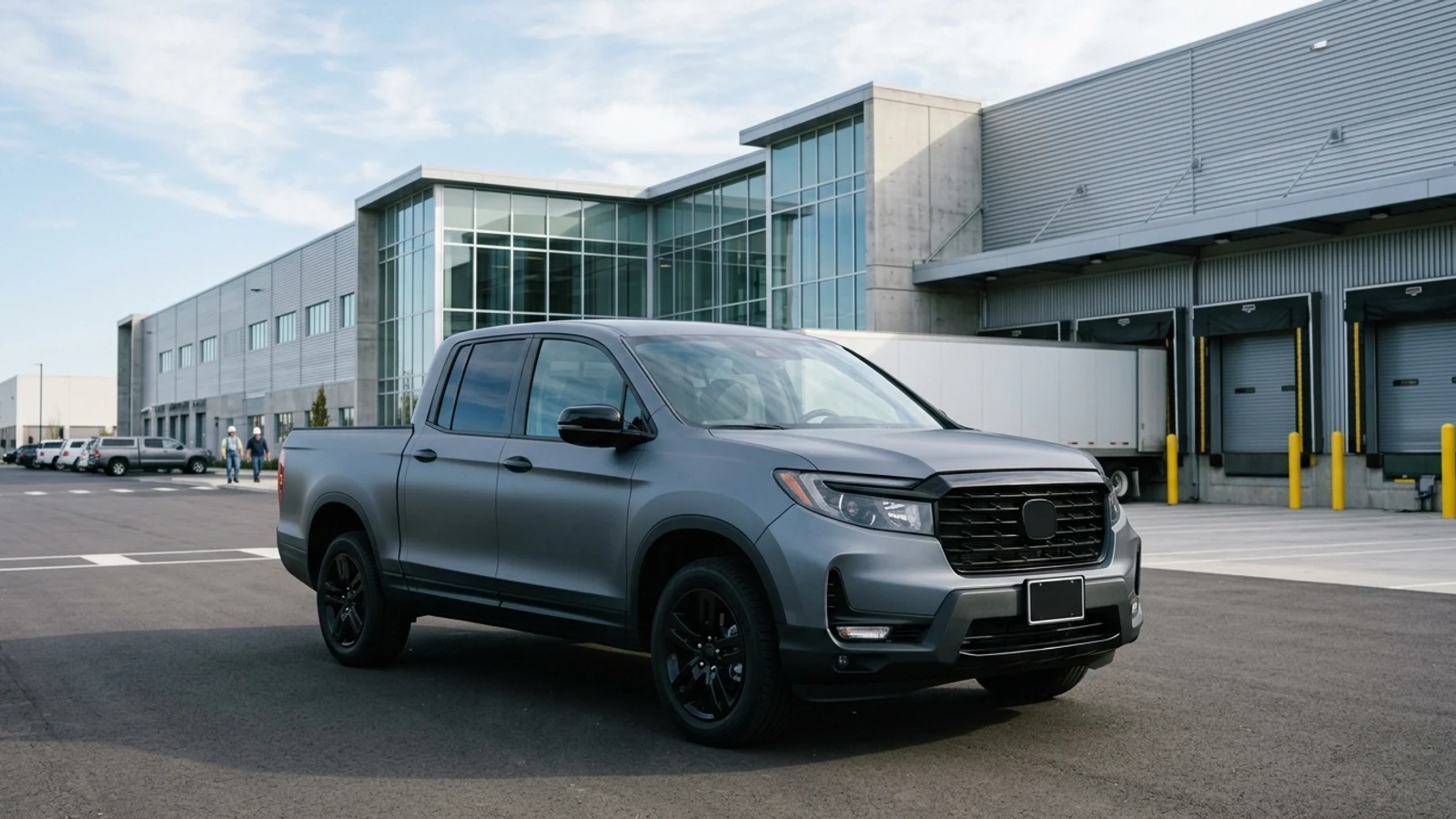
Market Positioning and Technical Divergence
The mid-size pickup market in the United States remains highly competitive, with the Toyota Tacoma maintaining its long-standing position as the segment leader over the last two decades. While many manufacturers have transitioned to smaller, turbocharged four-cylinder engines, the Honda Ridgeline and the Nissan Frontier represent a diminishing category of vehicles that still utilize naturally aspirated V6 power plants. CarBuzz reports that this distinction sets them apart in an industry increasingly focused on forced induction across the mid-size truck sector. Source
The Honda Ridgeline utilizes a unibody platform that prioritizes interior comfort and refined road manners over the traditional body-on-frame architecture favored by competitors like the Nissan Frontier. According to data provided by CarBuzz, the Ridgeline features a 3.5-liter V6 engine producing 280 horsepower and 262 lb-ft of torque. In contrast, the Nissan Frontier employs a 3.8-liter V6, factory-rated at 310 horsepower and 281 lb-ft of torque, with both vehicles utilizing a 9-speed automatic transmission system. Source
Utility comparisons reveal nuanced differences between these two approaches. The Ridgeline offers a wider bed space of 50 inches between the rear fenders, while the Frontier measures 45.5 inches. However, the Frontier maintains a higher maximum payload capacity on specific configurations. The S King Cab 4x2 Frontier can reach a 1,590-pound payload, which is 69 pounds higher than the capacity of the Ridgeline. The Frontier's payload decreases for higher trims, such as the Pro-4X 4x4, which is rated for 1,220 pounds. Source
Pricing strategies also serve as a key differentiator for these pickups. The base MSRP for the Honda Ridgeline Sport starts at $40,795, whereas the entry-level Nissan Frontier S trim begins at $32,490. CarBuzz indicates that the significant price gap often leads budget-conscious consumers toward the Nissan offering. Furthermore, matching the Ridgeline's high-end features in the Frontier requires additional equipment packages, such as the $1,640 convenience package and $3,080 premium package, which can bring the total cost into a similar bracket. Source
Technical Specification Summary
The following table summarizes key technical specifications for the Ridgeline and Frontier as reported in the provided evidence: Source
| Feature | Honda Ridgeline | Nissan Frontier |
|---|---|---|
| Engine | 3.5-liter V6 | 3.8-liter V6 |
| Horsepower | 280 | 310 |
| Torque | 262 lb-ft | 281 lb-ft |
| Transmission | 9-speed automatic | 9-speed automatic |
| Bed Width | 50 inches | 45.5 inches |
Honda has confirmed a significant change to its manufacturing schedule regarding the Ridgeline. Production at the Lincoln, Alabama facility is set to pause during the fourth quarter of 2026 for a duration of approximately 18 months. This decision is driven by the aging 3.5-liter engine's inability to meet emerging emissions standards without substantial engineering revisions. Honda intends to reallocate assembly resources to prioritize the production of higher-volume models including the Odyssey, Pilot, and Passport. Source
Despite the upcoming assembly hiatus, Honda does not plan to retire the nameplate. The manufacturer has scheduled the Ridgeline to return in late 2028, with production expected to resume around the third quarter of that year. This future iteration is expected to feature updated exterior styling and a revised, emissions-compliant V6 power plant. Looking further ahead, Honda anticipates the arrival of a fully redesigned hybrid generation for the Ridgeline in the early 2030s. Source
The market perception of these vehicles remains a significant hurdle for the Ridgeline. Consumers in the United States often favor traditional truck layouts. CarBuzz notes that the Ridgeline's unibody construction often excludes it from the consideration set of buyers seeking a vehicle defined as a traditional truck, regardless of its objective utility or comfort. The Frontier benefits from being viewed as a proper truck, which contributes to its reputation for reliability and its appeal in a truck-loving market. Source
While the Ridgeline earns praise for its ride quality and interior ergonomics, these attributes are prioritized by a specific segment of the buyer base that values passenger comfort. By contrast, the Nissan Frontier targets buyers looking for a more traditional, rugged pickup experience. The interplay between these preferences determines sales performance, as the market currently favors the perceived value and configuration of traditional body-on-frame designs within the mid-size segment. Source
The competitive environment for mid-size pickups is further shaped by the Ford Maverick, which has gained popularity due to its extreme affordability. CarBuzz highlights that the Maverick's pricing strategy has allowed it to outperform other mid-size trucks, including the Toyota Tundra and the two vehicles in this comparison, in year-to-date sales figures. This emphasizes that for many consumers, the purchase decision is heavily influenced by the balance between total cost and the utility offered by the vehicle. Source
In summary, while the Honda Ridgeline offers a distinct unibody alternative to the traditional mid-size truck segment, it faces challenges related to its platform perception, pricing, and current emissions compliance requirements. The temporary production pause at the Lincoln, Alabama plant represents a strategic shift for Honda to focus on higher-volume production while preparing for a refreshed model release in 2028. Meanwhile, the Nissan Frontier maintains its footing through a traditional formula that resonates with core truck buyers. Source

