
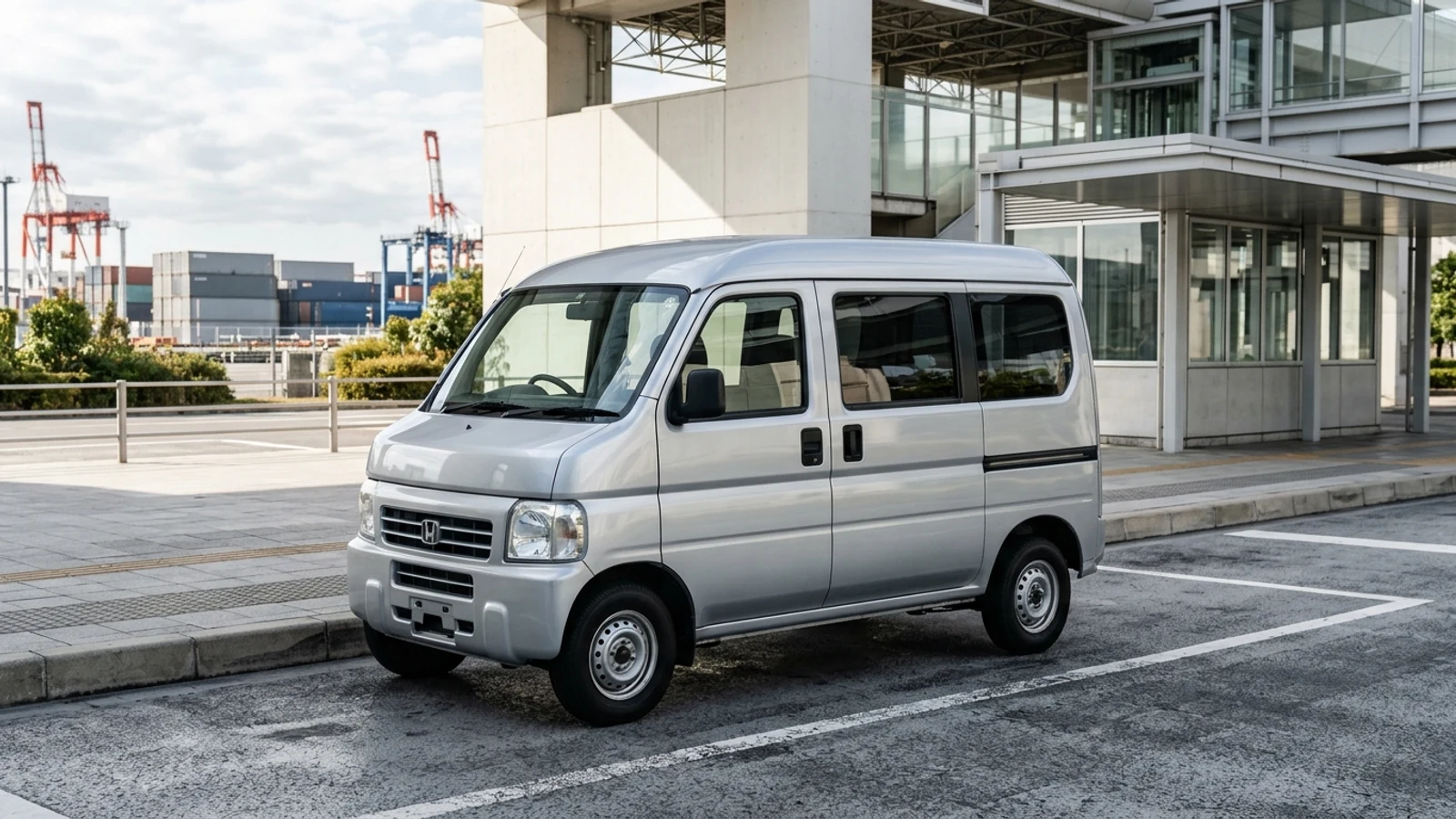
Kei Car Characteristics and Importation
The Honda Vamos represents a unique category of imported Japanese micro-vehicles known as kei cars that are gaining traction within the United States market. These vehicles are defined by specific Japanese regulations governing their size, engine displacement, and power output. Because of the 25-year import rule, enthusiasts are increasingly accessing these models through platforms like Bring A Trailer. The Vamos is distinguished by its naturally aspirated, mid-engine configuration and the availability of a manual transmission, which differentiates it from standard minivan offerings. Source
Designers of the Honda Vamos prioritized utility to suit an active lifestyle. The vehicle features a 656cc inline-three-cylinder engine that produces approximately 60 hp. Honda offered several powertrain variations for the Vamos, including a five-speed manual transmission, a three-speed automatic, and a four-speed automatic. Buyers could also select a turbocharged 656cc version for added performance. With a base curb weight around 2,200 pounds, the van achieves its intended functionality without requiring excessive power output from its small engine. Source
Space management is a primary feature of the Vamos architecture. The interior is designed with flat-folding seats that allow for a mattress to be placed in the cargo area, providing utility for camping or transport. Passenger comfort is maintained through decent rear legroom and the inclusion of a central armrest in the back, a feature noted by CarBuzz as being premium enough to rival modern luxury sedans. The mid-engine placement, positioned underneath the cargo floor, contributes to a low center of gravity. Source
The layout of the Vamos provides a short front overhang, which helps maximize interior cabin volume. To address noise concerns resulting from the mid-mounted engine, Honda utilized floor panels designed to minimize sound intrusion into the cabin. For safety, the manufacturer reported that the vehicle underwent testing for collisions at speeds up to 30 miles per hour on each side. The model run spanned from 1999 to 2018, during which time it received minimal updates to maintain competitive pricing structures for the Japanese market. Source
In 2003, Honda introduced the Vamos Hobio, a variation of the platform that featured a taller roofline to further expand interior space. The Hobio sub-model included specialized versions tailored for pet owners, featuring water-resistant interior materials, integrated pet mats, and a rear heater designed to maintain warmth for animals during travel. These functional additions demonstrate the vehicle's design intent, which caters specifically to utility-focused users rather than strictly high-volume consumer transportation requirements. Source
Market Performance and Ownership Considerations
Prospective owners in the United States must navigate complex regulations before finalizing an import. While federal law allows for the importation of any vehicle older than 25 years, state-level registration requirements for kei-class cars remain inconsistent. Some jurisdictions place restrictions on their operation or outright prohibit their use on public roadways. It is highly recommended that buyers verify local Department of Motor Vehicles regulations regarding micro-cars before committing to an purchase through international auction sites. Source
When assessing the current auction market, data suggests that the Honda Vamos can serve as an affordable daily driver. A recent transaction documented by CarBuzz saw a blue example with red-accented 16-inch wheels, faux wood trim, and checkered-flag floor mats sell for $8,100. This particular unit was equipped with air conditioning, front disc brakes, an aftermarket touchscreen audio system, and keyless entry, illustrating that despite the age of the vehicle, modern conveniences can be retrofitted or found as standard equipment. Source
Ownership of a kei car like the Vamos presents both benefits and challenges. The vehicle's compact dimensions offer significant advantages in urban environments, particularly for parking in tight spaces. For those living in areas with poor weather, the availability of an all-wheel-drive configuration adds to the vehicle's capability. However, maintenance requires sourcing specific parts, potentially involving international shipping from Japan, which could increase the long-term operational cost of the vehicle compared to domestic-market alternatives. Source
The price of entry for these vehicles appears to be trending within a specific range. CarBuzz reports that while the first Vamos model sold on Bring A Trailer in 2025 achieved a price of $11,100, subsequent auctions have seen lower final bids, keeping the average well under the $10,000 threshold for clean, operational examples. The value proposition of the vehicle is further bolstered by the presence of manual transmissions, which remain highly sought after by enthusiasts looking for a engaging, quirky, and practical daily driving experience. Source
Maintenance and structural integrity are the most significant factors for potential buyers to consider. Experts advise a thorough inspection of the undercarriage for rust, which can be detrimental to older, imported vehicles. Once verified as structurally sound and legally registered for the specific state, the Vamos can function as a capable and entertaining daily transport. Its simple mechanical architecture, including straightforward braking systems and minimalist construction, suggests that the Vamos remains accessible for owners who are mechanically inclined. Source
For comparison, common specifications of the Honda Vamos platform are outlined below to assist prospective buyers in understanding the differences between standard and Hobio models or engine configurations. Note that these specifications are based on manufacturer claims and production variants throughout the 1999–2018 model life cycle. The availability of these configurations varies significantly by individual auction listings, as these vehicles were produced in various trim levels and performance categories suited to the Japanese domestic market. Source
| Feature | Specification |
|---|---|
| Engine Displacement | 656cc inline-three |
| Power Output | ~60 hp (naturally aspirated) |
| Curb Weight | ~2,200 lbs |
| Transmission Options | 5-speed manual, 3/4-speed automatic |
| Production Years | 1999–2018 |
| Notable Variant | Vamos Hobio (2003) |
| Safety Rating | 30 mph side collision limit |

