
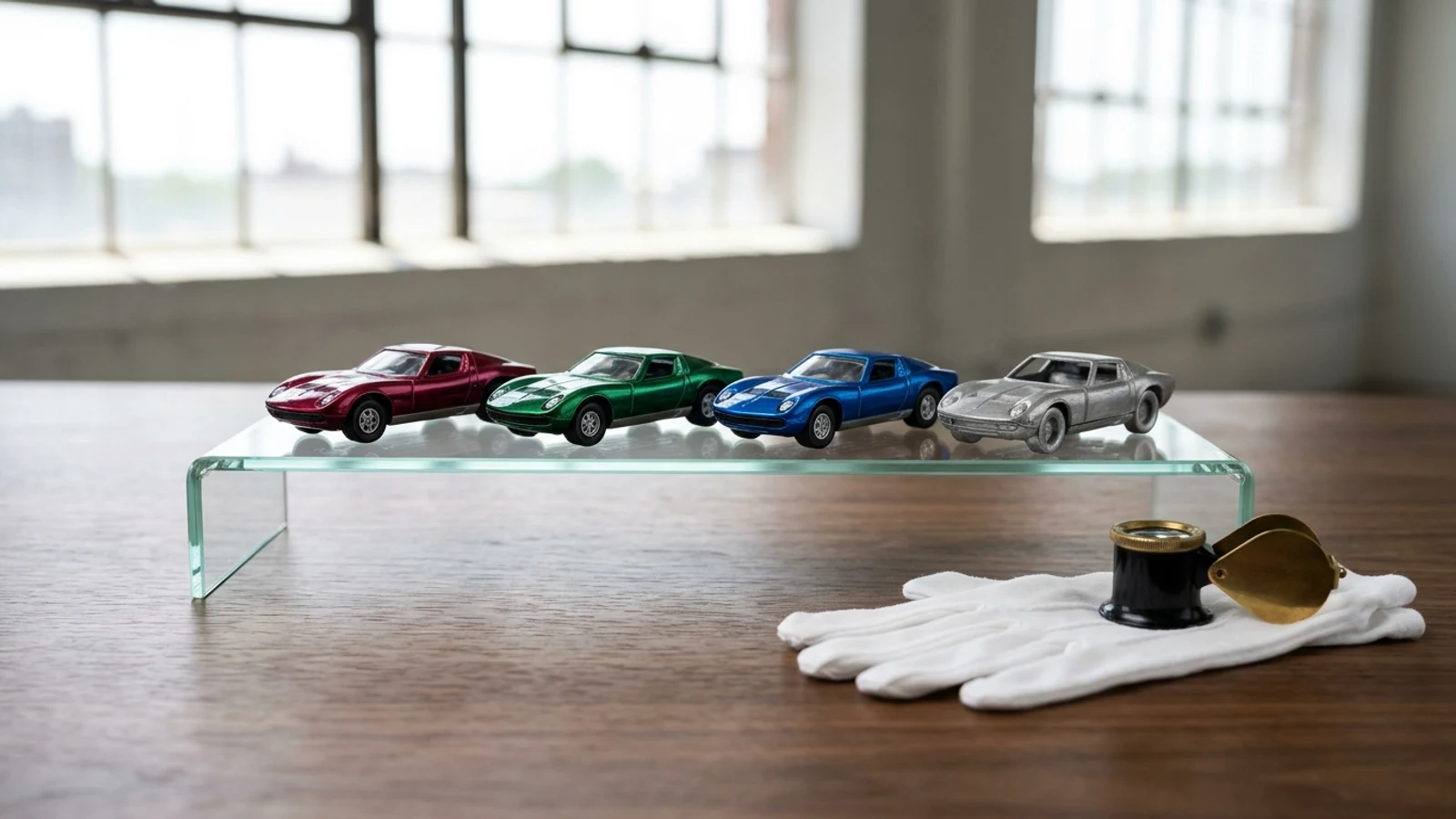
The collector market for Hot Wheels is currently active and broader than ever, according to experienced enthusiasts. While the most high-profile transactions often involve early models from the 1960s and 1970s, the hobby remains accessible to newcomers at various price points. Major platforms for buying and selling have shifted away from traditional auction sites like eBay toward Facebook fan pages, where collectors engage in auctions, haggling, and peer-to-peer transactions to acquire specific models for their personal collections. Source
For those seeking to enter the hobby, the vast majority of transactions remain under $10, allowing beginners to build collections without significant financial commitment. More experienced collectors often track segment-specific releases, such as the 1960s Redline era or later Blackwall models. Collectors emphasize that this is a time-consuming pursuit that requires significant patience, noting that parking spaces for die-cast cars are considerably easier to manage than those required for full-size classic vehicle collections. Source
Values for specific models are influenced heavily by production variations, such as rare interior colors or prototype status. For instance, while common iterations of the 1974 Rodger Dodger are readily available, models featuring a white interior command significantly higher prices of approximately $3000. Similarly, the 1969 Red Baron remains a staple of the hobby, but the version equipped with a white interior is the preferred choice for dedicated collectors, fetching between $4500 and $5000 in the current market. Source
Prototype models represent the pinnacle of the market, often escaping production lines and becoming highly sought-after rarities. The 1969 Cheetah base with a Python body is one such example; because only a limited number of units were built with this specific base plate, they are valued at approximately $6000. Another notable rare item is the 1971 Spectraflame Purple Bye Focal, which is particularly fragile and prone to structural failure, a characteristic that paradoxically increases the value of surviving examples. Source
The market is also impacted by external factors such as celebrity associations and license renewals. In the case of the 1969 rear-loading Beach Bomb prototype, valuations have fluctuated significantly. While older estimates were closer to $175,000, a 2026 feature on MeTV reported a valuation of approximately $1 million. It is important to distinguish these estimates from documented auction sales, as the exact number of survivors remains uncertain and subject to change as more examples are identified by registries. Source
The technical design of prototypes often led to their cancellation before reaching store shelves. The original rear-loading Beach Bomb, for example, was abandoned by Mattel because its high center of gravity caused it to tip over on curves, and its narrow body was incompatible with the company's track accessories. This decision cemented the model's status as a collector's prize. The production version was instead redesigned with side-mounted surfboard compartments, a change that significantly impacted the item's scarcity. Source
Collectors also distinguish between production prototypes and one-off showpieces. The diamond-encrusted 40th-anniversary custom Otto, created in collaboration with jeweler Jason Arasheben, had a reported valuation of $140,000 in 2008 and later sold for $60,000 at a charity auction. This figure represents a historical transaction rather than a current market estimate for such extravagant items. Enthusiasts are advised to verify paint, wheels, base markings, and provenance carefully, as modern reproductions can mimic original specifications. Source
In the modern era, club memberships provide access to exclusive, detailed castings. Mattel’s Red Line Club costs under $10 annually and offers members access to limited-run die-casts. The Red Line Club Ferrari F40, which debuted in August 2026 for $50, has seen examples trading for triple that price on secondary platforms. While these modern premiums are lower than those for 1960s classics, they demonstrate the continued demand for high-detail, member-exclusive releases in the current market environment. Source
Comparison of various Hot Wheels collectibles often reveals differences in construction and value across eras. For instance, the Ferrari 250, a casting designed by Larry Wood, had an 18-year production career. In 1996, the model was released in various wheel configurations, including Real Riders on Treasure Hunt versions. Recent purchases of 10 special Ferrari castings for research purposes totalled approximately $150, reflecting the current expense of building a specific thematic collection within the broader hobby. Source
The following table summarizes selected rare Hot Wheels valuations and characteristics based on reported market data from 2026: Source
| Model | Year | Estimated Value | Key Feature |
|---|---|---|---|
| Pink Beach Bomb | 1969 | $1,000,000 | Prototype Rear-Loader |
| Bye Focal | 1971 | $6,000 | Spectraflame Purple |
| Cheetah Base Python | 1969 | $6,000 | Prototype Plate |
| Rodger Dodger | 1974 | $3,000 | White Interior |
| RLC Ferrari F40 | 2026 | $120–$150 | Club Exclusive |
Prospective collectors should remain aware that market data often relies on reports and estimates rather than consistent auction verification. Whether focusing on mass-market mainlines or ultra-rare prototypes, success in the hobby requires a mix of historical knowledge and attention to detail. As the market continues to evolve through digital community engagement and limited-edition club releases, the diversity of the collecting field ensures that enthusiasts can pursue their interests at significantly different price and rarity levels. Source

