
Transitioning Manufacturing to North America
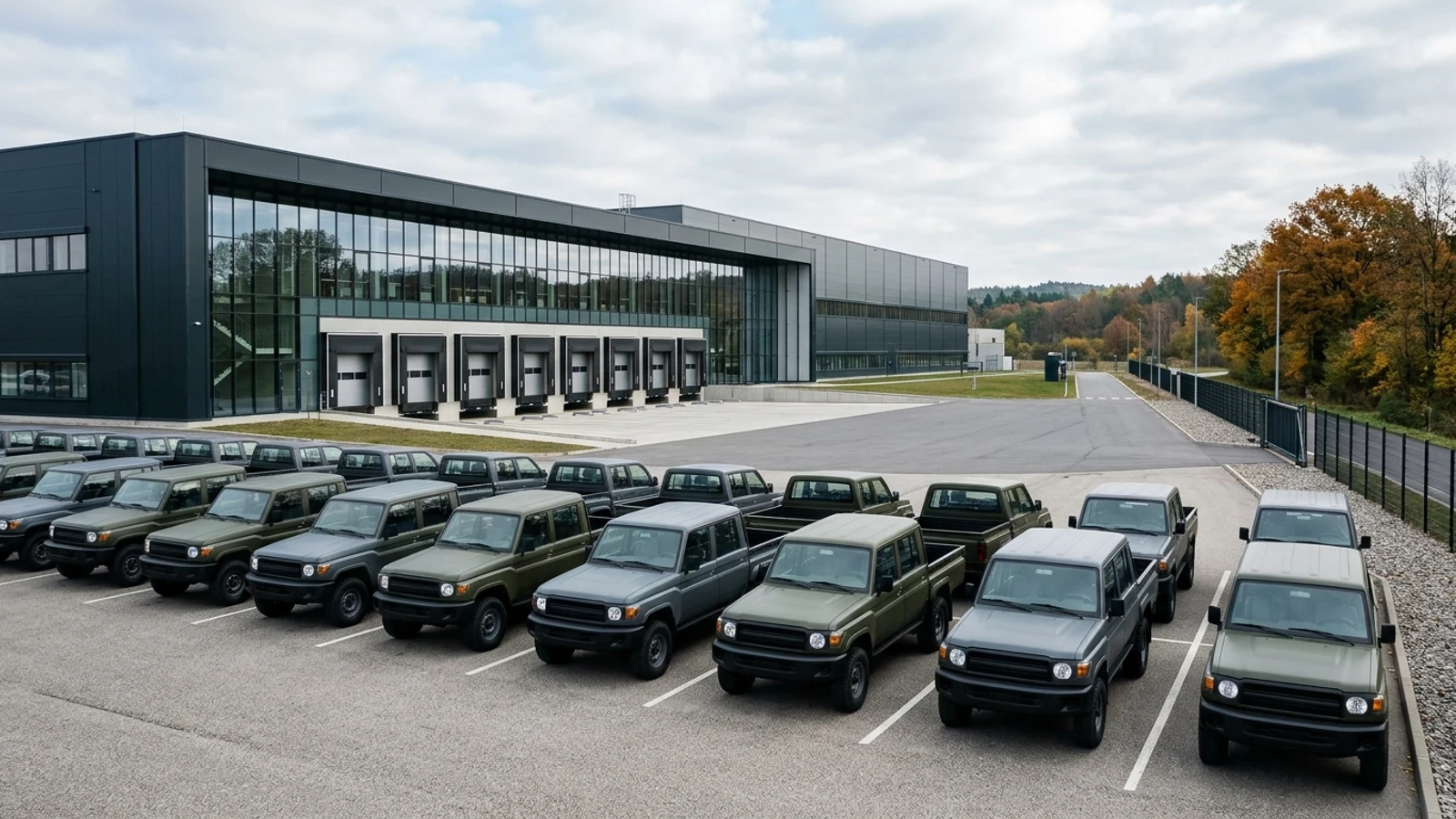
Ineos Automotive has officially declared its intent to establish a manufacturing presence in the United States, targeting a production start date for its Grenadier SUV and Quartermaster pickup truck in 2028. This strategic realignment aims to position the company's manufacturing footprint closer to its primary customer base, as the American market currently accounts for approximately 70 percent of the brand's total global vehicle sales. The shift is designed to improve overall operational efficiency and commercial performance for the fledgling automaker. Source
While the decision to manufacture in the United States has been confirmed, Ineos has not yet finalized the specific location for its new assembly operations. The company has currently developed a shortlist of potential sites but has not disclosed whether it intends to acquire an existing facility, construct a new plant, or utilize excess capacity from another manufacturer. Ineos expects to reach a final decision regarding the chosen site within the next few months to ensure the 2028 production timeline remains on track. Source
The transition to American-based production serves as a tactical response to the financial impact of current import tariffs. Under existing trade conditions, Grenadier units shipped from Europe to the United States incur a 15 percent import tariff. Additionally, the Quartermaster pickup truck is subject to the 25 percent tariff on imported light trucks, commonly referred to as the chicken tax. By domesticating production, Ineos aims to avoid these costs, which significantly affect the price structure of its vehicles in its largest market. Source
Concurrent with the announcement of its US expansion, Ineos has entered into exclusive negotiations to sell its existing assembly facility in Hambach, France, to the Chinese automotive manufacturer BYD. This facility, which was originally developed by Mercedes-Benz for the production of Smart city cars, was acquired by Ineos in 2020. Since 2019, Ineos reports that it has invested nearly €540 million into the site to retool it for the assembly of the body-on-frame Grenadier SUV and, subsequently, the Quartermaster pickup. Source
Should the sale to BYD reach finality, Ineos has indicated it will continue to manufacture the Grenadier and Quartermaster models at the Hambach site for the medium term. This arrangement would allow for a transition period where the two companies would share the manufacturing facility. The proposed sale remains subject to necessary consultations with employee representatives, a process that is standard for such corporate transactions within the French automotive manufacturing sector. Source
Strategic Implications of the Hambach Site Sale
For BYD, the acquisition of the Hambach factory would mark its second passenger car plant in the European Union, following its facility currently under development in Szeged, Hungary. BYD has expressed a long-term commitment to its European operations, aiming to provide consumers with vehicles built locally within France. While the company has not yet confirmed specific production volume targets or which models will be produced in Hambach, the site offers an established workforce, a paint shop, and proximity to supplier bases along the German border. Source
The local assembly project in France is interpreted as a strategy for BYD to mitigate the impact of EU-imposed trade measures. Currently, Chinese-built battery-electric vehicles imported into the EU face a 10 percent standard tariff plus a 17 percent countervailing duty. Additionally, the European Commission has introduced quota restrictions on hybrid imports from China. By producing vehicles locally, BYD intends to better position itself regarding potential future "Made in Europe" content requirements for subsidies and public contracts. Source
In terms of the current technical specifications of the Ineos Grenadier, the vehicle utilizes proven powertrains supplied via a partnership with BMW. The SUV in US specification is equipped with a 3.0-liter turbocharged inline-six gasoline engine, designated as the B58, which produces 281 horsepower and 332 lb-ft (450 Nm) of torque. In markets where diesel options are offered, the B57 engine delivers 245 horsepower and 406 lb-ft (550 Nm). Both engines are paired with an eight-speed automatic transmission provided by ZF and a permanent four-wheel-drive system. Source
Ineos has clarified that the decision to relocate assembly to the United States does not alter the current engine-supply agreement with BMW. BMW produces its B57 and B58 engines at the Steyr plant in Austria, and there is no indication that engine production will shift to the United States alongside the vehicle assembly process. The technical configuration of the Grenadier and Quartermaster remains consistent, and no immediate changes to the powertrain lineup were announced in conjunction with the US production plans. Source
The following table summarizes the key financial and regulatory factors influencing the production shifts currently underway by Ineos and BYD, as supported by the provided evidence: Source
Factor | Ineos (USA Expansion) | BYD (France Localization) | | :--- | :--- | :--- | | Primary Driver | Tariff Avoidance (15-25%) | Trade Quotas/Subsidies | | Target Year | 2028 Start | Ongoing Negotiations | | Capacity | Not Disclosed | ~30,000 units (Hambach) | | Strategic Rationale | Market Proximity (70% sales) | Local Content Requirements | Source
Ultimately, the dual-track strategy pursued by Ineos marks a significant transition for the company as it seeks to stabilize its long-term commercial performance. While Ineos focuses on scaling its presence in the United States to avoid import duties, the transition of the French factory to BYD reflects a broader trend of Chinese OEMs seeking to establish domestic manufacturing footprints in European nations to remain competitive within the regulatory environment governing the electric and hybrid vehicle sectors. Source

