
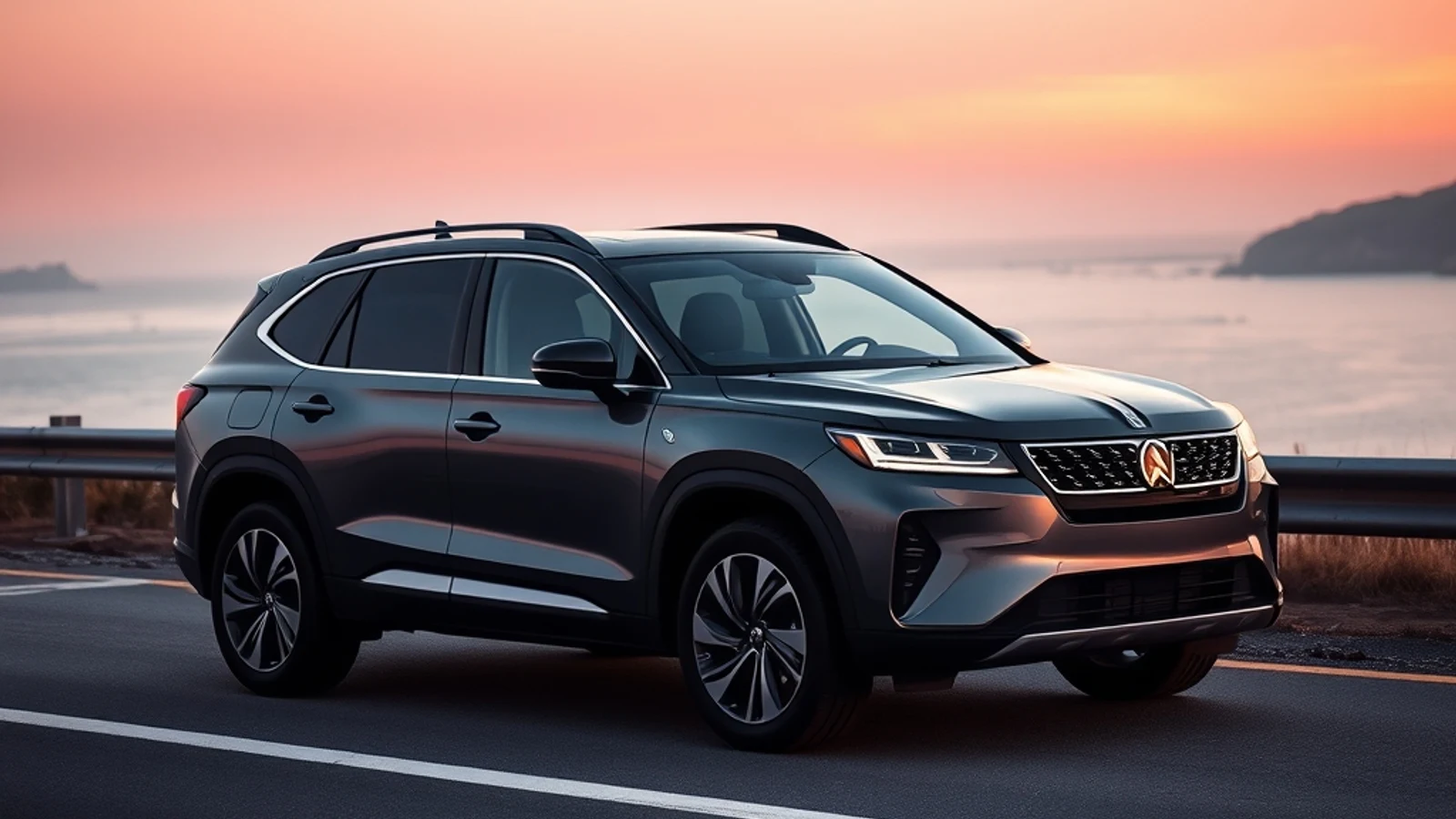
The boundary between luxury and mainstream SUV segments has blurred significantly as traditional premium brands face new competition. According to data provided by CarBuzz, an increasing number of consumers are opting to trade in their mid-size luxury SUVs for vehicles from mainstream manufacturers. This trend is driven by improvements in quality, technology, and interior refinement across the mainstream market, leading buyers to reconsider the value proposition of traditional luxury nameplates when purchasing new vehicles. Source
Market intelligence reports indicate that the shift in buyer behavior is measurable. During the first half of 2026, premium vehicle sales, excluding direct-to-consumer brands, accounted for 13.3% of the new-vehicle market, a decline from 13.8% during the same period in 2025. CarProUSA.com reports that this figure represents the lowest market share for premium brands since 2020. Among SUV buyers, 32% of those who traded in a midsize premium SUV opted for a model from a mainstream brand. Source
Financial incentives also influence these purchasing decisions. When moving from a midsize premium SUV to a mainstream equivalent, the average customer-facing transaction price observed was $51,500. This is contrasted against an average of $70,600 for the premium segment left behind, resulting in a difference of more than $19,000. CarProUSA.com notes that 11% of consumers switching from luxury to mainstream models specifically chose a midsize SUV, while 6% moved into the compact SUV segment. Source
The emotional satisfaction gap between segments has narrowed according to J.D. Power. In 2008, the difference in satisfaction between mainstream and luxury brands was 66 points on a 1,000-point scale; by 2026, this gap had decreased to 29 points. This suggests that features previously reserved for luxury vehicles, such as advanced infotainment systems, sophisticated driver-assistance technology, and high-end upholstery, are now widely available in mainstream models, reducing the perceived necessity of paying a luxury premium. Source
The Genesis GV80 and the Mazda CX-70 are identified as two models that effectively bridge this divide. The GV80 is described as a 'near-luxury' contender that provides a high level of equipment for a starting price of $57,700, excluding taxes and destination fees. Its performance is supported by a standard 2.5-liter turbocharged inline-four engine producing 300 horsepower or an optional 3.5-liter twin-turbo V6 producing 375 horsepower, offering alternatives to more expensive German luxury counterparts. Source
Mazda’s CX-70 enters the market with a starting price of $42,250. This model positions itself as a refined mainstream offering with a 3.3-liter turbocharged inline-six engine producing 280 horsepower in standard form, with a 340-horsepower 'Turbo S' variant available. The vehicle includes i-Activ all-wheel drive as standard and features high-end touches like available Nappa leather and Japanese-inspired interior details, aiming to offer a premium ownership experience at a lower price point than traditional mid-size luxury SUVs. Source
Luxury brand inventory and incentives provide further context for the current market state. As reported by CarProUSA.com, premium-brand inventory recently stood at approximately 67 days of supply, compared to 56 days for mainstream brands. Furthermore, premium-brand incentives have remained near 7.3% of the MSRP, while mainstream vehicles average 6%. This indicates that luxury manufacturers are spending more to manage higher inventory levels and maintain sales volume in a competitive environment. Source
The Genesis GV70 has also emerged as a significant challenger to established luxury compact SUVs like the BMW X3 and Mercedes-Benz GLC. According to Top Speed, the 2026 GV70 features a standard 2.5-liter turbocharged four-cylinder engine producing 300 horsepower and 311 pound-feet of torque. This output exceeds the 255 horsepower and 295 pound-feet produced by the standard engines in both the BMW X3 30 xDrive and Mercedes-Benz GLC 300 4MATIC models. Source
While customization remains a strength for German luxury manufacturers, the complexity of adding options can lead to significantly higher total costs. Genesis utilizes a more straightforward trim structure for the GV70, bundling desirable amenities into mid-level trims. The 2.5T Advanced trim, for example, is priced at $56,788 and includes features such as leather upholstery, ventilated front seats, a Bang & Olufsen sound system, and a Surround View Monitor, enhancing its appeal against less-equipped base models of competitors. Source
Performance and design updates for the 2026 Genesis GV70 further distinguish it from established competitors. The model includes a 27-inch OLED display, a refreshed crest grille, and updated exterior lighting. For those seeking higher performance, the 3.5-liter twin-turbocharged V6 version provides 375 horsepower and 391 pound-feet of torque. While premium German performance models offer their own benefits in chassis tuning, the Genesis provides substantial power as a baseline for the segment without requiring expensive option packages. Source
Model Performance and Market Comparison
Comparative data for mid-size and compact SUV segments are summarized below, highlighting the power advantages and pricing strategies utilized by the discussed brands. These figures reflect manufacturer-claimed performance and starting pricing expectations for the 2026 model year, noting that base prices can vary significantly once equipment packages are added to luxury-tier vehicles. Source
| Model | Engine Output | Drivetrain | Notes |
|---|---|---|---|
| Genesis GV70 2.5T | 300 hp / 311 lb-ft | AWD | Includes 8-speed auto |
| BMW X3 30 xDrive | 255 hp / 295 lb-ft | AWD | Mild-hybrid standard |
| Mercedes GLC 300 | 255 hp / 295 lb-ft | 4MATIC | Mild-hybrid standard |
| Genesis GV70 3.5T | 375 hp / 391 lb-ft | AWD | Twin-turbo V6 |

