
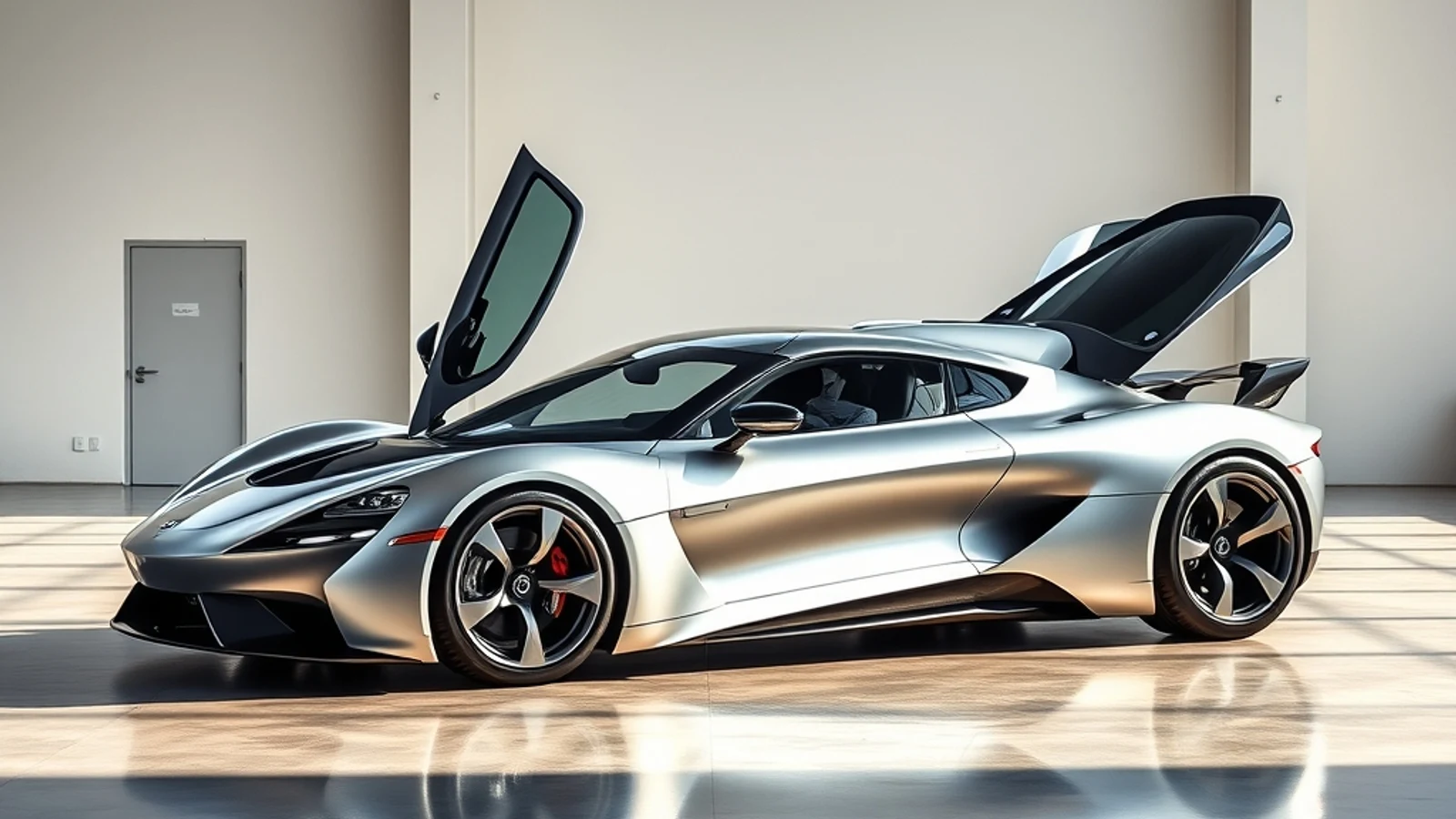
From Track to Concept
Automotive manufacturers often embark on high-level racing programs to refine engineering capabilities and bolster brand reputation. Opel engaged in this strategy to cultivate technical advancements that could be translated to its commercial road car lineup. By competing in the primarily Germany-based Deutsche Tourenwagen Masters series, the company sought to establish its name alongside industry leaders. The brand's commitment to this program was driven by the potential to coat its identity in a commanding aura of performance and respect. Source
Opel rejoined the DTM circuit in 2000, utilizing the Astra Coupe as the foundation for its racing contender. Diverging from the production model's four-cylinder engine, the race car featured a 4.0-liter naturally aspirated V8. Following a successful inaugural season where the team finished as a strong runner-up in both the drivers' and teams' championships, the manufacturer decided to celebrate its achievement by developing the Astra OPC X-Treme, a road-legal variant heavily based on the race machine. Source
The prototype was unveiled to the public at the 2001 Geneva Motor Show. It represented a significant departure from Opel’s reputation for producing affordable daily transportation. The OPC performance arm aimed to demonstrate its full engineering potential through this homologation special. The team successfully retained approximately 50% of the original DTM race car's components, focusing on making the vehicle usable and eligible for public road operation while maintaining its aggressive performance characteristics. Source
Technical Specifications and Design
Structural engineering for the Astra OPC X-Treme relied on the same tubular steel frame and carbon-reinforced plastic body used in the DTM contender. These materials were chosen to enhance chassis strength while minimizing overall weight. A striking design feature included the gullwing doors, which were adopted directly from the racing vehicle. Notably, these doors appeared on the Astra concept eight years before they were implemented on the Mercedes-AMG SLS in 2009. Source
The vehicle utilized a race-spec all-round double wishbone independent suspension system that was fully adjustable. This setup allowed for versatile performance tuning, enabling drivers to configure the car for track environments like the Nürburgring or soften it for road driving. Because the cockpit was designed with a focus on racing, the interior was minimalist. To increase civility, the cabin was lined with Alcantara, and a steering wheel from the Opel Speedster was fitted to include a driver-side airbag. Source
The braking system was revised from the extreme racing specification to a six-piston configuration utilizing carbon discs, designed to mitigate fade under heavy usage. Additionally, the exhaust system was updated with silencers to better meet road-legal requirements. These modifications reflected a balanced approach between raw racing capabilities and the constraints of public road usage, ensuring the machine could serve as a functional yet extreme demonstration of the OPC division's technical capabilities. Source
At the heart of the Astra OPC X-Treme sat a 4.0-liter naturally aspirated V8 derived from the Cadillac Northstar architecture. Positioned behind the front axle to achieve a centralized weight balance, the engine used dry sump lubrication to ensure consistent oil pressure during extreme cornering. The power unit was paired with a six-speed sequential manual transmission and a carbon clutch to optimize longevity. The engine was tuned specifically for the road, producing 444 horsepower and 390 lb-ft of peak torque. Source
Performance output for the road-going concept reflected a slightly different tune compared to the DTM racer, which produced 376 lb-ft of torque at 5,250 rpm. In the road-legal X-Treme, peak torque arrived at 4,800 rpm. The vehicle's lightweight construction enabled a 0–60 mph sprint time of 3.9 seconds. The following table provides a comparison of key engine and performance characteristics between the racing configuration and the intended road-going specification. Source
| Feature | DTM Racer | Road-Legal OPC X-Treme |
|---|---|---|
| Peak Torque | 376 lb-ft | 390 lb-ft |
| Torque Peak RPM | 5,250 rpm | 4,800 rpm |
| Acceleration 0-60 mph | N/A | 3.9 seconds |
Production Status and Legacy
Despite the project's ambitious engineering, it never proceeded to series production. The price for this homologation special was set at one million Deutschmarks, which converts to approximately $300,000. Although Opel reported that 10 blind orders were filed by interested buyers, the timeline for the project was cut short. The vehicle made its second major public appearance at the Internationale Automobil-Ausstellung in 2001, just as the global economy began to shift following the events of September 11. Source
Following the economic instability that emerged in late 2001, Opel placed the Astra OPC X-Treme project on indefinite hiatus. The car never returned to the development cycle, and the company eventually ceased production of the OPC performance line in 2022. The brand has since shifted its focus toward the GSe department, which prioritizes electrified performance. This transition is highlighted by the introduction of the Astra GSe, which combines a turbocharged inline-four engine with an electric motor to generate 220 hp. Source
While Opel continues to pursue performance, the Astra OPC X-Treme remains a unique historical chapter for the brand. The company has since expressed interest in returning to international racing through Formula E, which features electric single-seaters with high power outputs. However, a modern successor that directly replicates the V8 performance profile and the raw, racing-derived nature of the Astra OPC X-Treme has not been realized in the subsequent decades of production. Source

