
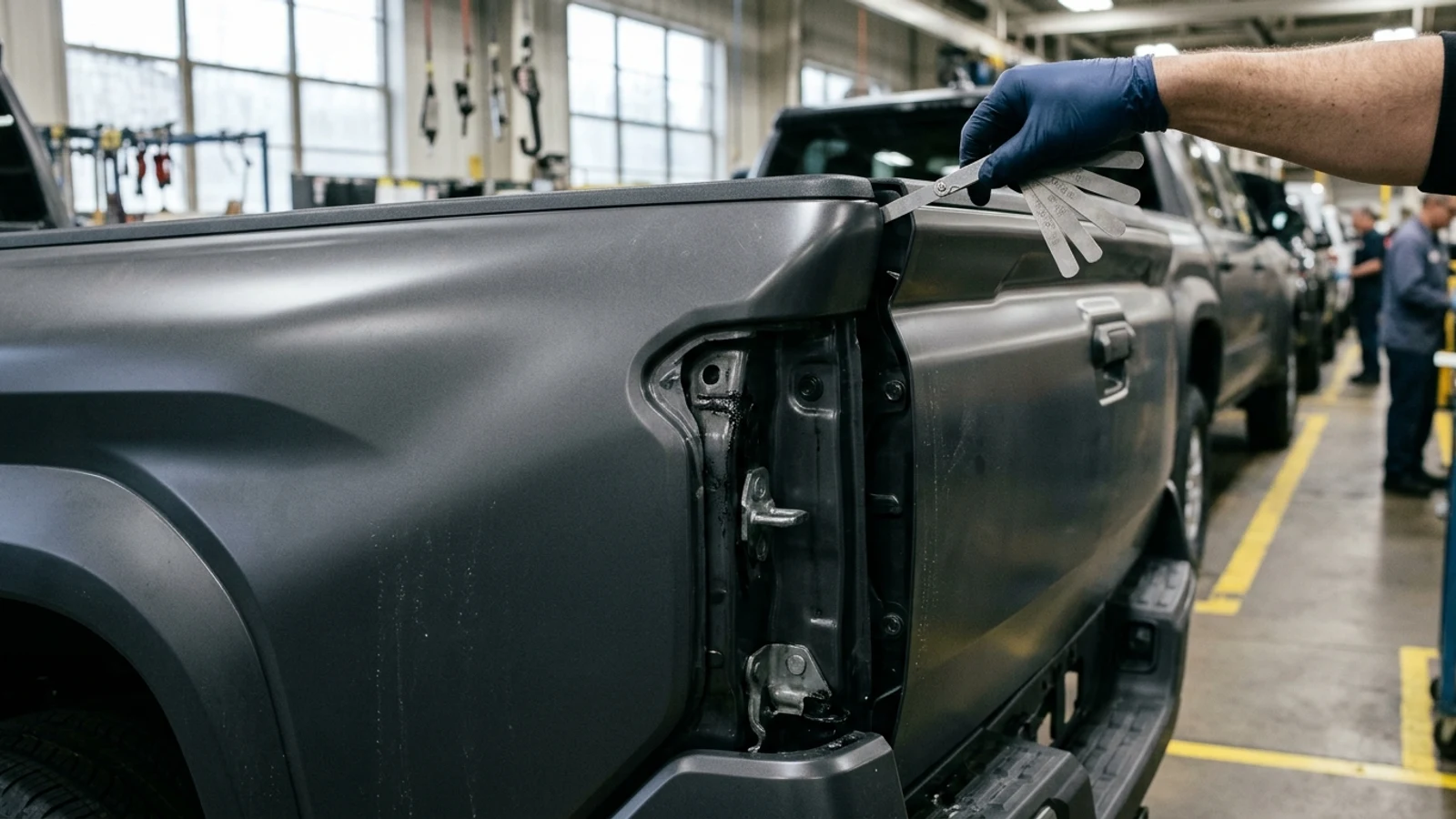
As of November 25, 2026, the collision repair facility Ed’s Collision 1, based in Maple Grove, Minnesota, has released consumer guidance regarding pickup truck tailgate misalignment. The advisory addresses how rear-end collisions often lead to subtle but significant damage that extends beyond visible surface dents. Even when the exterior of a truck appears relatively undamaged, impact forces can compromise the mechanical integrity of hinges, latches, and the surrounding truck bed, potentially hindering the safe transport of cargo. Source
Identifying Tailgate Damage and Mechanical Risks
The operational reliability of a pickup truck tailgate is dependent on the precise positioning of its supporting components and body structures. Any distortion in these areas can prevent the tailgate from fitting securely within the bed opening. According to the guidance, physical warning signs that owners should monitor include uneven gaps between the tailgate and the side panels of the truck bed, the tailgate sitting higher on one side, difficulty during opening or closing, or latches that fail to engage consistently. Source
These alignment issues are frequently observed following direct rear-end collisions or impacts that affect a rear corner of the vehicle. While superficial marks like scratches or dents are common, they do not necessarily reflect the extent of damage to internal operating hardware or the bed structure itself. An impact to a corner may shift adjacent body panels, leading to gaps or latch failures that remain present even if the tailgate panel itself appears to have suffered minimal damage during the incident. Source
Damage evaluation requires a thorough inspection of hinge mounting points, latch strikers, and the rear corners of the truck bed. If these structural points become distorted or displaced, mere adjustment of the tailgate is often insufficient to restore proper function. Effective repairs frequently necessitate the correction of these mounting areas, the replacement of damaged hardware, or the structural restoration of the surrounding bed. Procedures are dictated by individual manufacturer requirements, the truck's construction, and the specific impact location. Source
The complexity of modern pickup trucks introduces additional considerations for repair. Many contemporary models now integrate powered tailgate release mechanisms, electronic locking systems, and embedded cameras. A collision can impact these electronic components through direct contact, wiring damage, or the displacement of mounting structures. Consequently, verify that these systems function correctly after body repairs are completed. Simply ensuring the tailgate is physically aligned does not guarantee that the electrical or locking functions remain operational. Source
Repair Procedures and Winter Considerations
For the safety of transported equipment, owners should avoid relying on a tailgate that fails to close or latch securely until it has undergone a professional evaluation. Unsecured tailgates may pose risks when carrying supplies. In regions like Minnesota, the approach of winter presents added challenges, as snow, ice, moisture, and road deicing materials may infiltrate damaged surfaces where protective coatings have been compromised. Exposure to these elements can accelerate corrosion if the metal is left unprotected following an impact. Source
Repair cost estimates may shift as technicians disassemble the truck and discover previously hidden damage. An initial visual inspection might focus on the tailgate panel, but deeper issues such as bent hinge mounts or distorted bed structures often emerge only after disassembly. Providing supplemental repair documentation is essential to account for these findings, which in turn affects the necessary parts, specific repair operations, and the overall timeframe for restoring the vehicle to its proper condition. Source
Following the repair process, final quality inspections are necessary to ensure the tailgate functions as intended. This includes verifying the consistency of gaps, the smoothness of hinge movement, the security of latch engagement, and the integrity of the repaired mounting areas. For vehicles equipped with advanced electronic features, a functional test of these specific systems is also recommended. Not every issue requires extensive bed work or full replacement, as some cases may be resolved through manufacturer-approved adjustments. Source
The guidance emphasizes that for truck owners in regions experiencing harsh winter conditions, recognizing these warning signs before regular use is important. By addressing alignment issues and resistance in latch operation early, owners can prevent further damage caused by seasonal environmental factors. The service facility highlights that professional assessment is the standard for determining whether damage warrants simple adjustments or more comprehensive structural interventions, ensuring that the vehicle maintains its utility and safety for cargo management. Source
The process of verifying tailgate health generally follows a structured evaluation. The following table summarizes the primary indicators and factors contributing to the need for a professional inspection after a collision incident based on the provided technical guidance. Source
| Feature Type | Common Indicator of Potential Collision Damage | Source
| :--- | :--- | Source
| Body Alignment | Uneven gaps between tailgate and bed or uneven height | Source
| Hardware Operation | Increased resistance or inconsistent latch engagement | Source
| Electronic Systems | Failure of electronic locks, cameras, or powered releases | Source
| Environmental Integrity | Exposed metal surfaces or disturbed factory coatings | Source
By following these diagnostic checks, truck owners can establish the appropriate scope of repairs required for their specific vehicle models. Given the variety of manufacturer-specific procedures for modern electronic features, working with experienced collision centers helps ensure that safety and functionality are restored according to original factory specifications. This proactive approach to damage management is essential for preserving the vehicle's utility and ensuring the long-term integrity of the truck's cargo bed systems. Source

