
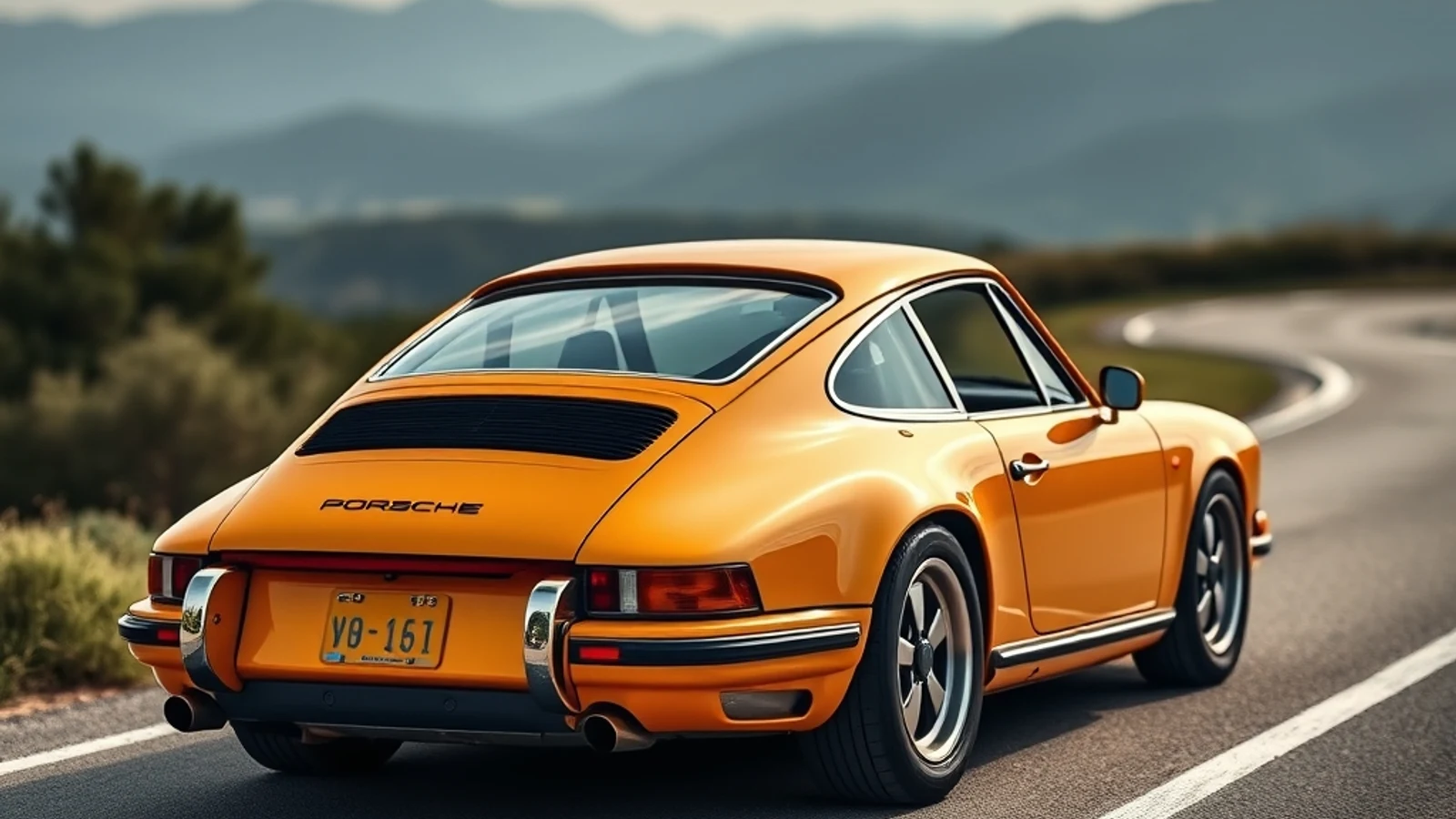
The Evolution of Rear-Engine Engineering
The Porsche 911 has remained a staple of the automotive sports car category since its initial market introduction in 1963. According to CarBuzz, the model is defined by the German manufacturer's commitment to a specific engine placement strategy that differs from the majority of performance automotive brands. While most manufacturers have gravitated toward front-mounted or mid-mounted engine positions to achieve a more centralized mass, Porsche has maintained a rear-mounted flat-six engine layout throughout the vehicle's production life. Source
The primary challenge identified by CarBuzz regarding this configuration involves the physics of weight distribution. In standard vehicle design, the engine represents the heaviest component. By placing this mass behind the rear axle, the vehicle acts like a pendulum under load, which can lead to snap oversteer situations. Furthermore, the lack of an engine over the front axle reduces the mass acting on the steering wheels, resulting in a light front-end feel and a tendency toward understeer when cornering at the limit. Source
Over more than six decades of production, Porsche has implemented a series of engineering solutions to mitigate the inherent handling challenges of the rear-engine layout. CarBuzz reports that the manufacturer has continuously refined the suspension geometry and settings. Additionally, the company has gradually extended the vehicle's wheelbase and widened the track width across successive generations. These modifications are intended to improve the natural stability of the chassis while retaining the traditional engine placement. Source
To achieve a more balanced handling profile, Porsche utilizes staggered tire widths, incorporating wider rear tires than those on the front axle. This approach enhances the mechanical grip available at the rear of the car. The flat-six boxer engine design itself also contributes to performance, as its low profile helps maintain a lower center of gravity for the vehicle. These design choices are meant to provide stability without abandoning the rear-engine architecture that characterizes the 911 series. Source
High-Tech Solutions for Mechanical Traction
Beyond physical design changes, modern iterations of the 911 feature advanced electronic and aerodynamic systems. CarBuzz notes that developers have utilized aerodynamic surfaces, including front splitters and rear spoilers, to generate downforce at speed. Additionally, active systems such as rear-wheel steering and active dampers allow the chassis to adjust in real-time. These systems function to maintain the intended trajectory of the vehicle by modifying suspension stiffness and rotation characteristics according to driving conditions. Source
Additional technical components include torque vectoring differentials and active engine mounts. The differential can distribute power to individual wheels to reduce understeer, while the active engine mounts use hydraulic fluid to stiffen connections between the drivetrain and the chassis. By reducing weight transfer during heavy loads, these mounts improve the vehicle's composure. These technologies represent a transition from purely mechanical solutions to integrated electronic systems designed to overcome traditional handling limitations. Source
While the rear-engine configuration introduces specific handling complexities, it also provides distinct advantages regarding traction and braking. Because the engine's mass is located directly over the driven rear wheels, the 911 is able to achieve superior mechanical traction during acceleration compared to many mid- or front-engine rivals. This traction allows for the application of higher power levels from the flat-six engine without the same risk of excessive wheelspin often encountered in other powertrain arrangements. Source
Braking performance is similarly influenced by the unique weight distribution. Under heavy braking, the weight of the car shifts toward the front axle. However, because the engine mass is positioned at the rear, the rear axle remains more effectively engaged with the road surface than it would be in a lighter rear-end setup. This contributes to improved stopping capabilities, as both axles can contribute more effectively to decelerating the car while maintaining consistent grip across all four tires. Source
The following table illustrates the technical specifications for the current base model as attributed by the source material, providing a snapshot of the hardware configuration associated with the modern 911 lineage. Source
| Feature | Specification |
|---|---|
| Model Year | 2027 |
| Trim | Base |
| Engine | 3L H-6 ICE |
| Transmission | PDK 8-speed |
| Drivetrain | Rear-Wheel Drive |
| Horsepower | 388 HP |
| Torque | 331 lb.-ft. |
In the context of the 2027 model year, the 911 Carrera retains the classic configuration while utilizing an 8-speed PDK transmission and a 3-liter flat-six engine. The data suggests that Porsche remains focused on refining its established engineering approach rather than shifting toward a mid-engine layout for the core 911 lineup. The manufacturer continues to prioritize the specific driving character and performance traits that are associated with the rear-engine philosophy that has defined the brand since its inception. Source
Ultimately, the development history of the 911 reflects a long-term strategy of iterative improvement. While physics dictates that a mid-engine layout may be more naturally balanced, Porsche utilizes its suite of engineering tricks to bridge the performance gap. Through high-tech dampers, aerodynamic management, and optimized weight distribution, the brand has maintained the viability of the rear-engine design, ensuring the 911 remains a competitive option within the global sports car market. Source

