
New Pickup Strategy and Competitive Outlook
Stellantis-owned brand Ram has officially confirmed its strategy to re-enter the midsize and compact pickup truck segments in the United States. During a recent strategic disclosure, current brand chief executive officer Matt VanDyke stated that two distinct models, the Dakota and the Rampage, are scheduled for a US market arrival in 2028. This move represents a shift for the manufacturer, which has focused exclusively on full-size and heavy-duty trucks in the American market since the discontinuation of the previous-generation Dakota in 2011. Source
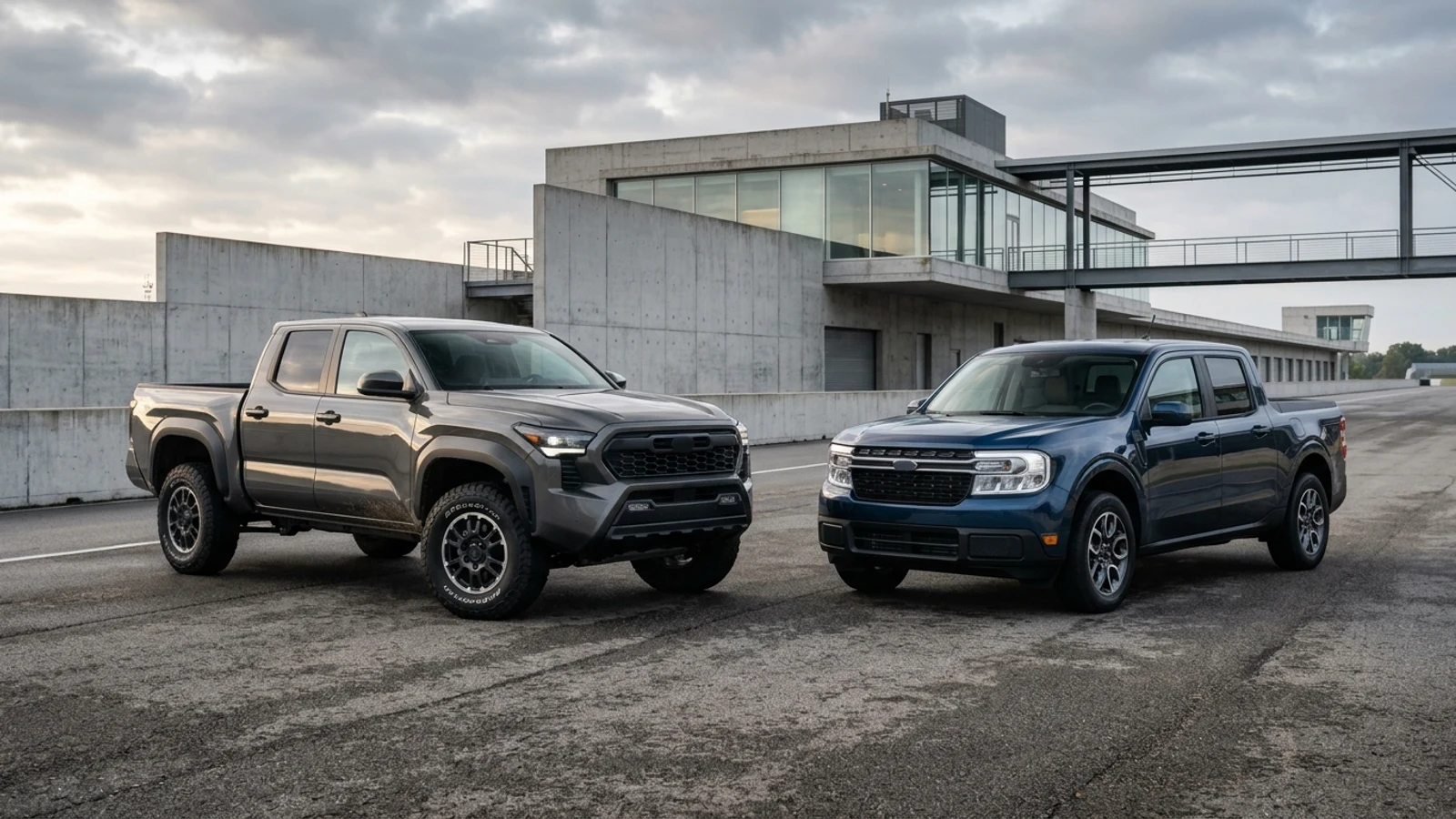
The compact Rampage is currently in production in Brazil for South American customers, and the company plans to tailor this existing vehicle for North American requirements. Market analysts and the company itself acknowledge the high sales volume of the Ford Maverick, which reached 135,147 units sold in the United States through October 2026. By contrast, the midsize Ford Ranger recorded 57,286 sales during the same ten-month period, while the Toyota Tacoma reached 237,128 units, illustrating the high barrier to entry for new midsize competitors. Source
Regarding the compact segment, VanDyke identified affordability as the critical driver for success and intends for the Rampage to compete directly with the Ford Maverick. While the Rampage is expected to serve retail customers as the primary demographic, the brand also anticipates potential interest from fleet operators and small businesses. Unlike some previous commercial van efforts, such as the ProMaster City which shared components with Fiat models, the company emphasizes that the Rampage will be positioned distinctly as a consumer-focused compact pickup truck. Source
The Rampage utilizes a Small Wide 4x4 LWB unibody platform, which also supports several other Stellantis vehicles including the previous-generation Jeep Compass, the Alfa Romeo Tonale, and the Dodge Hornet. Given this shared architecture, automotive analysts suggest that adapting the vehicle for US regulatory and consumer preferences may be relatively straightforward compared to an entirely new model development. While technical specifications for the US-bound version have not been finalized, the South American model currently offers 2.0-liter and 2.2-liter four-cylinder powerplants. Source
Technical Specifications and Market Positioning
For the midsize segment, the returning Dakota will utilize a body-on-frame architecture, diverging from the unibody construction of the smaller Rampage. Although exact engine configurations remain unconfirmed, industry reports suggest the platform may be related to the Jeep Gladiator, which is produced in Toledo, Ohio. This configuration could potentially accommodate a 3.6-liter Pentastar V6 engine. Design and product leadership have indicated that the Dakota architecture provides flexibility for future high-performance variants and specialized off-road trims to compete with established segment leaders. Source
Ram leadership has suggested that the Dakota will enable the brand to develop performance-oriented variants reminiscent of historical sport truck models. The company aims to position the Dakota against established performance-focused midsize competitors, such as the Ford Ranger Raptor, the Toyota Tacoma TRD Pro, and the Chevrolet Colorado ZR2. By developing these specialized trims, the manufacturer hopes to establish a performance identity that differentiates the new Dakota from standard volume-selling grades in a highly competitive midsize market. Source
The following table outlines key performance and sales comparisons and project details based on the provided information. Source
| Metric | Data | Source Reference |
|---|---|---|
| 2028 Market Target | US Market Launch | CarBuzz, Car and Driver |
| Rampage Platform | Small Wide 4x4 LWB | autoevolution |
| Dakota Platform | Body-on-Frame | Torquecafe |
| 2026 Maverick Sales (Jan-Oct) | 135,147 | ClubAlfa.it |
| 2026 Tacoma Sales (Jan-Oct) | 237,128 | autoevolution |
Market competition in the compact sector has shifted with the discontinuation of the Hyundai Santa Cruz, which previously served as a primary competitor to the Ford Maverick. The entry of the Rampage into this space is expected to provide consumers with an additional option from a traditional truck brand. While Ford and Toyota currently dominate their respective segments, the addition of two new models from Ram suggests an increase in overall segment crowding and potential leverage for buyers as manufacturers compete for similar consumer profiles. Source
Price sensitivity is expected to remain a decisive factor in the success of the Rampage in the compact pickup segment. For context, the Ford Maverick saw its MSRP shift from $19,995 for the 2022 model year to $28,145 for the 2027 model year. The company has not yet provided official pricing, trim levels, or final engine specifications for the US-bound versions of either truck. Consumers should anticipate that these details will be communicated closer to the scheduled launch window as the marketing campaign rolls out. Source
The internal development pressure on the brand is significant, as the launch represents the first time the company has expanded its lineup below full-size in the US market for several decades. Leadership has emphasized that despite the commercial aspects of the pickup business, the vast majority of sales for these new models are projected to be retail transactions. The company plans to manage these expectations through carefully timed marketing leads as the 2028 launch date approaches. Source
Potential interest in the Dakota extends to international markets, including Australia, where the Ram 1500 has previously achieved popularity. International product and sales heads have noted that a market exists for a mid-size pickup in Australia, though regional specific versions currently remain separate from the US-focused projects. The brand continues to evaluate dealer network readiness and factory-build requirements for future international expansion of its midsize product range. Source

