
Software Advancements and Regulatory Progress
Tesla has officially commenced the rollout of Full Self-Driving version 15, introducing a new feature dubbed Reality View. This software update represents a significant architectural overhaul, which according to company disclosures, is designed to enhance safety during critical driving interventions. The update is currently being distributed to select vehicle owners following an initial release phase that began on November 21, 2026. This version of the software aims to provide more sophisticated visual representations of the surrounding environment compared to previous 3D rendering methods used in earlier iterations of the driver assistance suite. Source
Central to Reality View is a 1-billion-parameter generative AI model that operates locally within the vehicle hardware. By utilizing Tesla's Universal Vision Encoder, the system interprets camera input to generate real-time visualizations at 36 frames per second. The technology uses a diffusion model that progressively denoises representations of the road, vehicles, and surroundings. According to company technical discussions, this process is optimized to run on just half of one TRIP accelerator present in the AI4 hardware, effectively separating the generative visualization from the primary network responsible for driving decisions. Source
While Tesla reports that Reality View enhances the visual coherence of the driver's interface, the manufacturer emphasizes that it remains a supervised driver-assistance system. The software does not provide full autonomy, and drivers are required to maintain active oversight of the vehicle at all times. Tesla claims that v15 offers a 25-fold improvement in the rate of critical interventions compared to prior software, attributing this performance gain to an upgraded vision encoder trained on extensive video data. However, the company has not provided specific mileage benchmarks to verify these performance metrics independently. Source
In the European market, Tesla reached a regulatory milestone on November 20, 2026, when the Italian Transport Ministry approved the company's Assisted Driving system. Italy is now the 12th European Union country to grant approval for the technology. This follows earlier type approval granted by the Netherlands in April 2026. The Italian regulatory move does not constitute bloc-wide authorization, as the European Union still requires a collective vote on pending applications for widespread recognition. Tesla has indicated that the rollout in Italy will commence following a necessary software update for eligible vehicles. Source
Cybercab Deployment and Operational Strategy
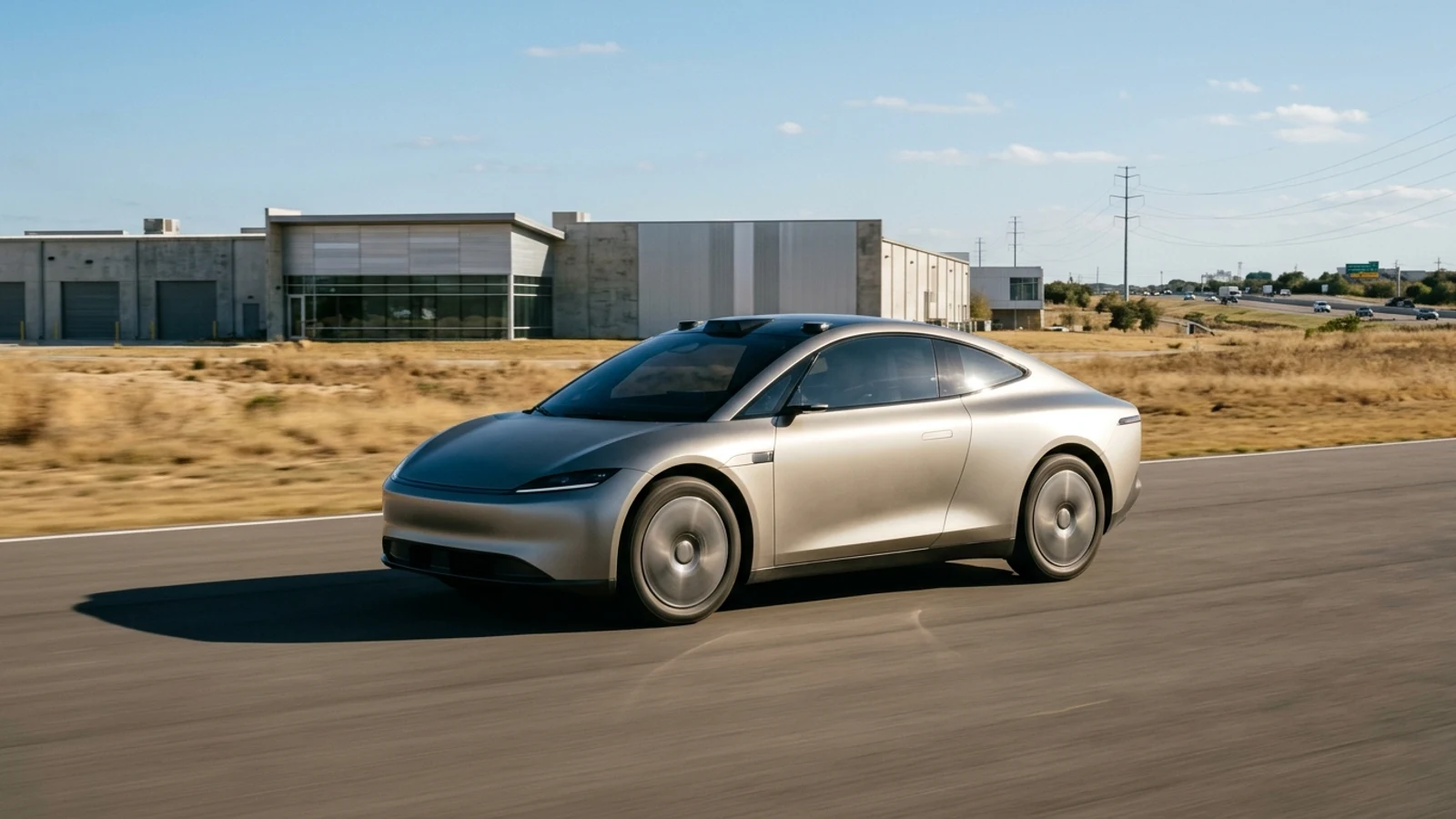
As Tesla expands its software-based services, the company is also refining its physical vehicle footprint. The Cybercab, an all-electric and fully autonomous vehicle, has entered its initial phase of customer availability. Invitations to purchase the two-seat vehicle have been issued to select individuals near Austin, Texas. Furthermore, Tesla has commenced public, driverless ride operations using the Cybercab in Dallas, marking the second city in the United States to host this specific vehicle program. The manufacturer intends to increase the scale of these operations, with customer deliveries for the Cybercab planned to ramp up throughout December 2026. Source
Financial and operational analysis suggests that the Cybercab launch is currently more symbolic and promotional than an immediate high-volume financial contributor. The vehicles are reported to be priced at $29,990, but users require a $299 monthly subscription to access services. Because the Cybercab lacks manual controls like steering wheels and pedals, it is restricted to geofenced areas approved for robotaxi operations. CEO Elon Musk has stated that the company is transitioning toward a transportation-as-a-service model, where the majority of Cybercab operations will be Tesla-owned rather than individual customer-owned. Source
Data collection for the robotaxi program is ongoing, with Tesla claiming double-digit weekly growth in unsupervised driving miles. This data gathering is intended to support the broader rollout of the autonomous service anticipated for 2027. While market observers have speculated on the long-term impact of this trajectory—including potential implications for the company's broader AI integration strategies—management remains focused on the validation and release of subsequent software iterations, such as those following the current v15 rollout. Source
Complementing its vehicle and software updates, Tesla Energy has highlighted the function of Storm Watch mode for its Powerwall users. This feature is designed to increase grid resilience for individual households during severe weather events. When the system detects official weather watches or warnings—such as those for hurricanes, tornadoes, or ice storms—it automatically overrides user-set charging schedules. The Powerwall pushes to charge to 100% capacity as rapidly as possible, ensuring maximum stored energy is available should the primary power grid experience an outage. Source
The Storm Watch feature functions as an automatic overlay, regardless of whether a user has configured their Powerwall for Backup-Only, Self-Powered, or Time-Based Control modes. Owners are notified via push notifications on the Tesla mobile application when the system activates or deactivates. For users who wish to intervene manually, the system allows the Powerwall to be set to Backup-Only mode with a reserve of 100%, effectively mimicking the automatic trigger. The company advises that maintaining the feature in an enabled state is the recommended default for most users. Source

