
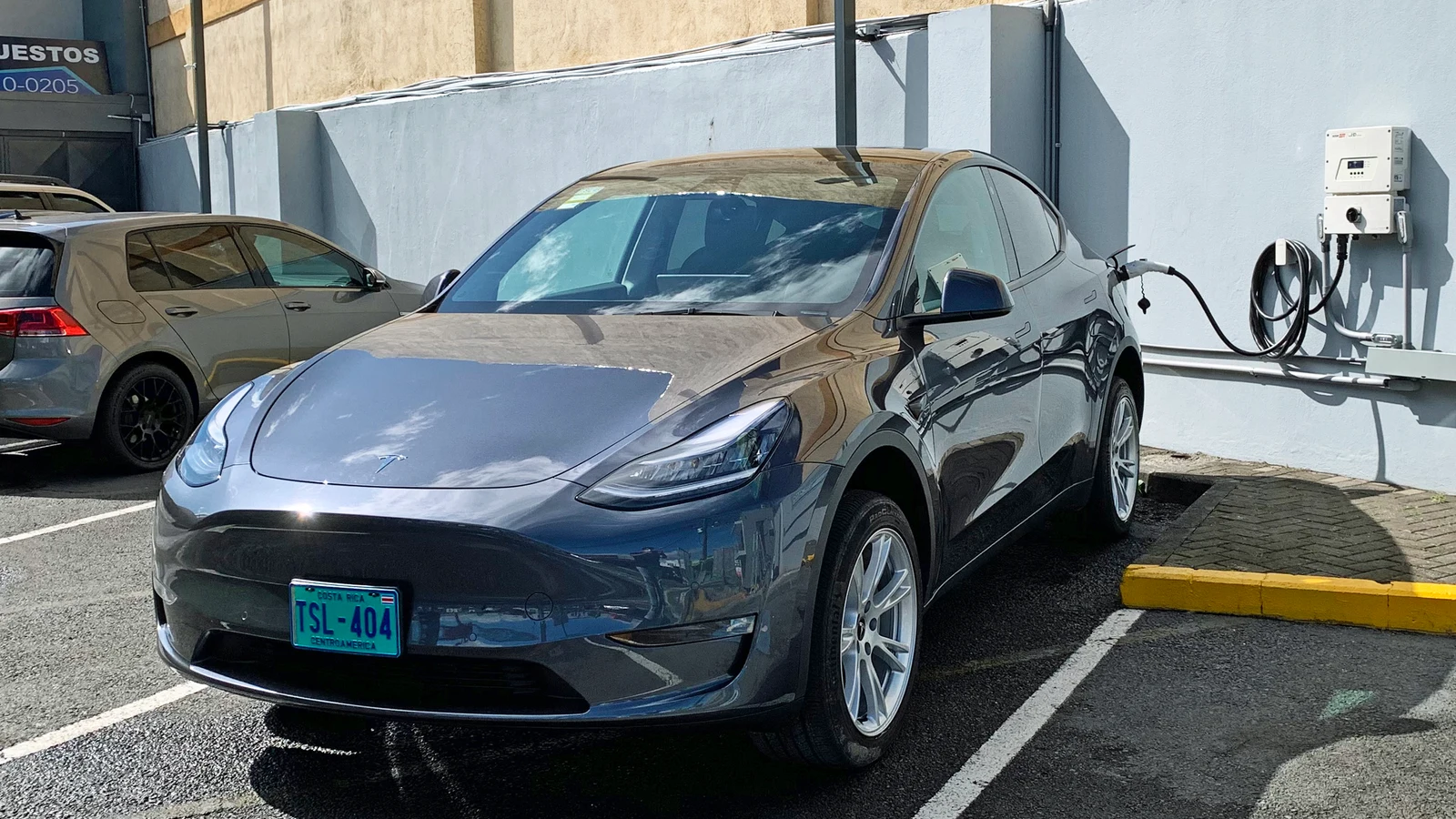
The recently released Tesla Full Self-Driving version 15 suite introduced a prominent new feature known as Reality View. Following its launch on Saturday, users reported experiencing noticeable input lag when attempting to change perspectives by dragging on the screen. Teslarati, in its review of the software, noted that the visualization rendering appears to be a fraction of a second behind what a driver observes through the windshield, indicating a lack of responsiveness compared to previous Tesla driver visualization iterations. Source
Tesla CEO Elon Musk has acknowledged the latency issues in FSD v15, attributing the current performance to compute constraints. To resolve this, Tesla plans to implement a software-based optimization that does not require any new vehicle hardware. The company intends to interleave newer Universal Vision Encoder features along the layers of the diffusion transformer. By injecting more recent encoder data deeper into the denoising process instead of relying on earlier features, the model is expected to converge on visualizations faster. Source
According to estimates provided by Musk, this upcoming software update is expected to reduce the latency by approximately 35 percent. Reality View operates via a 1-billion-parameter diffusion model that functions independently from the primary vehicle driving stack. It processes UVE features at 18 Hz, drawing on the same sequence used by the larger 3-billion-parameter model responsible for outputting driving actions. The system generates short video chunks consisting of eight images at 36 frames per second at UI-screen resolution. Source
In separate corporate developments involving Tesla and SpaceXAI partners, Jensen Huang has officially returned to NVIDIA as President, CEO, and Board Director as of November 23, 2026. Musk expressed support for the decision, stating that the previous mistake had been corrected. Huang's reinstatement follows his removal from these roles amid allegations regarding his conduct and illegal chip sales to China. NVIDIA has since established a National Security and Export Control Committee to manage trade compliance and risks. Source
The return of Huang is viewed as a positive development for Tesla and SpaceXAI, both of which rely heavily on NVIDIA products for their AI and SI efforts. The collaboration remains significant as SpaceXAI continues to build its AI compute infrastructure exclusively on NVIDIA hardware. The restoration of supply and delivery certainty is identified by observers as a primary near-term benefit, allowing Tesla and SpaceXAI to maintain their current technical trajectory while developing their own proprietary chip initiatives. Source
Despite the positive outlook on the partnership, potential risks remain. Ongoing investigations into Huang persist, and any residual scrutiny related to national security could still impact government-related projects or export capabilities for the involved parties. As the situation evolves, stakeholders continue to monitor how NVIDIA's new committee and the appointment of a future Chief Compliance Officer will address international trade concerns while balancing the high-demand compute needs of partners like Tesla and SpaceXAI. Source
Technical Specifications and Corporate Updates
The following table outlines the technical specifications for the Reality View diffusion model as reported by Teslarati: Source
Parameter: Diffusion model size. Value: Roughly 1-billion-parameter. Parameter: Processing frequency. Value: 18 Hz. Parameter: Output frames. Value: 36 frames per second. Parameter: Compute utilization. Value: Half of one TRIP accelerator engine. Parameter: Estimated latency reduction. Value: 35 percent. Source
Beyond the current software suite, Tesla continues to explore future hardware and integration paths. Musk has stated that future vehicle models could potentially include built-in Starlink connectivity by 2027. This potential integration, alongside ongoing adjustments to the AI4.5 computing architecture, represents the company's broader effort to expand its ecosystem and connectivity features across its fleet, maintaining the emphasis on proprietary hardware and software convergence. Source
The integration of Starlink and hardware upgrades remains subject to Tesla's internal production timelines and regulatory approvals. While these announcements point toward significant hardware expansion in the coming year, the company has not yet provided specific vehicle-by-vehicle rollout schedules. The combination of these connectivity advancements and the iterative refinement of Full Self-Driving vision models underscores the current engineering focus on optimizing existing platforms while preparing for future infrastructure capabilities. Source
The reliance on NVIDIA for AI compute remains a central pillar for Tesla and SpaceXAI. With the current supply chain certainty restored following the leadership change, the focus shifts back to meeting the substantial compute demands required for advanced driving visualization and real-time processing. This environment requires a continuous calibration of vision encoders and denoising cycles to ensure that the user interface keeps pace with the vehicle's actual movement through the environment. Source
Strategic Partnerships and Future Outlook
Looking ahead, the collaboration between Musk's enterprises and NVIDIA appears to be secured by shared strategic interests. As investigations into past export compliance continue, both companies are likely to prioritize transparency and compliance efforts to mitigate future disruptions. This long-term alignment is expected to facilitate the deployment of more complex models like those driving the Reality View system, provided that the underlying compute performance continues to meet the requirements of Tesla's expanding AI features. Source

