
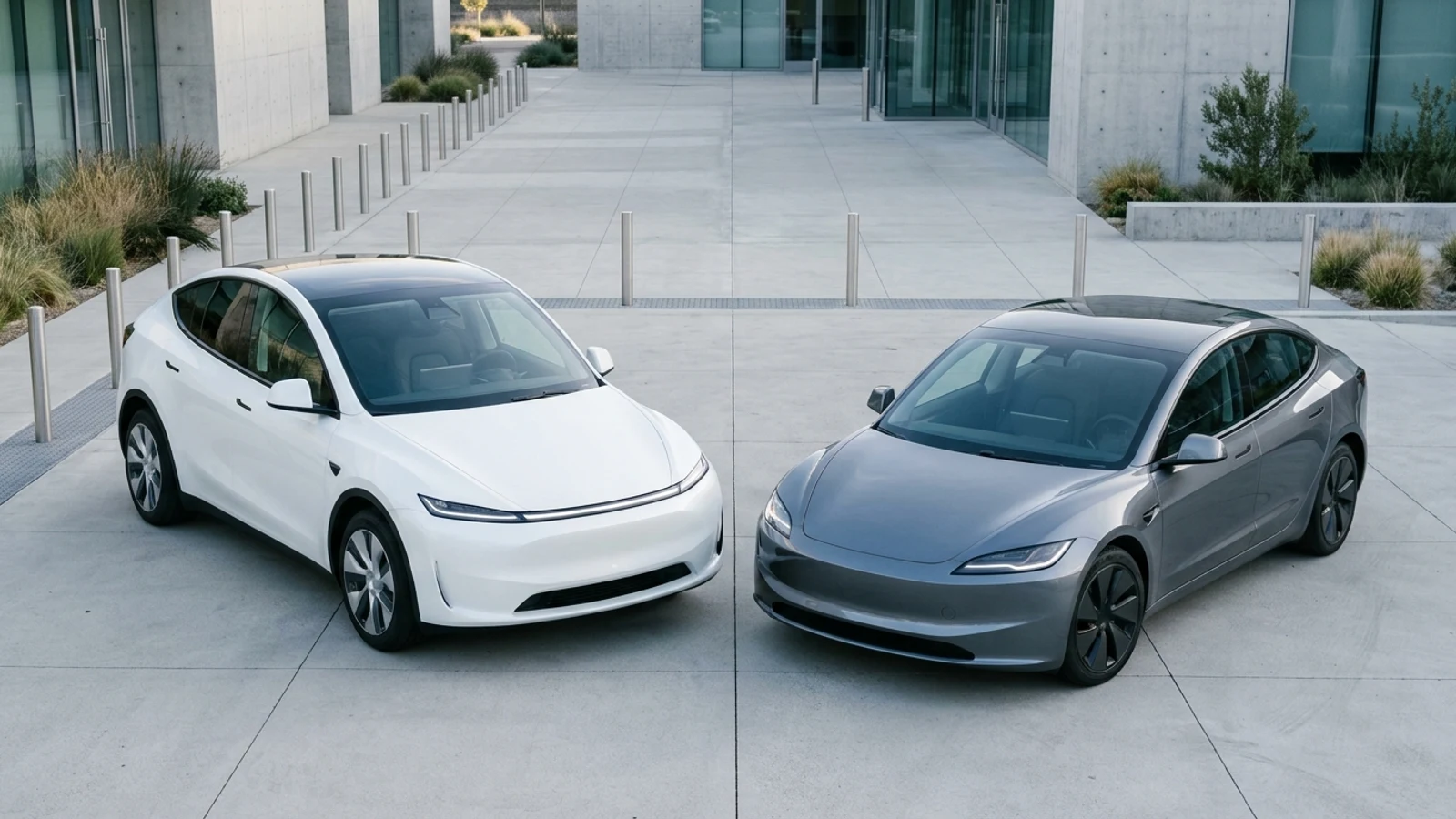
As of February 4, 2026, Tesla has officially updated the entry-level configurations for its Model 3 sedan and Model Y SUV. The automaker has removed the previous Standard nomenclature from these entry-level trims, leaving them without specific branding. These vehicles were designed to serve as lower-cost options within the broader Tesla lineup. The base Model 3 sedan now carries a starting price of $38,630, while the base rear-wheel-drive Model Y SUV is priced at $41,630. Source
Alongside the base rear-wheel-drive version of the Model Y, Tesla has introduced a new entry-level Model Y AWD option. This variant is priced at $43,630. While the base models achieve lower entry costs, they do involve specific compromises in performance and hardware compared to higher-spec configurations. Both the entry-level Model 3 and Model Y are exclusively rear-wheel drive, with the exception of the newly added AWD Model Y trim, and feature reduced range and acceleration capabilities compared to the Premium variants. Source
The entry-level Model 3 is equipped with a 69.5-kWh battery pack, which allows for a driving range of 321 miles on a single charge. This is 42 miles less than the capacity of the Model 3 Premium RWD, which utilizes an 80-kWh battery. In terms of acceleration, the base Model 3 is capable of reaching 60 mph in 5.8 seconds. This performance is slower than the 4.9-second time associated with the Premium RWD model, although both versions share the same 286 horsepower output and 125 mph top speed. Source
Similar to the sedan, the entry-level Model Y RWD experiences a reduction in performance. It offers the same 321-mile range as the base Model 3, which is 36 miles less than the Y Premium RWD trim. Acceleration for the entry-level Model Y is rated at 6.8 seconds to reach 60 mph. This represents a 1.4-second increase over the Y Premium model. The entry-level Y is powered by a 300-horsepower motor and is limited to a top speed of 125 mph. Source
The recently added base Model Y AWD variant provides a distinct trade-off in performance. While it retains the same battery pack as the RWD configuration, it offers a reduced range of 294 miles. However, this model improves upon the RWD version’s acceleration, with Tesla claiming a 4.6-second time to reach 60 mph. Regarding charging capabilities, the basic 3 and Y trims are restricted to a peak charging rate of 225 kW, compared to the 250 kW limit found on higher-spec vehicles within the lineup. Source
For properties seeking to host infrastructure, Tesla released a Supercharger for Business configurator in April 2026. This tool provides cost estimates for third-party site development. A standard eight-stall V4 Supercharger site carries an estimated total investment of approximately $940,000, which includes $500,000 for hardware. The configurator uses fleet data to estimate localized utility costs, retail charging prices, and daily utilization rates to calculate potential payback periods for business owners. Source
The business program mandates that property owners cover the cost of hardware and installation, while Tesla remains the operator of the network stalls. A specific fee of $0.10 per kWh is charged by Tesla for revenue-generating sites to cover operations, software, and payment processing. Analysis indicates that utilization estimates in the configurator vary by location, ranging from 302 to 453 kWh per post per day, which directly influences the expected return on investment for the host. Source
In the United Kingdom, the Model Y remains a distinct offering with a price of £44,990. The vehicle is equipped with a 63-kWh battery and is limited to rear-wheel drive. Official tests indicate a WLTP range spanning from 309 to 383 miles. The Model Y supports a maximum DC charge speed of 175 kW, which allows for a 20-80% charge in approximately 25 minutes. In terms of power, the Model Y produces 295 bhp in its standard configuration, while higher outputs reach 299 bhp. Source
As Tesla continues to refine its software and hardware, CEO Elon Musk confirmed on November 22, 2026, that the next-generation AI5 computer chip will be reserved exclusively for the Optimus robot program. Current Tesla vehicle models will continue to use the AI4 computer platform, which Musk stated provides sufficient computational power for unsupervised self-driving capabilities at levels exceeding human performance. This represents a strategic shift in the allocation of high-performance AI hardware within the company. Source
Tesla is also testing prototype units of its Cybercab robotaxi, with vehicles identified in Los Angeles. Observations of these prototypes in late 2026 show them equipped with steering yokes for testing, though the final production models are expected to lack steering wheels and pedals. These prototypes feature a NACS charge port located low on the vehicle body, designed for use with current Supercharger network stations during the development and validation phases before production launch. Source
The following table summarizes the specifications for the 2026 Model 3 and Model Y trim variants: Source
| Model Trim | 0-60 mph | Range | Starting Price |
|---|---|---|---|
| Model 3 RWD | 5.8s | 321 miles | $38,630 |
| Model Y RWD | 6.8s | 321 miles | $41,630 |
| Model Y AWD | 4.6s | 294 miles | $43,630 |

