
Refining Security and Notifications
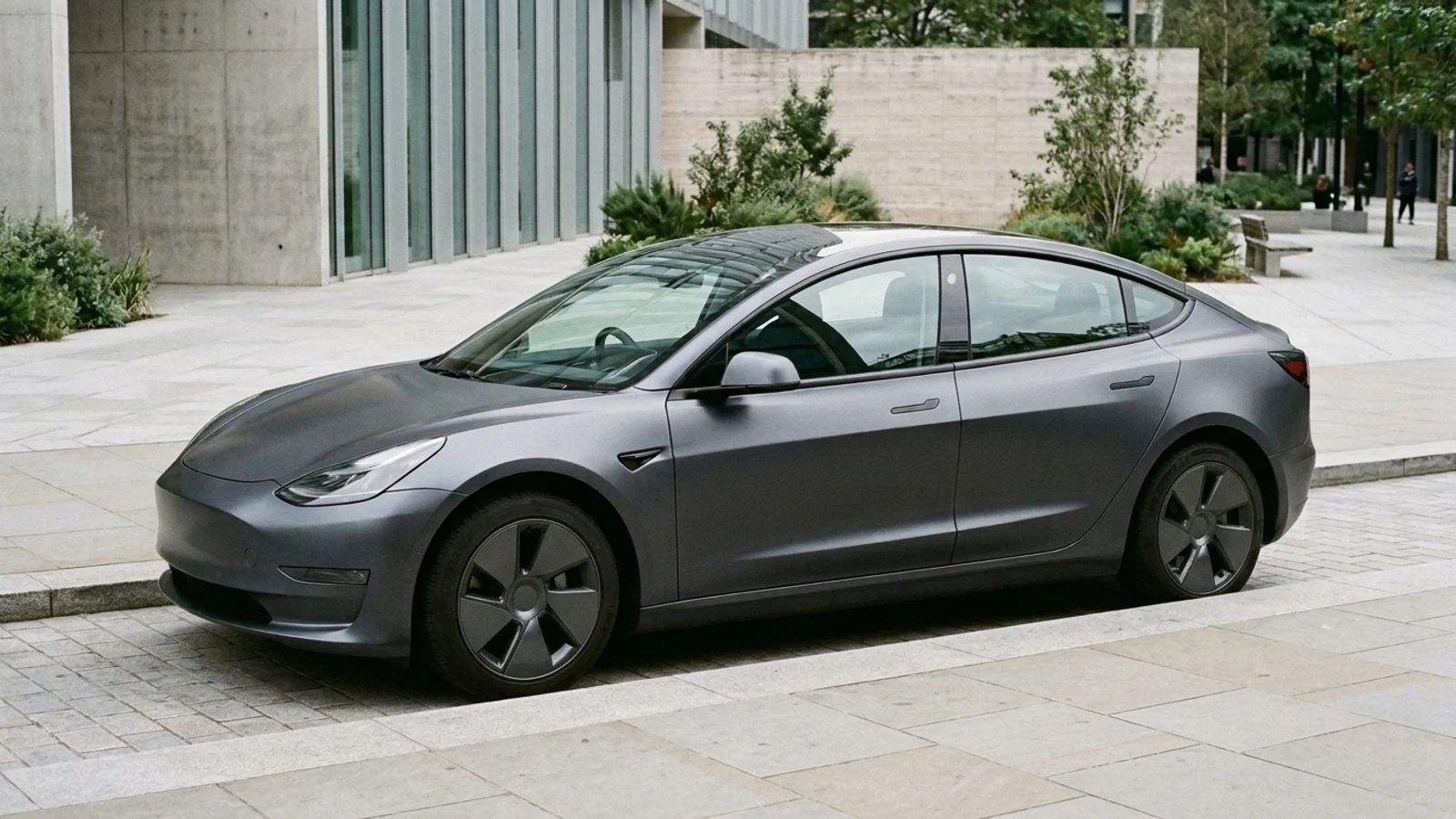
Tesla has introduced significant refinements to its Sentry Mode feature through the release of Software Update 2022.44.2. The update addresses long-standing user feedback regarding the sensitivity of the system's camera-based detection. Previously, the vehicle's eight external cameras would monitor the surroundings for movement and trigger persistent alarms or mobile app notifications, even when no credible threat existed. This frequency of alerts became particularly problematic for owners in high-traffic urban areas, such as busy metropolitan streets or crowded parking lots. Source
According to reporting by Teslarati and Not a Tesla App, the updated software allows owners to disable general camera-based detection for non-threatening activity. When this specific setting is toggled off, the Sentry Mode system transitions to a more targeted surveillance model. Instead of capturing every instance of a bystander walking near the car, the system will only alert the owner if a legitimate security breach occurs. These confirmed threat triggers include window breakage, the opening of a vehicle door, or the activation of the vehicle tilt sensor. Source
While this change aims to reduce the volume of unnecessary notifications sent to owners, it also carries a trade-off in broader event recording. By limiting the scope of triggers, potential instances of vandalism that do not involve forced entry may go unrecorded. The system is designed to balance the goal of minimizing nuisance alerts while maintaining the capability to document genuine criminal activity, such as break-ins or robbery attempts, where the system has historically succeeded in capturing high-quality facial imagery of perpetrators. Source
Enhanced Clip Management
In addition to modifying detection triggers, the 2022.44.2 update grants users greater authority over the Sentry Mode recording process. Specifically, owners can now manually adjust the duration of the video clips saved when a potential threat is detected. Previously, these clips could run for several minutes to ensure the entire incident was captured. With this update, owners can define the clip length through the vehicle's settings menu, providing more control over storage management and data review. Source
The implementation of these features aligns with the broader evolution of Tesla's in-vehicle software suite. While Sentry Mode continues to leverage the existing external camera array, the ability to tailor clip lengths ensures that users can optimize their data storage based on their specific parking security needs. This update provides a more customizable experience for owners who frequently deal with high-traffic environments, shifting the balance away from constant monitoring toward focused, actionable threat detection. Source
Looking toward hardware developments, Elon Musk addressed questions regarding the future of the company’s computing platforms on November 22, 2026. Musk clarified that the next-generation AI5 chip will be allocated exclusively for the Optimus humanoid robot project. He explicitly stated that Tesla’s current AI4 hardware computer remains sufficient for achieving superhuman driving capabilities. This confirmation follows prior discussions regarding the transition from the older Hardware 3 systems to the current AI4 architecture. Source
Regarding Hardware 3 owners, earlier commentary in the first quarter of 2026 indicated that those systems lack the capacity required for fully unsupervised self-driving. At that time, Tesla suggested an upgrade plan might be developed for owners wishing to bolster their vehicle capabilities. However, recent communications emphasize that AI4 is the standard platform for all new vehicles, and the development focus remains on maximizing the performance of this existing silicon for autonomous driving tasks. Source
To provide context on the hardware and software evolution, the following table details the intended applications of Tesla's various computing platforms as described by company leadership. Source
| Computing Platform | Primary Application | Status/Strategy |
|---|---|---|
| Hardware 3 | Driver Assistance | Legacy; no unsupervised FSD |
| AI4 (HW4) | Full Self-Driving | Standard in new vehicles |
| AI5 | Optimus Robot | Exclusive for robotics/training |
The focus on AI4 is also central to the performance of the Full Self-Driving version 15 suite, which includes the Reality View feature. Following its release on November 21, 2026, some users reported latency in the visualization rendering. In response, Musk noted that the high compute demand is currently managed by interleaving newer features into the diffusion transformer layers. This optimization is expected to reduce visualization latency by approximately 35 percent without requiring physical hardware changes. Source
This software-based approach to improving the Reality View feature reflects the company's commitment to enhancing existing user interfaces through algorithmic refinements. By utilizing the existing AI4 accelerators to run the roughly 1-billion-parameter diffusion model, the system aims to close the gap between real-time environmental input and the screen-based visualization. The process includes processing Universal Vision Encoder features at an 18 Hz frame rate across multiple cycles to maintain visual consistency. Source
In summary, owners of Tesla vehicles have received updates that enhance both security customization and visualization performance. The Sentry Mode update offers a direct response to nuisance alerts, while the ongoing refinements to FSD v15 demonstrate a reliance on software optimization for existing AI4 systems. These changes define a period where the focus is on maximizing the potential of current hardware installations, ensuring that both security and driving features remain aligned with vehicle capabilities. Source

