
Military Training Resumption Plans
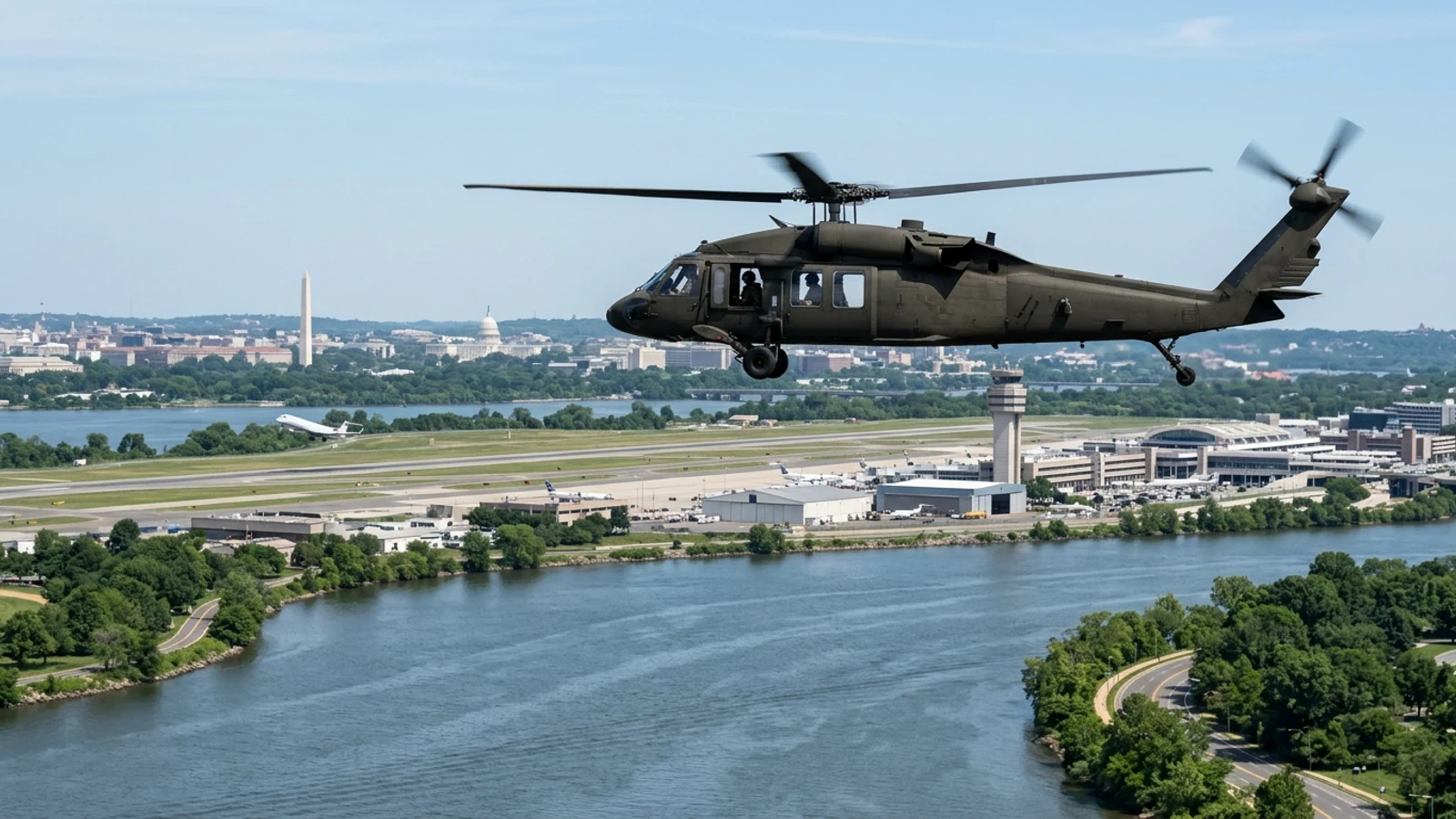
The United States Army has expressed intentions to resume helicopter training flights in the vicinity of Ronald Reagan Washington National Airport (DCA), with potential operations starting as early as the first or second week of December 2026. This move follows a period of suspension that began in May 2025 after a Black Hawk helicopter incident caused commercial airliners to abort their landings. The proposed restart remains in the planning phase, as the service has yet to file a formal request for authorization with federal regulators. Source
Military officials have conducted briefings with congressional staff regarding these plans. Despite these internal discussions, the Federal Aviation Administration (FAA) confirmed as of late November 2026 that it had not received a formal application to authorize these military flights. Agency spokespeople maintained that specific approval is a prerequisite for any training activities to proceed in the restricted airspace surrounding the airport, which serves as a major hub for commercial traffic. Source
The proposed timeline arrives less than two years after a catastrophic event on January 29, 2025. On that date, an Army Sikorsky UH-60 Black Hawk and a PSA Airlines regional jet operating as American Airlines Flight 5342 experienced a midair collision over the Potomac River. The tragedy resulted in the loss of all 67 passengers and crew members aboard the involved aircraft, triggering widespread scrutiny of airspace management and safety protocols in the metropolitan corridor. Source
Following the January 2025 collision, the National Transportation Safety Board (NTSB) launched a comprehensive investigation, identifying multiple vulnerabilities rather than a single point of failure. Findings highlighted issues such as tight vertical margins near river transit routes, significant radio frequency congestion, and discrepancies in altimeter instrumentation. Additionally, bright urban lighting conditions were cited as a factor complicating visual detection, particularly for crews operating in nocturnal environments. Source
The NTSB concluded that the deployment of an Automatic Dependent Surveillance-Broadcast (ADS-B) system could have provided the airliner crew with a critical alert approximately 59 seconds before the impact occurred. Consequently, the agency issued 50 safety recommendations, eight of which were specifically directed at the Army. These included mandates for improved cockpit traffic information displays and the implementation of audible alerts to assist flight crews in maintaining separation in congested airspace. Source
Regulatory actions taken after the crash significantly altered the aviation landscape around Reagan National. Effective January 23, 2026, interim final rule 2026-01226 permanently closed Helicopter Route 4 between Hains Point and the Wilson Bridge. Current regulations explicitly exclude routine training, proficiency evaluations, and non-essential personnel transport from the list of permitted operations within the restricted zone up to 1,500 feet mean sea level. Source
Exceptions to these strict access rules are currently limited to specific scenarios, including lifesaving medical missions, law enforcement responses to ongoing criminal activity, national defense operations, and the transport of high-level government officials. Military leaders seeking to resume routine pilot currency training would require a formal regulatory modification or a specific authorized pathway from the FAA to overcome the current prohibition established by the January 2026 rule. Source
Opposition to the proposed flight resumption is mounting among stakeholders. Virginia Congressman Don Beyer, who represents the district surrounding the airport, stated he spoke with Army officials and urged them to delay the restart. Family members of the victims from the 2025 collision have also voiced strong concerns, expressing that the Army has provided little information regarding its specific safety concepts or the implementation status of outstanding NTSB recommendations. Source
Safety and Regulatory Challenges
NTSB Chairwoman Jennifer Homendy has emphasized the urgency of addressing the 47 open safety recommendations stemming from the initial investigation. She noted that while investigators were briefed on the Army's intent to begin an initial phase of return, the NTSB has not yet reviewed the specific concept of operations. The board maintains that full implementation of the safety mandate is essential before reintroducing military helicopter traffic into the dense airspace near the airport. Source
Legislation remains a primary point of contention in the ongoing debate over airspace sharing. While the Rotor Operations Transparency and Oversight Reform Act passed the Senate in late 2025, it stalled in the House. Lawmakers are currently negotiating a framework to reconcile competing bills, with key discussions centering on how mandates for ADS-B technology apply to military assets. Senate Commerce Chair Ted Cruz has expressed a desire to finalize this legislation before the close of 2026. Source
Senator Maria Cantwell, representing Washington state, has publicly stated that current plans to restart training routes are fundamentally misguided without prior correction of existing air safety failures. She advocates for the mandatory implementation of ADS-B technology across both civilian and military aircraft to prevent future collisions. This position reflects a broader skepticism from safety advocates regarding whether the airspace can safely support the simultaneous transit of commercial and military traffic. Source
The following table summarizes the status of key safety and operational factors identified in the wake of the 2025 collision and the subsequent regulatory response. Source

