
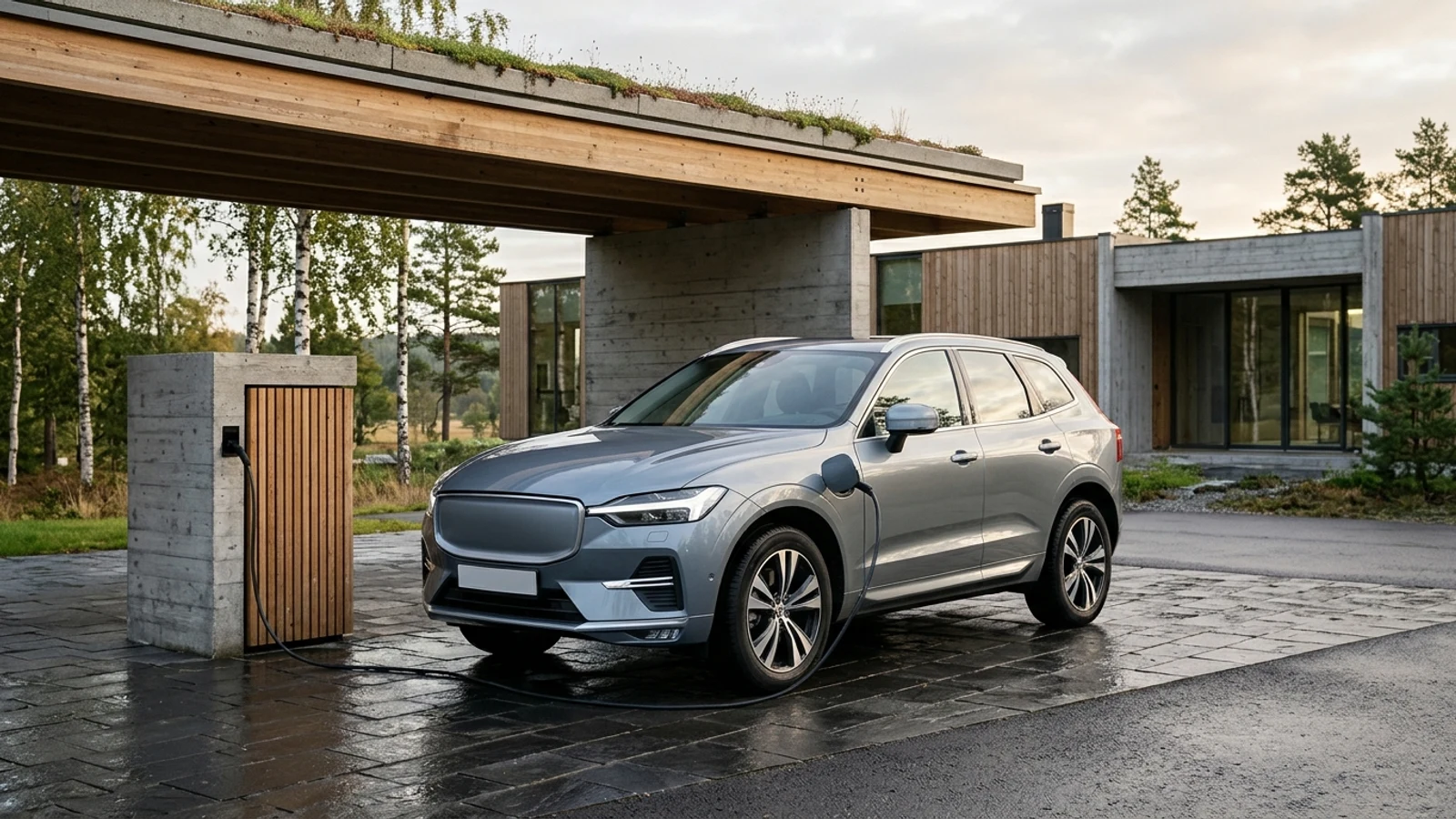
Volvo has introduced a significant technological update to its second-generation XC90 SUV for the 2028 model year. Despite the vehicle being more than a decade into its lifecycle, the automaker has revised the powertrain to feature a new long-range plug-in hybrid system. This update follows a previous facelift in 2025 and focuses on enhancing battery performance rather than altering the exterior aesthetic. The model remains a core component of Volvo's lineup, adapting its existing platform to support increased electrification requirements. Source
The core of this upgrade involves a transition from the previous 19 kWh battery pack, located in the transmission tunnel, to a new 41.2 kWh unit installed beneath the rear seats. This shift effectively doubles the all-electric driving range, increasing it from 32 miles to 73 miles on a single charge. Volvo reports that this enhancement positions the XC90 among the longest-range plug-in hybrid SUVs available in the U.S. market, serving as a transitional vehicle for owners not yet ready for a full battery-electric model. Source
Engineering changes also extend to the onboard charging system, which has been upgraded from 3.6 kW to 7.2 kW capacity. This enhancement allows the significantly larger battery to reach a full charge in under six hours when using a standard Level 2 home charger. For users with a 16-amp home charging setup, the duration decreases to four hours. Despite these advancements, the manufacturer has confirmed that the vehicle does not support DC fast-charging capabilities, maintaining the standard PHEV charging architecture. Source
Performance output remains a notable characteristic of the XC90 T8. The powertrain features a turbocharged 2.0-liter four-cylinder engine alongside an electric traction motor. Combined, the system produces 455 horsepower and 560 lb-ft of torque. While the internal combustion engine is rated at 247 horsepower, the rear-mounted electric motor has been improved to output 174 horsepower, up from 143 horsepower in the previous model. The vehicle utilizes an eight-speed automatic transmission to manage power delivery to all four wheels. Source
The interior of the 2028 XC90 continues to emphasize Swedish design principles, retaining high-quality materials including leather, wood, and textiles. The cabin is equipped with an 11.2-inch touchscreen utilizing Google Built-in infotainment software. While the front two rows provide ample space, the third row remains limited and is primarily intended for children. The flexible seating configuration allows for a 23-cubic-foot cargo volume when the third row is folded, maintaining the model's utility as a family-focused luxury vehicle. Source
Volvo's market research indicates that the median round-trip commute for its U.S. customers is 22 miles, with the vast majority of owners traveling fewer than 30 miles daily. This usage pattern suggests that the extended 73-mile electric range is sufficient for most daily errands, allowing owners to rely primarily on residential electricity for their routine driving needs. The company anticipates that this extended capability will reduce engine wear and lower long-term maintenance costs for drivers who consistently charge the vehicle. Source
Technical Specification Comparison
The following table outlines the key technical specifications comparing the previous XC90 PHEV powertrain to the new 2028 long-range configuration. These figures highlight the significant increases in battery capacity and electric-only driving range across the updated T8 model range. All values are derived from manufacturer-claimed performance benchmarks during the 2028 product rollout phase. Source
The vehicle is slated to arrive at U.S. dealerships in early 2027. While official pricing has not been released by Volvo, industry analysts project a starting point in the low to mid $80,000 range. This positioning makes the XC90 one of the few full-sized premium SUVs that offers a plug-in hybrid option. The manufacturer views this update as a strategic bridge for consumers who require the flexibility of a gasoline engine for longer road trips but desire the benefits of electric operation for daily commutes. Source
Drivers of the 2028 model will find that the vehicle retains a composed, balanced handling characteristic. The lower center of gravity provided by the floor-mounted battery pack assists in cornering stability, despite the vehicle's size. While the power output is substantial, the driving experience is characterized as comfortable and refined rather than sporty. The integration of a one-pedal driving mode remains available, providing a tactile experience that bridges the gap between conventional hybrids and fully electric vehicles. Source
Safety and convenience features are consistent with the previous model year, including the signature Thor's Hammer headlight design and the comprehensive suite of driver-assist technologies. The inclusion of the 11.9-inch infotainment screen ensures that the vehicle remains current in terms of digital connectivity. By focusing on these iterative improvements rather than a complete redesign, Volvo aims to sustain the XC90's market relevance until its next-generation platform is ready to fully supersede this long-running SUV architecture. Source
The total range of the vehicle, when combining a full tank of gasoline and a fully charged battery, reaches 560 miles. This figure confirms that the XC90 is prepared for long-distance travel, negating the range anxiety often associated with pure electric vehicles. For owners capable of installing Level 2 home charging equipment, the daily utility of the PHEV setup aligns with the average consumption habits noted by Volvo's internal data, supporting a shift toward minimal gasoline usage for typical urban and suburban driving. Source
Volvo's commitment to the PHEV segment remains strong, even as the broader industry debates the pace of electric adoption. By improving the battery density and range, the manufacturer provides a practical solution for customers who prioritize electrification but are not yet prepared to transition fully to an all-electric vehicle. This strategy ensures that the XC90 brand identity remains associated with both sustainability and premium utility, satisfying the needs of a diverse consumer base while balancing evolving fuel economy standards. Source

