
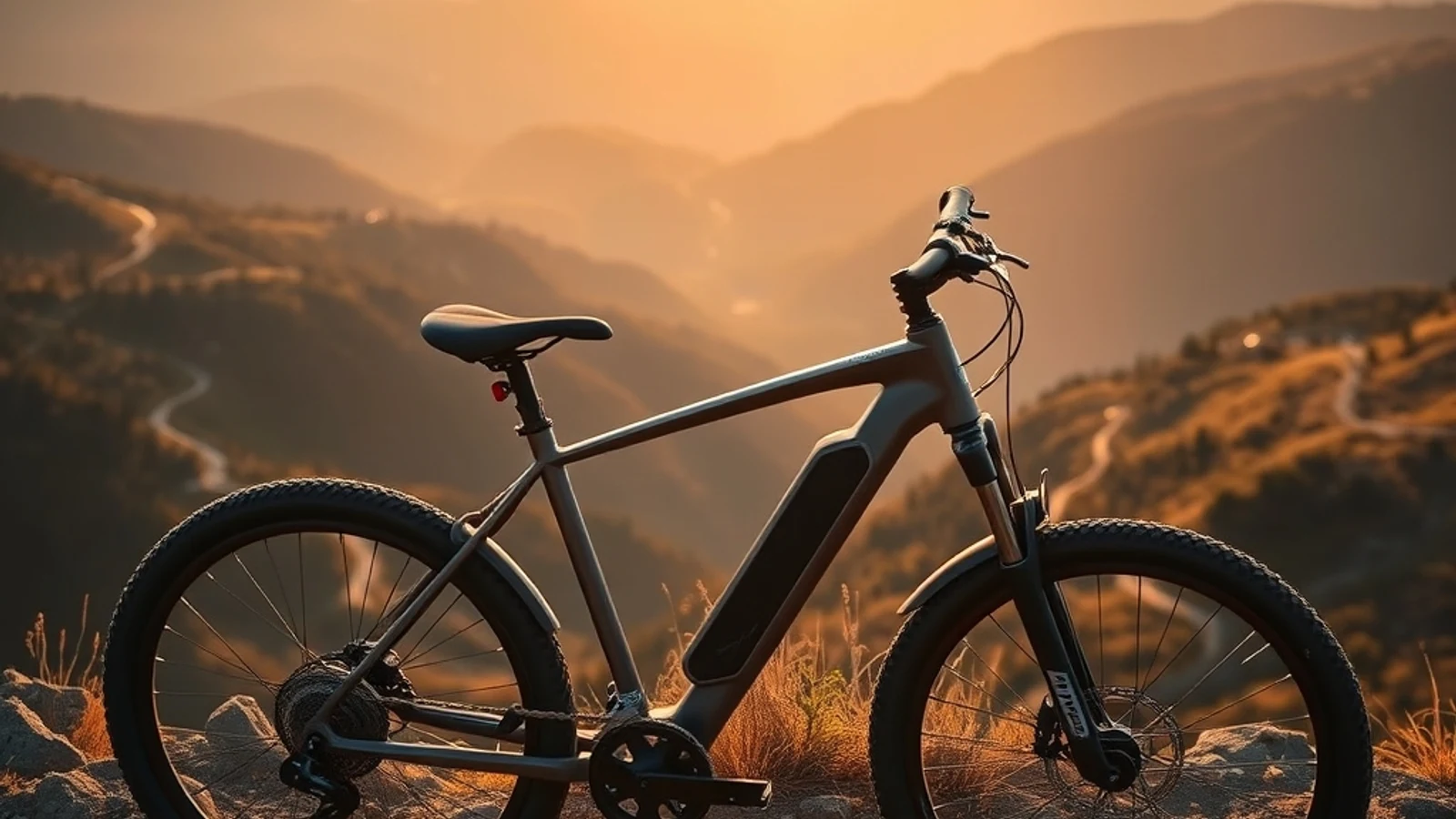
The global electric bicycle industry experienced two notable developments on November 24, 2026, as two technology-driven companies revealed starkly different operational trajectories. Amflow, a brand rooted in the same engineering ecosystem that developed DJI’s Avinox drive system, officially launched its new commuter e-bike series. Conversely, the high-tech startup ALSO, which spun out of the electric vehicle manufacturer Rivian, declared a pause on deliveries for its flagship TM-B electric bicycle because of ongoing software issues. Source
Both companies entered the market with the shared objective of producing premium, high-performance electric bicycles that utilize sophisticated technology to enhance the riding experience. They share deep engineering foundations incubated by established technology firms, and both have developed proprietary systems designed to differentiate their products. However, the outcomes of their recent launches illustrate the contrast between iterative innovation and ambitious, fundamental product re-engineering in the real-world consumer market. Source
Amflow’s market entry strategy is built upon the technological advancements of its parent company, DJI. The drone manufacturer leveraged its years of expertise in developing compact, high-power electric motors, advanced battery management systems, and electronic controllers. These components formed the basis of the Avinox drive system. This drivetrain gained market share from established industry leaders like Bosch by providing high power-to-weight ratios and sophisticated software that creates a natural feeling for pedal assistance. Source
The success of the Avinox system in the electric mountain bike sector established a technical reputation that Amflow has now extended to its new UE commuter series. This series integrates the existing Avinox drive unit into a more practical urban form factor. A key differentiator in Amflow's design philosophy is the decision to maintain the fundamental mechanics of a bicycle. The system relies on conventional pedaling and a mechanical drivetrain, which is augmented rather than replaced by the electric motor. Source
By focusing on refining the traditional bicycle experience rather than reinventing the entire mechanical structure, Amflow has received positive early feedback for its commuter offerings. While long-term reliability remains to be proven, the company’s ability to successfully transition its technology from specialized mountain biking to general commuter use marks a significant milestone in its product lifecycle. Amflow's approach favors evolutionary improvements to proven bicycle architectures over wholesale replacement of mechanical systems. Source
In comparison, the ALSO startup from Rivian adopted a significantly more radical design path for its TM-B electric bicycle. Drawing on Rivian’s experience with complex electric vehicle drivetrains and software, ALSO chose to move away from conventional bicycle architecture entirely. The TM-B features a pedal-by-wire system. In this configuration, the pedals are not mechanically linked to the rear wheel. Instead, human pedaling input is converted into electrical data and power that instructs the motor. Source
This pedal-by-wire architecture allows for the removal of traditional mechanical components like chains, derailleurs, and belts. While this design offers the potential for highly customizable pedal responses and the ability to design unconventional e-bike geometries, it also introduces substantial complexity. Replacing mechanical reliability with software-dependent electronic systems creates new failure points. Such systems often require manufacturer-specific diagnostics and support, limiting the ability of riders to perform basic maintenance using standard tools. Source
The challenges currently facing ALSO demonstrate the difficulties inherent in bringing software-defined hardware to market. The company recently confirmed the suspension of deliveries for the TM-B. This action follows prior delivery delays and documented instances where customers were required to return bikes for repairs. Furthermore, previous reports noted unusual energy management behavior, specifically regarding charging and discharging cycles, which raised questions about the integration of the bike’s proprietary electronic systems. Source
The following table summarizes the different design philosophies adopted by the two companies as reported by Electrek. Source
| Feature | Amflow Approach | ALSO Approach |
|---|---|---|
| Drivetrain Type | Mechanical with motor assist | Pedal-by-wire (generator-based) |
| Design Philosophy | Evolutionary (Refining standard bikes) | Revolutionary (Re-thinking architecture) |
| Current Status | Commuter series launched | Deliveries paused due to software issues |
There remains a possibility that the issues with the TM-B can be addressed through software updates for existing units and those in transit. However, the current situation highlights the pressure on startups to achieve seamless integration between hardware and software. Amflow’s success suggests that established drivetrain systems, when tested in demanding conditions, provide a more stable foundation for product expansion compared to launching entirely new architectures without extensive real-world validation of all interdependent systems. Source
The industry will continue to observe both companies as they progress. While Amflow expands its lineup after establishing a foothold in the mountain bike market, ALSO faces the task of resolving its initial product rollout issues. Both firms remain significant as they test the limits of technology in personal mobility, though their respective paths emphasize the fundamental difference between developing impressive prototypes and executing a consistent, dependable consumer product experience on a large scale. Source

