
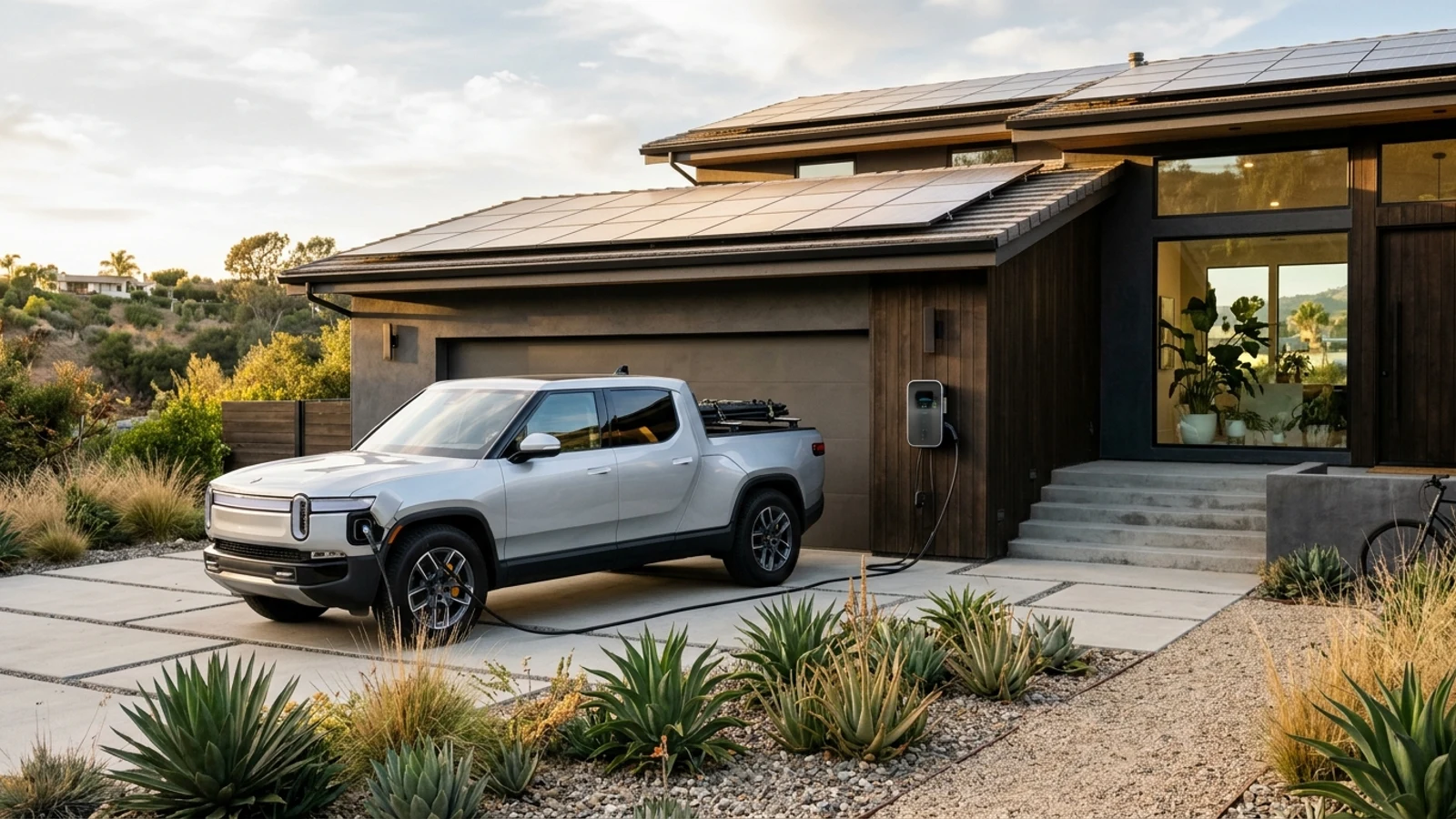
General Motors and its specialized division, GM Energy, have initiated a new vehicle-to-grid (V2G) pilot program in cooperation with WeaveGrid. This program is specifically designed for select customers served by Southern California Edison (SCE). By participating, these customers gain the capability to export electrical power from their electric vehicle batteries back into the regional grid. The core objective of this pilot is to test the practical operation and technical feasibility of bidirectional energy flow for residential users. Source
Incentive Structure and Participation
The program creates a mechanism for eligible EV drivers to receive financial assistance for necessary hardware and home installation. Electrek reports that qualifying participants may access more than $16,000 in total support. This funding is distributed through the California Energy Commission to facilitate the adoption of V2H systems. Specifically, customers enrolled in the Emergency Load Reduction Program managed by SCE can receive up to $8,000 for a GM Energy V2H system, along with up to $8,099 for eligible installation costs. Source
The financial incentives provided to participants are designed to offset the costs of integrating bidirectional charging capabilities into the home environment. The total support package accounts for both the purchase of specialized V2H hardware and the labor and materials required to connect the system to the electrical grid. By leveraging these funds, GM aims to lower the barrier to entry for EV owners interested in providing demand-response support to the grid when utility demand increases, effectively turning their vehicles into assets. Source
The financial assistance breakdown for qualifying participants is as follows: | Incentive Category | Maximum Amount | | :--- | :--- | | GM Energy V2H System | $8,000 | | Eligible Installation Costs | $8,099 | | Total Potential Support | $16,099 | Source
Eligible vehicles for the pilot include various electric models from the Chevrolet, GMC, and Cadillac brands. These owners are encouraged to utilize time-of-use energy management tools provided by the manufacturers to shift their charging to off-peak periods, thereby taking advantage of lower electricity rates. Additionally, participants may receive direct compensation for contributing to eligible demand-response events, though the specific financial outcomes remain variable based on the user's rate plan, overall electricity consumption, and level of active participation. Source
Technical Infrastructure and Standardization
The technical framework of this pilot highlights a shift toward AC bidirectional charging technology. Traditionally, EV batteries store power in direct current (DC), requiring a wall-mounted inverter to convert that power for home or grid use. By utilizing the vehicle's onboard inverter to perform the conversion process, AC bidirectional charging systems may allow for less complex and more affordable home installations. This method simplifies the equipment needed on the garage wall compared to current home backup systems which rely on external inverters. Source
GM is formally participating in the CharIN North American AC V2G task force to facilitate the adoption of these technologies. This task force is concentrated on establishing consistent technical standards, creating protocols for equipment certification, and clarifying the requirements for utility approval. The ongoing collaboration is designed to ensure that V2G hardware can interface reliably with existing grid infrastructure, helping to refine the regulatory pathway for widespread deployment of bidirectional charging systems across different utility networks. Source
The Southern California pilot serves as a diagnostic tool for GM and its partners to evaluate the complete user journey. This includes the initial sign-up process, the physical installation of hardware, the necessary coordination with utility providers for formal approval, and the final execution of energy exports. By observing these stages in a real-world setting, GM intends to identify areas for operational improvement, ensuring that the transition to V2G functionality remains accessible and manageable for the average electric vehicle owner. Source
Beyond this specific pilot, GM maintains managed charging programs through 13 other utility providers, although the structure of these programs varies significantly by region. The company's expansion into V2G, as evidenced by the current Southern California initiatives, represents a broader strategy to integrate vehicle storage into grid demand management. The lessons learned from the SCE program are expected to inform future utility programs, particularly as AC bidirectional charging becomes a more standard feature across GM's various electric vehicle lineups. Source
While the pilot program aims to streamline V2G deployment, it operates within the framework of existing regional utility rules. Participants must ensure their local site conditions and electrical panels meet the necessary certification standards for connection. The role of partners like WeaveGrid is central to managing the software-based orchestration of these energy exports, ensuring that grid demands are met without compromising the vehicle owner's ability to maintain a sufficient battery state-of-charge for daily transportation needs. Source

