
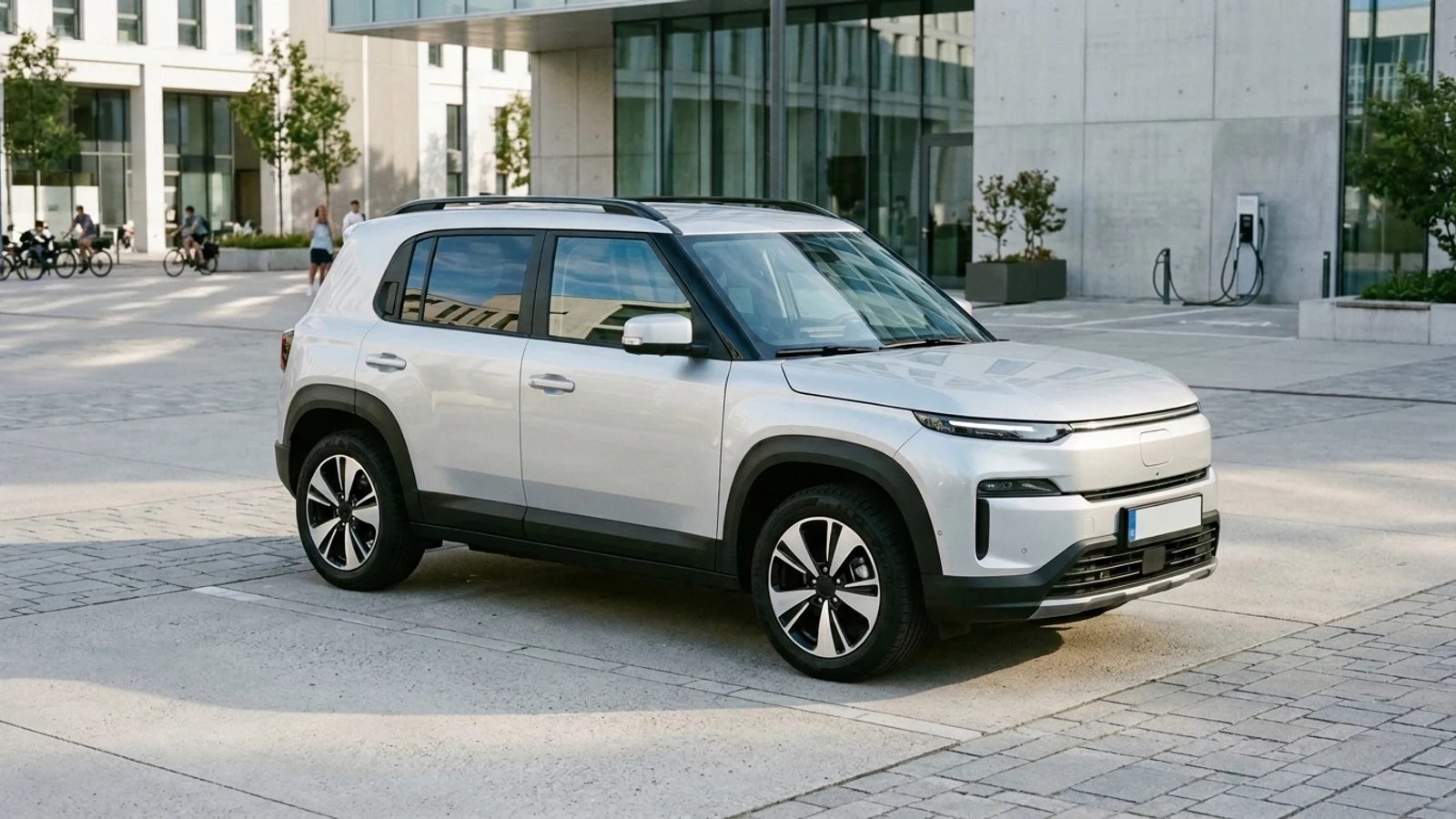
Suzuki has officially announced the revival of the Ignis nameplate, transforming the brand's formerly gas-powered crossover into a compact, fully electric vehicle. This model represents a strategic shift as the company’s first compact electric car designed specifically for global markets. The vehicle aims to bridge the gap between traditional combustion engine cars and new electric mobility by utilizing the concept of 'Easy to Switch.' This design philosophy targets drivers seeking an accessible entry into the electric vehicle space. Source
The new Ignis EV is built on the dedicated 'HEARTECT-e' platform, the same architecture underpinning the e Sky, which debuted in Japan last month. While the Ignis draws clear inspiration from the smaller Japanese kei car, it is dimensionally distinct to better suit international roads. The vehicle measures 3,570 mm in length, 1,565 mm in width, and 1,635 mm in height, with a 2,460 mm wheelbase. This footprint positions it as a direct competitor to existing entry-level electric cars. Source
Powering the compact EV is a front-mounted single electric motor that produces 67 kW (90 hp) and 133 Nm (98 lb-ft) of torque. Energy is stored in a 26 kWh lithium iron phosphate (LFP) battery pack, a chemistry chosen for its cost-effectiveness. The battery is reportedly sourced from the battery unit of BYD. These technical foundations suggest that the vehicle is primarily engineered for urban commuting rather than extended long-distance travel, prioritizing efficiency within dense traffic environments. Source
To ensure reliable performance in diverse global conditions, Suzuki has subjected the vehicle to extensive public road testing. The manufacturer focused on tuning the chassis and power delivery to accommodate the varying road surfaces found across Europe and other international markets. The platform design also provides a high level of maneuverability. One notable feature is its turning circle of 4.5 meters, which provides a significant advantage over many traditional hatchbacks that typically require twice that distance to turn. Source
The interior layout maximizes the available cabin space through a four-seat configuration. Drivers are provided with a wide infotainment display, and the dashboard design incorporates aesthetic elements inspired by traditional pottery, according to the manufacturer. For safety and efficiency, the car features a regenerative braking system that captures energy during deceleration to recharge the battery. Suzuki claims that the braking sensation is tuned to feel intuitive for drivers transitioning from traditional gasoline vehicles. Source
While official certification is pending, the vehicle's efficiency is supported by a lightweight construction. With a kerb weight of approximately 1,080 kg, the Ignis is among the lighter full-sized electric cars expected for global release. This low mass, combined with the compact 26 kWh battery, leads to projections of a driving range slightly under 322 km. While specific performance and efficiency figures have yet to be finalized or formally certified, the model aims for high competitiveness. Source
The market entry is scheduled for summer 2027, when the vehicle will enter a segment occupied by established contenders such as the Renault Twingo E-Tech, the BYD Dolphin Surf, and the Honda Super-N. Price lists for the new Ignis have not yet been disclosed by the company. The previous generation of the Ignis—a petrol-powered crossover—was produced across two generations from 2000 until 2026, marking a significant heritage for the badge that this EV will now represent. Source
As of the latest announcement, the company has not confirmed plans for an India launch, nor has it disclosed manufacturing locations for the new global model. The Indian market recently saw the discontinuation of the petrol Ignis hatchback earlier this year. Potential positioning in such a market would face competition from models like the Tata Tiago EV and the MG Comet, provided the pricing and localized manufacturing strategies align with the cost-sensitive nature of the segment. Source
The strategic reliance on LFP battery technology highlights the manufacturer's goal to keep the price accessible for a global audience. The company has a long history of success in the small car sector, reporting sales of over 90 million A-segment vehicles since the launch of the Suzulight in 1955. This legacy informs the development of the new Ignis, which aims to leverage Suzuki’s long-standing expertise in small vehicle engineering to gain a foothold in the electric transition. Source
Global market competition is intense as automakers introduce entry-level options to capture a broader consumer base. Comparisons to existing models are illustrative of the current pricing expectations in this category. The e Sky in Japan serves as a reference point for pricing, having debuted with a starting price of 2,120,000 yen (approximately 13,500 USD). However, international pricing for the global Ignis EV remains subject to local taxes, import duties, and market-specific distribution costs. Source
Technical and Market Specifications
The following table summarizes the key specifications and dimensions reported for the Ignis EV compared to known segments. Source
While the manufacturer has established a clear roadmap for the summer 2027 global launch, consumers should note that several details regarding charging speeds, exact range certification, and local market availability remain pending. The company has explicitly stated that further documentation regarding finalized performance and pricing will be released as the launch window approaches. Prospective buyers in the US are currently excluded from the anticipated rollout, as the company has not indicated plans for that market. Source

