
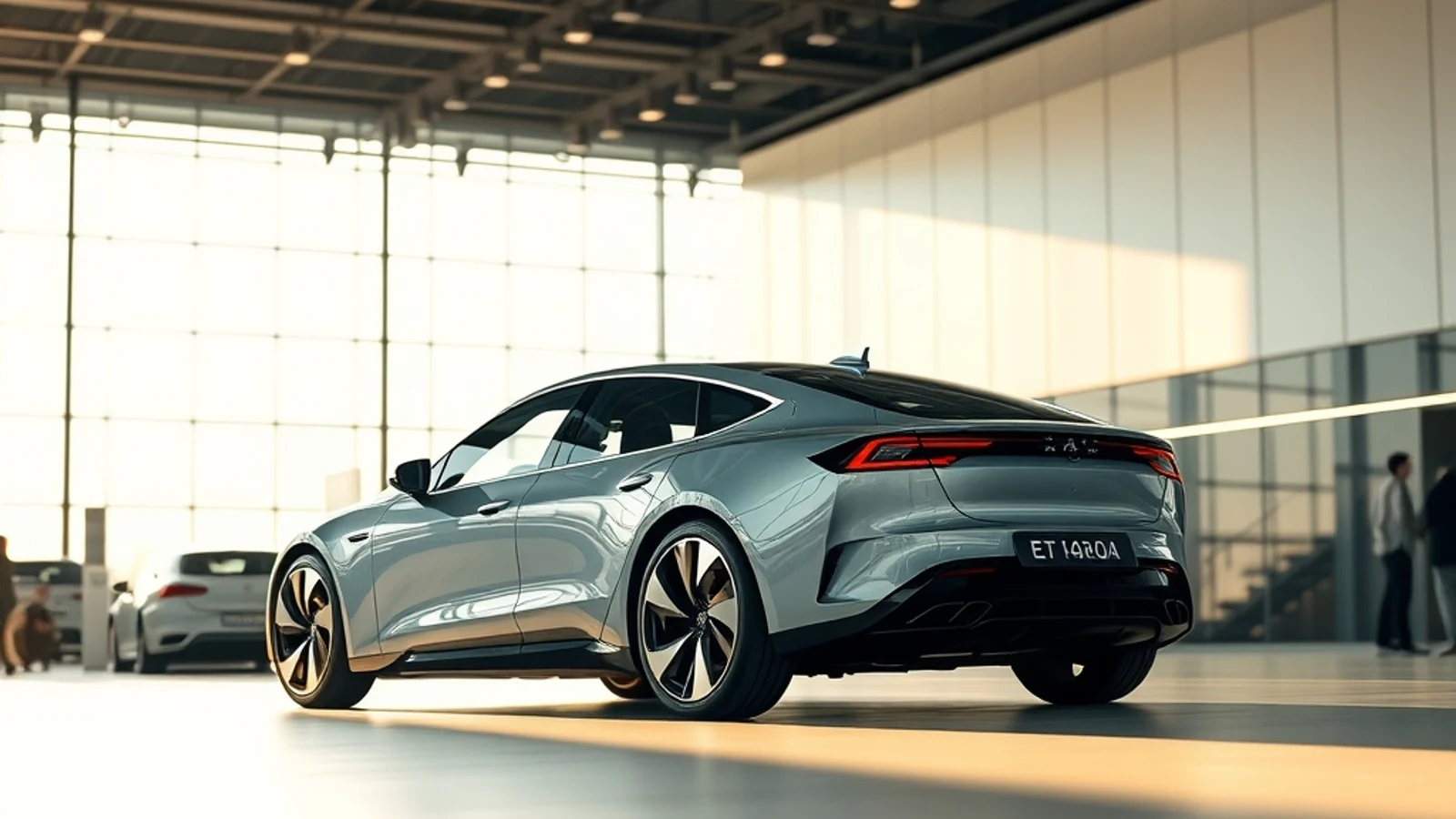
Toyota EREV Market Expansion and Specifications
Toyota has announced plans to unveil its first extended-range electric vehicle, known as an EREV, at the upcoming Guangzhou Motor Show on November 27, 2026. Official teasers posted by GAC Toyota on Weibo suggest the new model will be based on the Highlander SUV platform. Unlike traditional battery-electric vehicles, this EREV configuration utilizes an internal combustion engine acting solely as a generator to recharge the battery when energy levels drop, effectively extending the total driving range for the driver. Source
Technical details remain limited as GAC Toyota has not yet published official specifications or pricing. However, reports from Chinese outlets indicate that the vehicle might feature a 1.5-liter turbocharged range extender paired with a 3,050 mm wheelbase to accommodate seven passengers. Estimates circulating within the automotive industry suggest an electric-only range of approximately 150 km, with a combined total driving range reaching up to 1,000 km, though these figures have not been verified against a standardized test cycle. Source
Toyota aims to address declining sales in the Chinese market by introducing this range-extended technology. In the first nine months of 2026, the company recorded sales of approximately 1.05 million vehicles in China, representing a 19% decrease compared to the same timeframe in the previous year. By offering an EREV, Toyota intends to navigate the intense price competition currently dominating the pure battery-electric vehicle segment, positioning the flagship SUV at a potential premium price point for local consumers. Source
Production targets for the new EREV platform are significant. According to reports cited from Nikkei, Toyota plans to initiate building EREV models in China by April 2027. The company set an internal production goal of 200,000 units for the 2027 calendar year, with projections indicating that this output could double to approximately 400,000 units by 2028. These targets reflect the company's broader strategy to diversify its electrified lineup, which currently includes hybrids, plug-in hybrids, and fuel-cell electric vehicles. Source
While the EREV model is slated for the Chinese market, Toyota continues its rollout of a fully electric version of the Highlander for North American consumers. This battery-electric variant, scheduled for launch in early 2027, will be manufactured at the company's facility in Georgetown, Kentucky. The North American model is expected to be available in both front-wheel-drive and all-wheel-drive configurations, supported by two distinct battery pack capacities of 77 kWh and 95.8 kWh. Source
The battery-electric Highlander for the US market offers specific performance claims provided by the manufacturer. The 77 kWh battery option is estimated to provide up to 287 miles of driving range, while the larger 95.8 kWh battery pack enables a range of up to 320 miles in front-wheel-drive models. Both versions are designed with three-row seating to accommodate up to seven passengers, marking a notable addition to the company's North American portfolio of electric utility vehicles. Source
Highlander Model Configuration Overview
Comparative data for Highlander configurations across markets are summarized below to illustrate the differences between the incoming battery-electric model and the reported EREV technology. Note that the EREV figures originate from unofficial market reports, whereas the BEV specifications represent announced manufacturer estimates for the US market. Source
| Specification | Highlander BEV (US) | Highlander EREV (China Report) |
|---|---|---|
| Powertrain | Battery Electric | Range Extended (ICE Gen) |
| Seat Capacity | 7 | 7 |
| Battery | 77 kWh / 95.8 kWh | Not Published |
| Range | 287-320 miles (est) | 150 km (electric) / 1,000 km (combined) |
| Production Site | Georgetown, KY | China (Planned) |
Broadening its portfolio, Toyota is simultaneously developing a 13th-generation Corolla featuring a new multipathway platform. This architecture will support internal combustion, hybrid, plug-in hybrid, and fully electric powertrains for the first time in the nameplate's history. The company anticipates a debut for the new Corolla generation in 2027 as a 2028 model year vehicle. Industry estimates suggest the electric version could provide a driving range of at least 250 miles with varied motor configurations. Source
The competitive environment in China is shifting, as evidenced by Audi's filing for a range-extended version of the E7X SUV. This model utilizes a 244 kW electric motor paired with a 1.5-liter turbocharged gasoline generator. The E7X, produced at the Anting plant in Shanghai by SAIC Volkswagen, exemplifies the shift toward range-extended powertrains among established automotive brands operating within China to meet consumer demand and address concerns regarding charging infrastructure and range anxiety. Source
Furthermore, JSW Motors has established a new identity for its impending entry into the Indian market, scheduled for December 3, 2026. The company's first vehicle, the JSW Combat, will feature a plug-in hybrid powertrain, reportedly combining a 1.5-liter turbo-petrol engine with two electric motors and an 18.4 kWh battery pack. This SUV is intended to offer an electric-only range of approximately 90 km, alongside a total driving range exceeding 1,100 km, supported by a three-speed dedicated hybrid transmission. Source
Historical context highlights the long timeline of electric vehicle experimentation, with Volvo marking 50 years since the introduction of its Elbil prototype in 1976. This early four-seat hatchback used twelve lead-acid batteries to reach a top speed of 70 km/h. By comparison, modern vehicles like the Volvo EX60 utilize advanced SPA3 architecture and high-capacity lithium-ion batteries, demonstrating the evolution from early lead-acid technology to current high-efficiency electric platforms capable of significantly longer ranges and faster charging times. Source

