
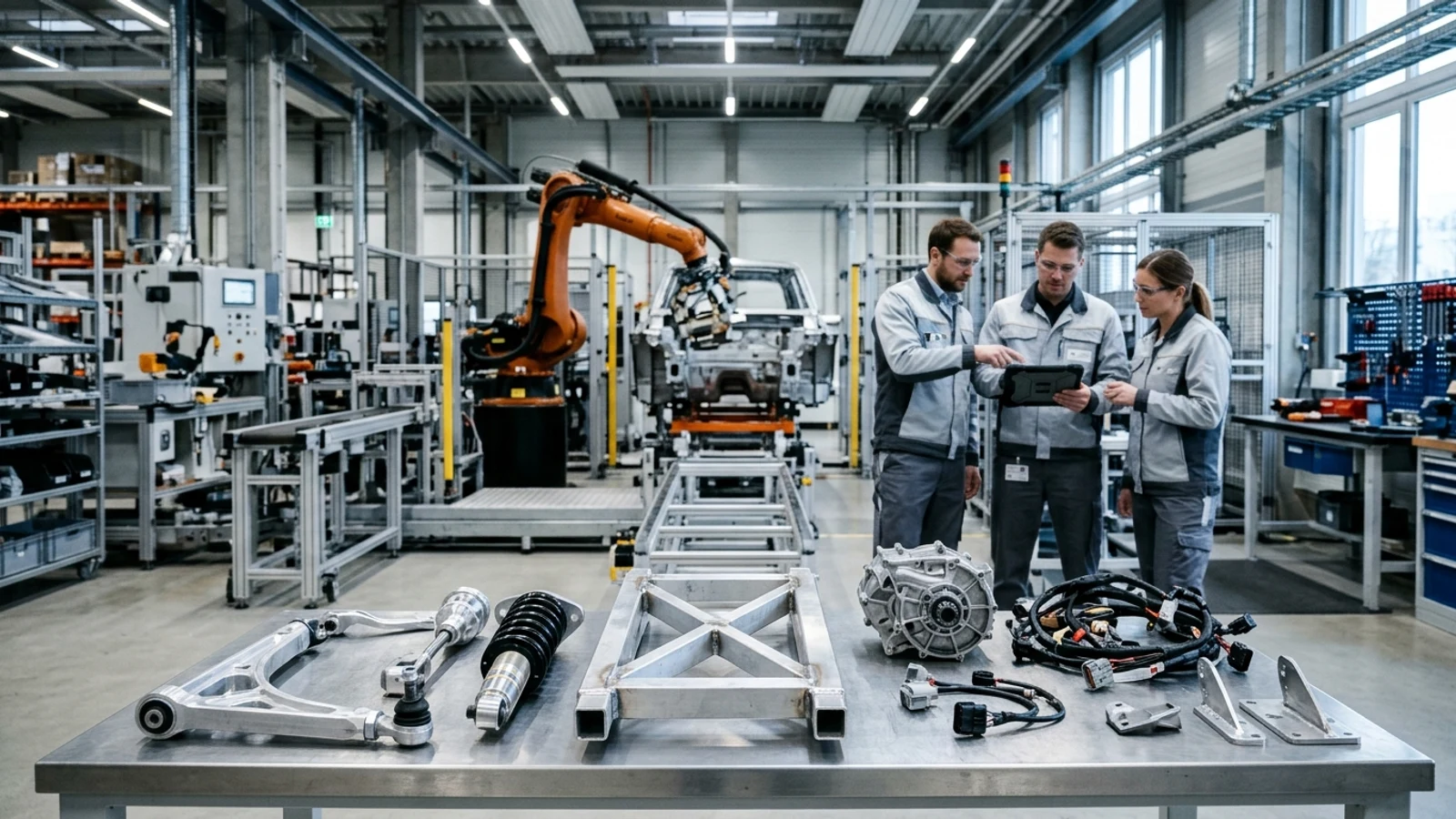
In a strategic move to optimize manufacturing efficiency, Toyota, Nissan, and Honda have reached a formal agreement to standardize a selection of vehicle parts. As reported by Car and Driver, which cites information from Automotive News, the initiative aims to drive down overall production costs for Japan’s three largest automakers. This development was shared by Koji Sato, the chairman of the Japan Automobile Manufacturers Association and vice chairman of Toyota, during a press conference held in Tokyo. Source
Standardization Objectives
The initial phase of this standardization project focuses on three specific areas that are largely invisible to the end consumer. By targeting these non-visible components, the automakers intend to achieve cost reductions without altering the individual brand identity of their respective vehicles. The immediate focus includes implementing unified quality criteria for steel, adopting consistent protocols for the use of plastics and resins, and establishing a universal color-coding system for automotive wiring harnesses. Source
These three areas were selected for the pilot program because they represent significant production expenses for the participating companies. By streamlining these processes, the manufacturers hope to realize a prompt impact on their bottom lines. Koji Sato noted that a shared sense of crisis among the Japanese automotive industry served as the primary catalyst for this shift in procurement and production strategy, allowing the companies to consolidate resources and focus on future innovation. Source
Implementation and Industry Impact
The scope of this cooperation is set to expand over time. While the current agreement prioritizes the three aforementioned categories, the Japan Automobile Manufacturers Association has established long-term goals to encompass a broader range of components that cover the entire vehicle. This move signifies a shift toward a more collaborative industrial approach, specifically designed to help domestic manufacturers maintain their market position against an increasing number of competitive Chinese automotive brands. Source
Operational implementation is scheduled to begin next year. Regarding the supply chain, initial discussions are strictly involving Japan’s domestic parts suppliers. However, the roadmap includes plans to integrate international suppliers into these standardized protocols in the coming periods. Beyond the three primary firms mentioned, the broader Japanese automotive sector, including Mazda, Subaru, Mitsubishi, and Suzuki, is actively involved in efforts to improve competitiveness amid global market pressures. Source
Initial Standardized Components Table
The following table summarizes the initial phase of component standardization as reported by the Japan Automobile Manufacturers Association for the upcoming production year. These categories have been prioritized for their high production cost impact and minimal effect on unique brand aesthetic or performance characteristics. Source
| Component Category | Standardization Focus |
|---|---|
| Steel | Unified quality criteria |
| Plastics and Resins | Consistent production protocols |
| Wiring Harnesses | Universal color-coding scheme |
The necessity for this collaborative effort is framed by a collective response to competitive headwinds. By homogenizing these foundational elements of vehicle assembly, the participating automakers seek to free up capital that can be redirected toward new technological developments. This strategy serves as an attempt to protect the industry from the impact of increased global pressure while maintaining high standards of quality for the components utilized by the manufacturers across their diverse model lineups. Source
The long-term vision of this plan is to eventually standardize components that extend to the total vehicle build. This ambitious target follows the initial focus on materials and wiring, which were chosen specifically because they offer the most immediate and efficient path to cost savings without requiring visible changes to the customer-facing aspects of the cars. The strategy emphasizes that standardization does not equate to the erosion of brand distinctiveness, but rather a necessary adaptation. Source
Looking ahead, the inclusion of international suppliers remains a key step for the manufacturers. While domestic suppliers are currently the focus of the foundational talks, the transition to a global supply chain standard will be essential as the program matures. The shift serves as an indicator of how the Japanese automotive market is prioritizing cost efficiency to secure its future stability in the face of rapid, evolving global market forces and intensifying international automotive competition. Source
Ultimately, the decision by these major firms to align on production standards marks a significant moment for the automotive industry in Japan. By forming a united front, Toyota, Nissan, and Honda aim to leverage their scale to stabilize production costs. This approach not only addresses immediate concerns regarding financial efficiency but also establishes a framework that could be replicated for additional components in the upcoming years as the industry continues to search for ways to maximize output and quality. Source
While specific financial targets regarding the total amount saved have not been publicly detailed, the expectation is that these changes will have a measurable impact on the manufacturers' operations. The commitment from leadership, including the Japan Automobile Manufacturers Association, signals that this initiative is a top-down priority. As the industry advances toward the implementation date next year, the success of this standardization will likely serve as a benchmark for future collaborative manufacturing efforts in the sector. Source

