
Volkswagen and BMW V2G Program Overview
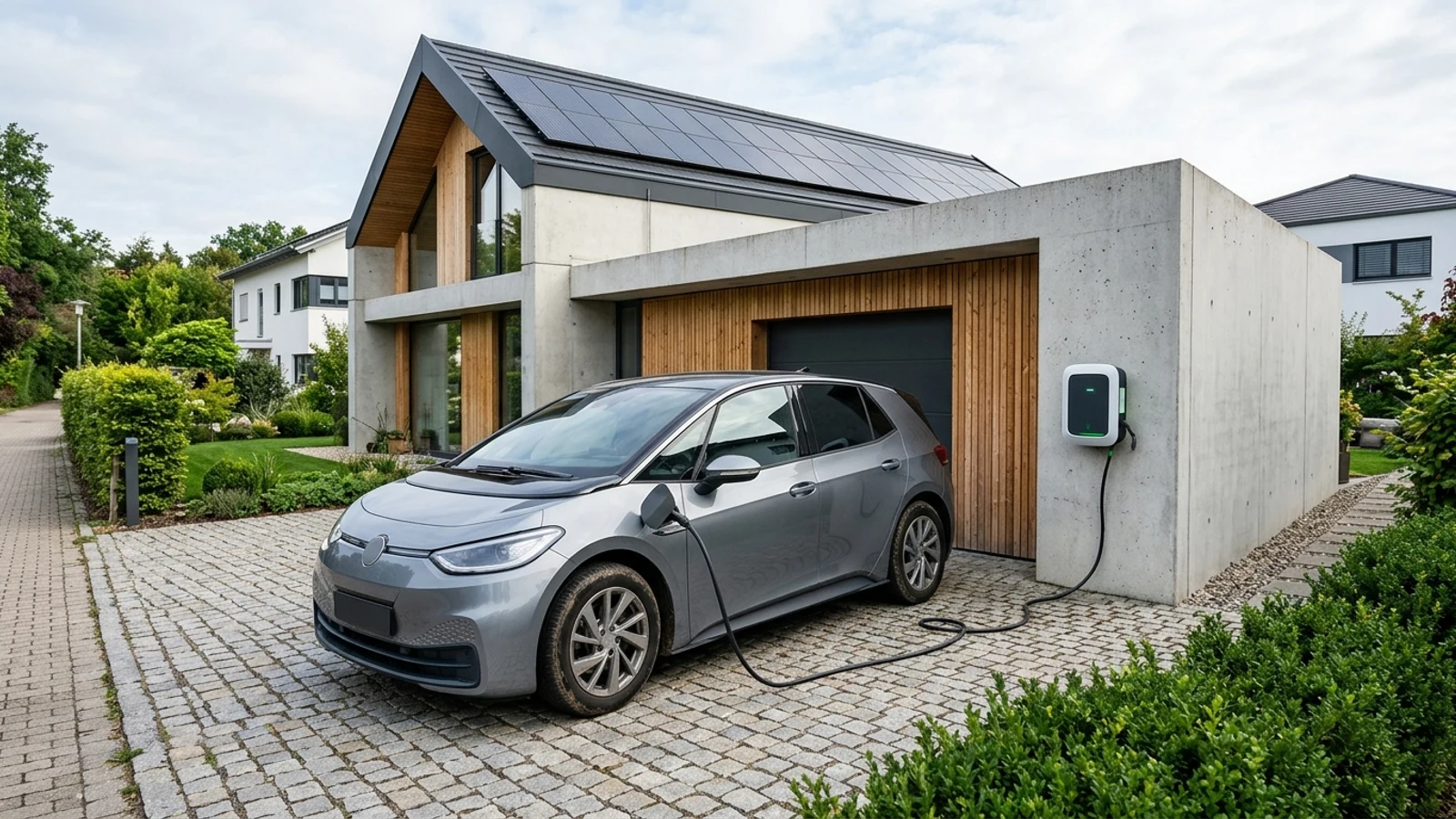
Volkswagen’s charging subsidiary, Elli, is set to launch a vehicle-to-grid (V2G) initiative in Germany this December. The program provides financial incentives for EV owners who maintain a connection between their vehicle and the grid using a specific bidirectional hardware setup. Owners can receive as much as €720 during the first year of participation. This program requires the use of an 11 kW DC bidirectional home charger, which is available for purchase at a price of €1,995, inclusive of shipping and tax. Source
The incentive structure relies on a plug-in bonus of €0.24 per hour for every session lasting at least three hours. To qualify for the maximum monthly bonus of €60, drivers must maintain 250 plugged-in hours each month, which corresponds to an average of slightly more than eight hours daily. Volkswagen estimates that this annual bonus is sufficient to cover electricity costs for approximately 15,500 km of driving in an ID.3 Neo Trend model, based on an electricity rate of €0.33 per kWh. Source
To facilitate these payments, Elli manages the charging process through a mobile application where users define their vehicle needs and departure times. The system autonomously manages energy flow to and from the grid. Currently, approximately 360,000 EVs in Germany built on the shared VW Group electric platform possess the necessary hardware for this bidirectional capability. However, individual vehicle eligibility remains dependent on specific model configurations and enabled functions across brands including Volkswagen, Cupra, Škoda, and commercial variants. Source
Beyond the initial plug-in bonus, Elli plans to introduce a secondary payment structure called V2G Return. This upcoming feature aims to compensate users at a rate of €0.40 per kWh for actual electricity transferred from the vehicle battery back into the public grid. To participate, customers must undergo a site check and secure an installation quote for the charger, alongside ensuring their home is equipped with a compatible smart meter to support the bidirectional data exchange. Source
Parallel to the Volkswagen rollout, BMW has expanded its own V2G offerings in Germany. According to BMWblog, the automaker has extended its program, previously exclusive to the iX3, to include the i3 (NA0), iX4 (NA7), and iX5 (G65) models. These vehicles are part of the sixth-generation eDrive platform. The BMW program also offers up to €720 annually, structured as a €0.24 connection bonus per hour of availability, capped at 250 hours per month for a total of €60 monthly. Source
BMW and its energy partner E.ON provide a compensation model that mirrors the Volkswagen structure for the connection bonus. In addition to the hourly rate, E.ON pays €0.42 per kWh for any energy successfully fed back into the grid by the vehicle. BMW states that these payments are achievable through the My BMW app, where users set their minimum state of charge and departure schedules. The company claims that this bidirectional usage has no adverse impact on the long-term health of the high-voltage battery. Source
Comparison of V2G Incentive Structures
The table below outlines the key financial components and availability details for the respective V2G programs in Germany as reported by the manufacturers and their energy partners. Source
For vehicle owners whose cars do not support V2G, such as certain plug-in hybrid models, BMW offers an alternative program called Remote Charging Control. This system shifts charging periods to lower-cost hours and provides a separate night-charging bonus of up to €240 annually through the end of 2028. Participation requires at least six charging sessions per month, each lasting at least four hours between the hours of midnight and 6 a.m., along with an active CarConnect service and a smart meter installation. Source
Technical considerations for the BMW package include the requirement for sixth-generation eDrive, meaning models such as the i4, i5, i7, and iX are excluded from the V2G program. The BMW Wallbox Professional unit included in the package charges at a maximum rate of 11 kW. While BMW asserts the operation remains within an optimal range, independent analysis suggests that further data regarding long-term discharge limits and potential degradation would be necessary to verify the lack of impact on battery lifespan. Source
Both manufacturers have restricted these programs to the German market for the time being. Elli, the Volkswagen subsidiary, has explicitly stated intentions to broaden its V2G availability to additional European regions in 2027. Furthermore, the company plans to introduce a vehicle-to-home (V2H) solution. This future offering aims to allow households to utilize stored electricity from their electric vehicles to power home functions, including the integration of surplus rooftop solar energy storage for later residential consumption. Source
A notable distinction in the BMW program logic is that the hourly connection bonus is uniform across all qualifying vehicle models, regardless of battery capacity. Consequently, an iX5 with a 141-kWh battery receives the same €720 annual cap as the smaller i3 model. However, the feed-in compensation of €0.42 per kWh is variable based on actual energy exports, meaning vehicles with higher battery capacity may realize greater total returns if the system frequently utilizes that capacity to supply the public electrical grid. Source
Market integration efforts continue as both companies look to leverage the flexibility provided by EV batteries. The Mobility House Energy is currently working with Elli to pool battery capacity from participating Volkswagen vehicles. Similarly, E.ON has highlighted the importance of electric vehicles in providing the flexibility required for the transition to renewable energy sources in Germany. Both programs signify an increasing focus on the integration of consumer-owned battery assets into the broader energy infrastructure within the German automotive market. Source

