
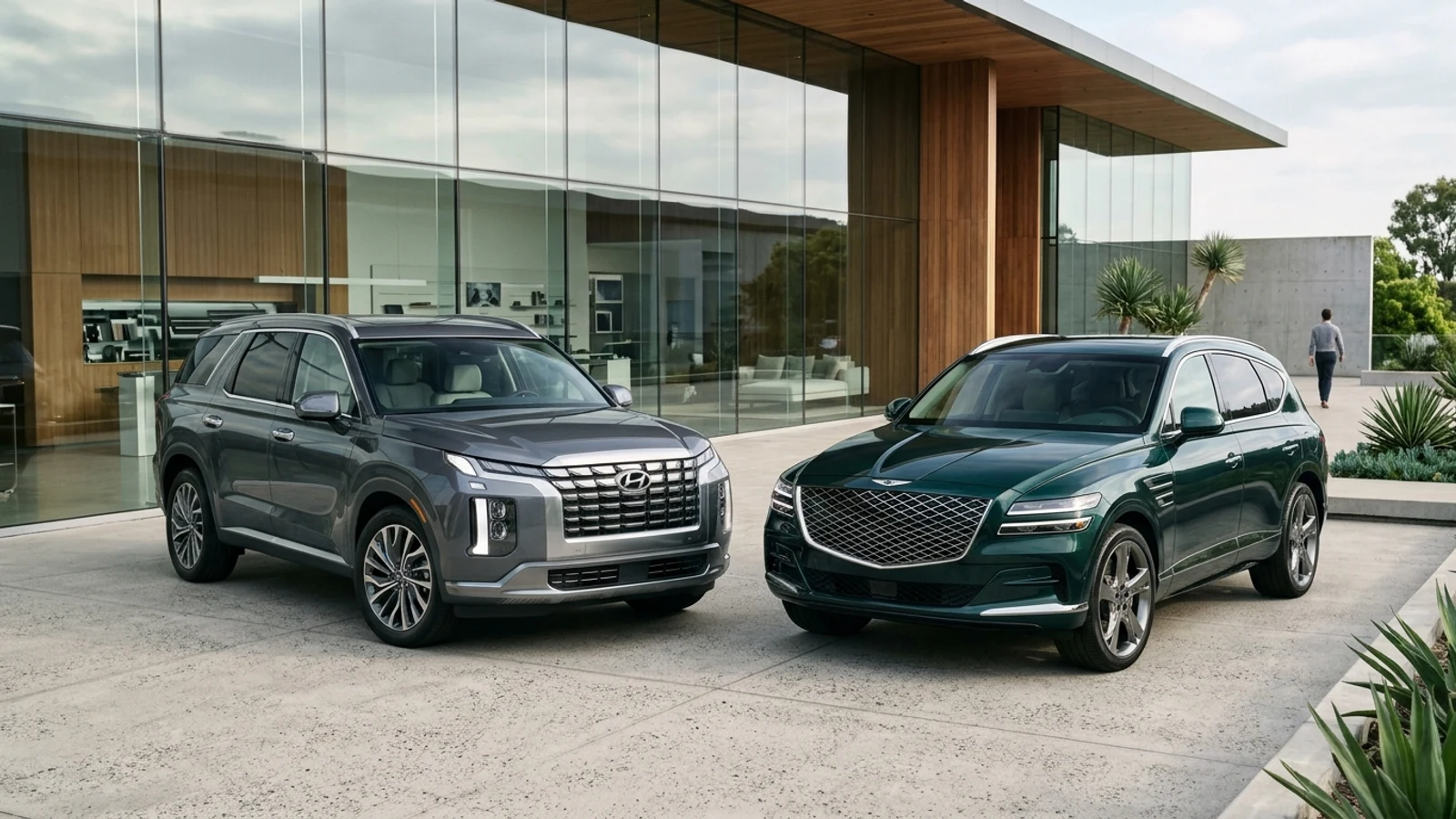
The 2026 Hyundai Palisade Hybrid has emerged as a primary choice for long-distance road trips within the Car and Driver fleet, accumulating over 24,700 miles across various regional assignments. Throughout these journeys, the vehicle has demonstrated high operational capacity, carrying families, gear, and pets to destinations including Colorado and West Virginia. Editor feedback describes the SUV as smooth and sufficiently powerful during high-speed freeway travel, though testers reported concerns regarding tire noise and interior durability over extended usage periods. Source
Reliability and maintenance logs indicate a service-heavy experience for the 2026 model year. At the 16,000-mile maintenance interval, the vehicle underwent a routine oil and filter change, as well as tire rotation for a total of $164. Earlier intervals included general inspections and software updates performed under warranty, specifically concerning seatbelt wiring harnesses and power-operated second and third-row seat mechanisms that had previously triggered a stop-sale order due to inadequate pinch detection functionality. Source
The Palisade Hybrid’s Calligraphy AWD trim configuration features a powertrain composed of a turbocharged 2.5-liter inline-four engine paired with two electric motors, delivering a combined output of 329 hp and 339 lb-ft of torque. The system utilizes a six-speed automatic transmission. In testing conducted by Car and Driver, the vehicle reached 60 mph in 6.6 seconds. The EPA fuel economy is rated at 29 mpg combined, while the fleet-observed average stands at 25 mpg for the 18.2-gallon fuel tank. Source
Interior functionality remains a subject of critique among frequent operators. While some editors appreciate the luxury-adjacent cabin, difficulties have been reported regarding the operation of second-row captain's chairs and the lack of touch-sensitive door handle locking mechanisms. Additionally, the white interior upholstery is noted for its vulnerability to wear and staining, particularly in family-oriented use cases. The integration of front and rear dash cams provides continuous-loop recording, which has served to capture road encounters. Source
Genesis has officially entered the hybrid market with the announcement of the G80 and GV80 hybrid models. These vehicles aim to compete in the premium segment against established European rivals such as the BMW 5 Series and Mercedes E-Class. The new hybrid architecture utilizes a parallel system added to the existing 2.5-liter turbocharged engine. This configuration delivers 347 horsepower, positioning the hybrid between the standard four-cylinder and the top-tier twin-turbo V-6 engine variants currently offered in the brand's lineup. Source
A notable technical advancement for the Genesis hybrid system is the implementation of liquid-cooled batteries, a first for the Hyundai Motor Group in the hybrid segment. While most traditional hybrids utilize passive air-cooled batteries, liquid cooling is intended to provide better long-term stability and energy management. The transmission system for these models is a seven-speed automatic, deviating from the eight-speed units found in the non-hybrid G80 and GV80 gas models. Both hybrid variants come standard with all-wheel drive. Source
Further electrified offerings from Genesis are currently in development. The manufacturer has confirmed that extended-range electric vehicles (EREVs), which use gasoline engines strictly as generators without a mechanical connection to the wheels, are scheduled for release in 2027. These future models are projected to offer more than 640 miles of combined range. Specific pricing, trim levels, and official on-sale dates for the new G80 and GV80 hybrids have yet to be disclosed, with further details expected in the coming year. Source
In the Australian automotive market, the Zeekr 7X electric SUV has experienced a rapid rise in sales, tracking toward over 15,000 units for the 2026 calendar year. Chasing Cars has initiated a long-term test of the Long Range RWD variant. This model is distinguished from the Performance AWD flagship by its fixed-rate suspension and 19-inch wheels, which contribute to a softer ride quality suitable for suburban commuting, though it may exhibit less stability on speed humps compared to the air-suspended AWD model. Source
Charging performance remains a focal point for the Zeekr 7X, which utilizes an 800-volt architecture. The Long Range RWD variant is equipped with a 100kWh nickel-manganese-cobalt battery and supports DC charging speeds up to 420kW, with a claimed 10–80% charge time of 16 minutes. By comparison, the base RWD model, which utilizes a 75kWh lithium-iron-phosphate battery, is capable of reaching a 450kW peak and achieving a 10–80% charge in 13 minutes, according to manufacturer specifications. Source
Comparative energy efficiency data highlights the variations within the medium-sized electric SUV segment. During initial testing, the Zeekr 7X Long Range RWD averaged 17.1kWh/100km in urban conditions. While this efficiency is higher than the 14.7kWh/100km recorded for the 2026 Tesla Model Y RWD, the Zeekr offers a greater claimed WLTP range of 615km compared to the Tesla’s 466km. These figures are contingent on driving style, battery capacity, and the specific test cycles utilized by the manufacturer. Source
For buyers considering the Zeekr 7X, the manufacturer has also announced an updated MY27 range. These revisions feature refined exterior styling, a redesigned center console, and upgraded powertrain performance. The RWD variants are now rated at 335kW and 520Nm, while the Performance AWD variant output has been increased to 500kW and 790Nm of torque. These updates reflect the manufacturer’s push to maintain competitiveness in the medium electric SUV category as the market continues to evolve. Source
Technical Comparison and Market Data
The following table summarizes key performance specifications for the Zeekr 7X variants based on available reporting: Source

