
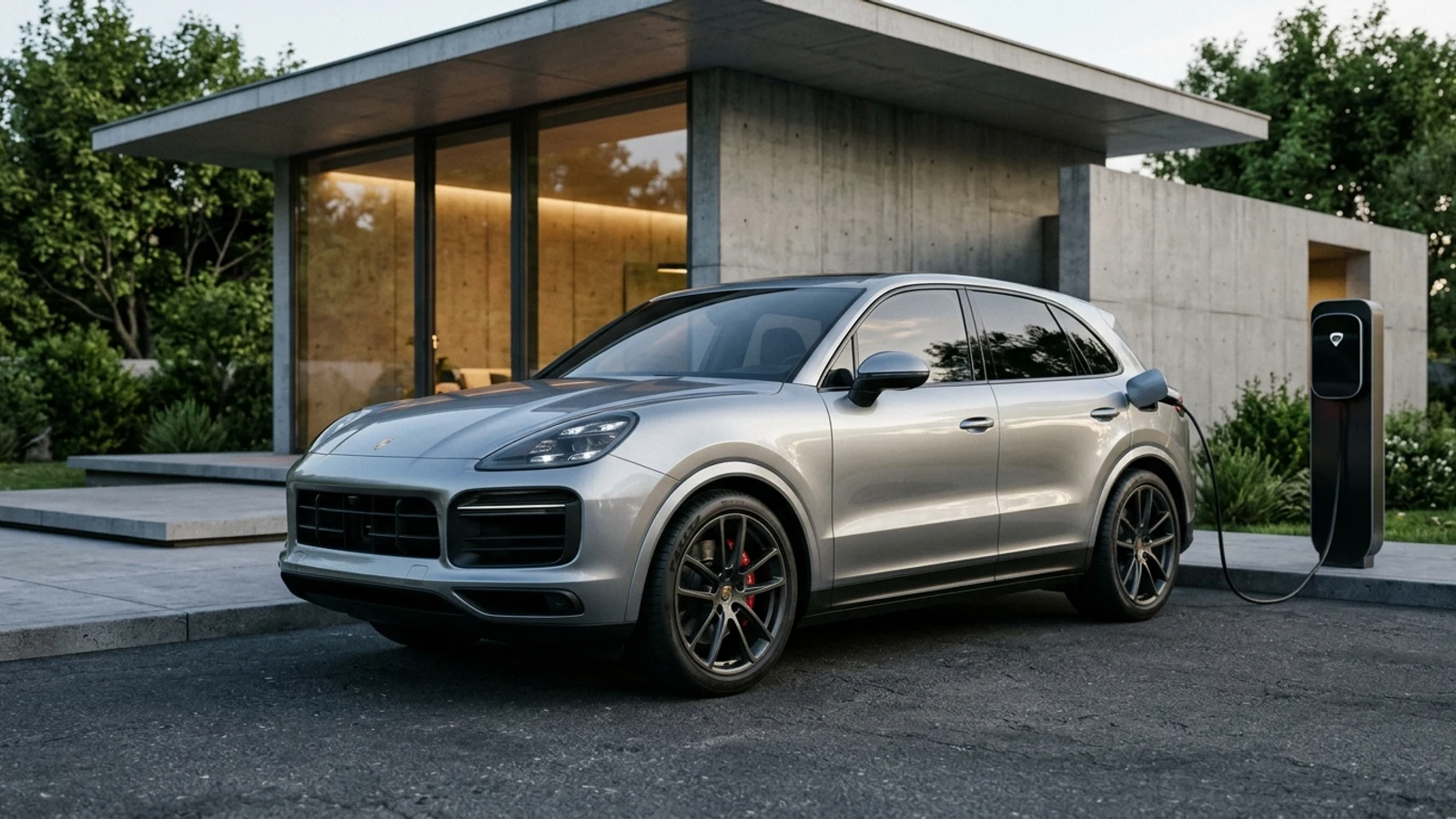
Market Launch and Performance Overview
The 2026 Porsche Cayenne Electric SUV and its corresponding Coupe variant arrived in the South Korean market during September and October 2026. This expansion follows Porsche Korea’s broader electrification strategy, which saw pure electric vehicle sales reach 43% of the company's total volume during the first half of 2026. These models join the existing internal combustion and plug-in hybrid Cayenne configurations, providing consumers with a wider array of powertrain options as the brand transitions its portfolio toward long-term electrification goals. Source
Performance figures for the Cayenne Electric reflect the brand's shift toward high-output battery-electric systems. According to manufacturer reports, the top-tier Turbo variant utilizes a dual-motor all-wheel-drive system that generates over 1,100 horsepower. With Launch Control enabled, the SUV achieves a 0-100 km/h acceleration time of 2.5 seconds. Porsche claims the vehicle offers a driving range of approximately 620 kilometers, supported by a 113 kWh high-voltage battery architecture capable of 800V ultra-fast charging. Source
Technical specifications provided by the manufacturer highlight charging capabilities designed to minimize downtime. The 800V electrical system supports charging from 10% to 80% capacity in under 16 minutes under optimal conditions. Additionally, Porsche offers an optional 11 kW wireless charging system. The chassis incorporates Porsche Active Ride technology, an active suspension system that aims to balance the performance requirements of a high-output electric vehicle with the comfort expectations of the luxury segment. Source
The Cayenne Electric Coupe distinguishes itself through specific aerodynamic adjustments and feature sets compared to the standard SUV body style. It achieves a drag coefficient of 0.23, an improvement over the 0.25 rating for the standard SUV. Standard equipment for the Coupe includes the Sport Chrono package and a liquid-crystal panoramic sunroof. While these aerodynamic benefits are notable, Porsche does not cite a significant increase in total driving range resulting specifically from these design adjustments. Source
Interior technology for the 2026 Cayenne Electric includes a 12.3-inch curved OLED infotainment display, accompanied by a 14.3-inch curved digital gauge cluster. An optional 14.9-inch screen is available for the front passenger. Despite the emphasis on digital interfaces, the cabin retains physical controls for primary HVAC functions and audio volume. Road testers noted that while the interior refinement is high, certain high-frequency road noises from tires and traffic remain audible in the cabin at highway speeds. Source
The Coupe model offers a Lightweight Sport package as an exclusive option, which utilizes carbon fiber to replace the glass panoramic roof and includes 22-inch wheels with Pirelli PZero R tires. Porsche internal data suggests this package provides a total weight reduction of 39 pounds, or approximately 0.7% of the vehicle's total mass. This package is marketed as a performance-oriented addition, although its impact on total vehicle dynamics is described by reviewers as marginal in daily driving scenarios. Source
Regional Configurations and Comparative Data
Canadian market availability and pricing for the 2026 Porsche Cayenne Coupé Electric reflect a distinct tiered structure. The vehicle is offered in three trim levels with pricing starting at $134,200 and reaching up to $181,900 CAD. These models feature a standard 10-speaker audio system, in-car Wi-Fi, wireless charging pads, and a 12.60-inch touchscreen infotainment interface. Warranty coverage in the Canadian market is set at 48 months or 80,000 km for both the comprehensive and powertrain categories. Source
When comparing the 2026 Porsche Cayenne Coupé Electric with other luxury SUVs like the Bentley Bentayga, structural differences become apparent. The Porsche Cayenne Coupe offers 534 liters of trunk space, which expands to 1,347 liters when the rear seats are stowed. In contrast, the five-seat Bentley Bentayga provides 479 liters of trunk space, increasing to 1,774 liters with the rear seats folded. The Porsche model includes 10 airbags as standard, including knee airbags, whereas the Bentayga features eight. Source
The following table outlines key performance and utility specifications for the 2026 Porsche Cayenne Coupé Electric as referenced in the gathered data. Source
| Feature | Specification |
|---|---|
| Powertrain | Electric Dual-Motor |
| Max Power (Turbo) | 1,156 PS (Reported) |
| Torque | 796 lb-ft |
| 0-100 km/h | 2.5 seconds |
| Battery Capacity | 113 kWh |
| Trunk Space (Seats Up) | 534 L |
| Charging (10-80%) | < 16 minutes (800V) |
Porsche’s global strategy, termed 'Sportwagenschmiede 35,' continues to prioritize the retention of traditional sports car brand values even while expanding its electric lineup. Matthias Buse, President of Porsche Korea, emphasized that the transition to electric vehicles does not alter the brand's fundamental expectations for performance and design. By integrating advanced electrification into their core SUV models, the company aims to maintain competitiveness in markets like South Korea, which have demonstrated a high adoption rate for new automotive technology. Source
For consumers and drivers, the Cayenne Electric represents the top end of Porsche’s current performance spectrum. While internal combustion variants like the Cayenne Turbo GT continue to exist in markets with less stringent emissions regulations—utilizing a 4.0L twin-turbocharged V8 engine producing 485 kW—the Cayenne Electric serves as the primary high-performance flagship in markets prioritizing lower emissions. The distinction between these engine types remains a central component of Porsche’s 'Power of Choice' strategy, allowing for a diverse product mix across global regions. Source

