
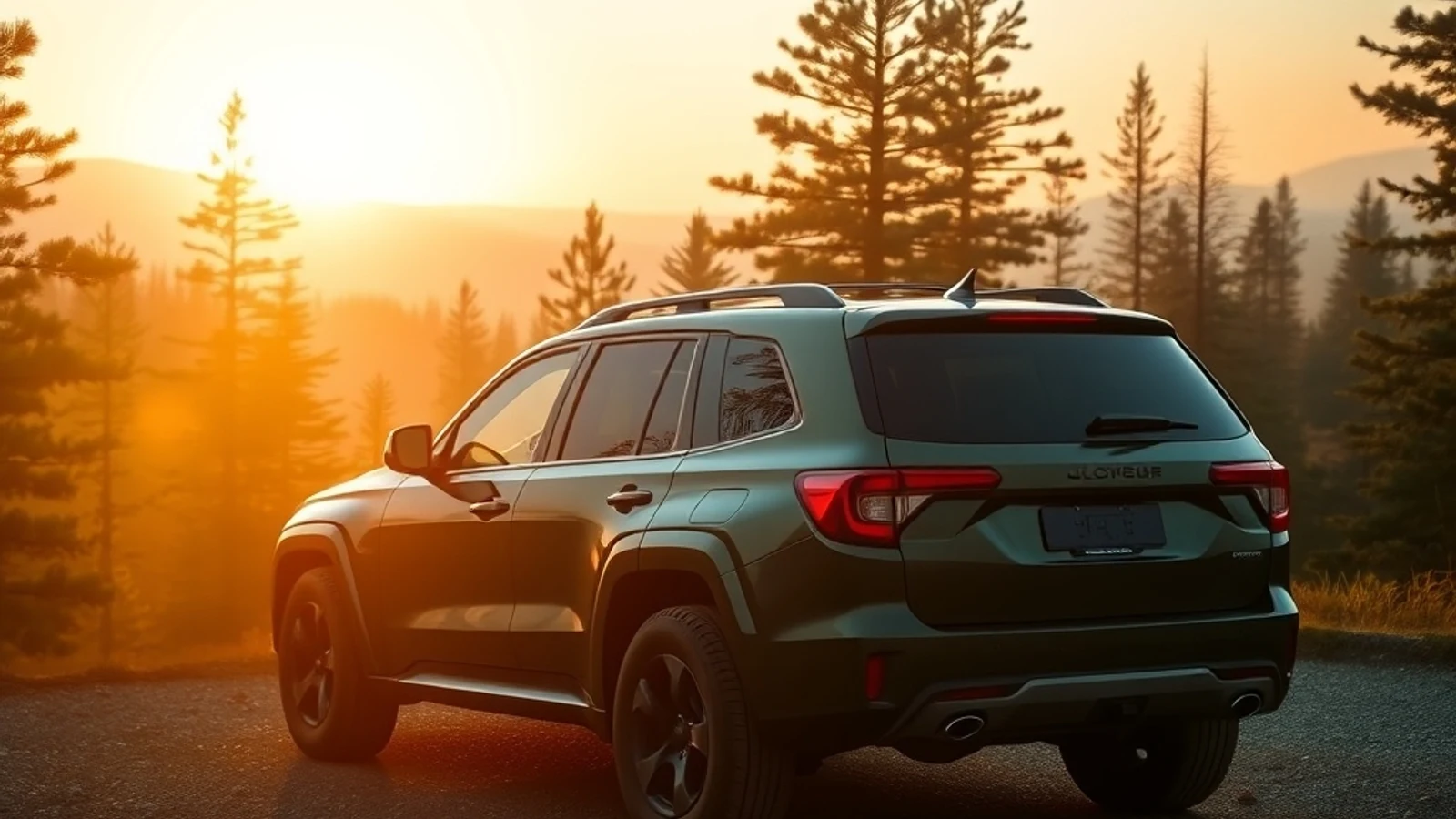
The 2026 Subaru Forester Wilderness arrives with significant structural improvements and a refreshed design that caters to off-road enthusiasts. The crossover now features 9.3 inches of ground clearance, representing a 0.6-inch improvement over other Forester siblings and a 0.1-inch increase over the previous generation. Subaru achieved these gains through redesigned front and rear fascias, which include a larger grille opening and a steel engine guard. These aesthetic and functional changes provide the vehicle with greater visual aggression. Source
Under the hood, the 2026 Forester Wilderness retains the 2.5-liter boxer four-cylinder engine found in other trims, producing 180 hp and 178 lb-ft of torque. Despite the unchanged engine output, the model's continuously variable transmission features a shorter final drive and a dedicated oil cooler. These modifications improve performance in off-road scenarios. Furthermore, towing capacity has been upgraded to 3,500 pounds, a substantial increase over the 1,500-pound limit on standard Forester trims. Source
The interior of the 2026 Forester benefits from several updates, including a reshaped center console that offers more storage space and improved comfort. Safety for rear passengers has also been addressed through reinforced seat belt mounting points, rerouted seat belts, and a reinforced floor. These changes were implemented as a direct response to rigorous collision testing performed by the Insurance Institute for Highway Safety. The cabin remains spacious, maintaining the practical identity the Forester is known for among its user base. Source
Pricing for the 2026 Forester Wilderness starts at $38,385, excluding the $1,495 destination fee. This puts the rugged trim $5,000 above the volume-selling Premium trim and $3,200 below the flagship Touring model. Owners benefit from signature bronze accents on both the interior and exterior, as well as a roof rack with an 800-pound capacity. While some critics note the power output is modest, the vehicle's genuine off-road capabilities remain a primary selling point for the brand's adventure-oriented customers. Source
Subaru has experienced a notable sales surge for the new Forester, with January 2026 figures showing a 22% increase to 15,821 units sold in the United States. This result marks the best January sales performance for the model to date. Following this success, Subaru confirmed that as of February 3, 2026, every Forester trim sold in the US is manufactured at its facility in Indiana. The production shift was enabled by the consolidation of the lineup and the end of legacy sedan manufacturing. Source
Beyond the gas-powered Forester, Subaru is aggressively expanding its electric vehicle portfolio. The automaker is set to unveil a new high-performance electric SUV at the New York International Auto Show. While specific details remain under wraps, teaser materials suggest a powerful vehicle. Subaru continues to deepen its partnership with Toyota to develop EVs, with the automaker aiming for a majority of its model lineup to be electrified in the near future. This includes the updated Solterra, which now offers 338 hp. Source
The 2026 Solterra has received substantial hardware upgrades to remain competitive in the current market. These improvements include a range increase to 288 miles and enhanced charging capabilities, supporting 11 kW AC and 150 kW DC fast charging. These revisions aim to address past criticisms regarding battery performance. Additionally, Subaru is introducing two more electric crossovers, including the Trailseeker and the Uncharted, to bolster its presence in the EV space during the 2026 calendar year. Source
Market dynamics have influenced Subaru's current sales strategy, particularly regarding the Outback. While Outback sales declined by 23.3% in January 2026, the company attributed this to a transitional supply period as it shifts production to Japan. The brand remains committed to its core AWD identity, even as it navigates winter weather challenges that affected retail operations early in the year. Meanwhile, the BRZ maintains a niche role, serving as the only non-AWD model in the current product stable. Source
The strategic roadmap for 2026 also includes limited-run special editions. Subaru is releasing Series.Yellow editions for both the BRZ and WRX sports cars, limited to 350 units each. These models feature specialized suspension hardware, Sunrise Yellow paint, and matte black wheels. Each unit is equipped with a six-speed manual transmission, catering to performance enthusiasts while the wider brand continues its transition toward electrification and higher-volume SUV segments to satisfy broader demographic demands. Source
Looking forward, the Ascent three-row SUV is expected to receive an overhaul in the mid-2026 timeframe. Subaru is likely to refine the model's visual design while maintaining the current turbocharged 2.4-liter boxer engine and platform architecture. The brand is also evaluating the introduction of a hybrid powertrain for the Ascent and Outback to meet competitive requirements. Although timing for these specific hybrid implementations remains subject to ongoing product development, they represent the next phase of the company's long-term electrification strategy. Source
Subaru's long-term sustainability goals remain a major factor in its global strategy. The automaker has already stated plans to become an electric-only manufacturer for the European market by 2028. This transition is being driven by tightening emissions regulations, forcing the company to adapt its technological focus. While the current 2026 model year highlights the successful application of rugged, ICE-based utility vehicles, the company is preparing for a significant pivot in its global powertrain offerings over the next decade. Source
The current market environment underscores a divergence in Subaru's product strategy between the high-performance enthusiasts represented by the WRX and the growing demand for EV utility. By balancing the production of the 2026 Forester Wilderness with the introduction of new electric platforms like the Trailseeker, Subaru intends to maintain its identity as a producer of all-wheel-drive vehicles while modernizing its entire fleet. This multi-pronged approach is intended to ensure future compliance with environmental standards and consumer preferences for efficient, high-capability SUVs. Source

