
The automotive market is witnessing a notable shift as gas-electric hybrid vehicles capture a larger share of consumer interest. According to the Energy Information Administration, hybrids rose from approximately eight percent of new light-duty vehicle sales in 2024 to 16 percent by the end of September 2026. This trend marks a period where hybrid growth has significantly outpaced that of battery-electric vehicles, which have struggled to maintain the momentum seen in 2025 and early 2026. Automakers are responding by diversifying their hybrid offerings across various segments. Source
Many manufacturers are integrating hybrid powertrains into high-performance and luxury vehicles to balance efficiency with power. Bentley, for instance, produces the Continental GTC plug-in hybrid, featuring a twin-turbo V-8 and a 22-kWh battery pack. BMW has expanded its plug-in hybrid range to include multiple sedans and SUVs, with systems in the M5 and XM models generating between 717 and 738 horsepower. Meanwhile, Ferrari has adopted hybrid technology for its mid-engine lineup, with the 296 Speciale delivering a minimum of 869 horsepower through its twin-turbo V-6 and electric motor setup. Source
Ford continues to maintain its footprint in the hybrid space with the Maverick compact pickup, which achieves over 40 mpg in city driving, and the F-150 PowerBoost. The F-150 remains a staple of the full-size truck market, with configurations utilizing V-6 and V-8 gas engines alongside hybrid options, all paired with a 10-speed automatic transmission. For those seeking used examples, market data indicates a wide range of availability for various F-150 trims and model years, with diverse pricing structures depending on the specific vehicle condition and age. Source
Safety and reliability remain core considerations for Ford F-150 buyers, as the trucks come equipped with automated emergency braking and other driver-assistance features such as adaptive cruise control with hands-free capability. Safety ratings from the NHTSA and IIHS are recommended for review when evaluating specific model years, as configurations influence performance. The F-150’s long-standing reputation for durability contributes to its competitiveness against other full-size pickups such as the Ram 1500, GMC Sierra 1500, and Toyota Tundra. Source
Technological innovation in vehicle interiors is also advancing, evidenced by BYD’s introduction of a folding steering wheel in its Fang Cheng Bao Tai 9 SUV. Enabled by a steer-by-wire system, the steering wheel can retract into the dashboard while the vehicle is parked, providing additional space for the driver. This feature, available on the top trim level, reflects potential design trends for future vehicles with higher levels of autonomy, where the physical constraints of a traditional steering column may become obsolete in specific operating scenarios. Source
The Fang Cheng Bao Tai 9 serves as a series plug-in hybrid, utilizing a 1.5-liter turbo four-cylinder engine as a generator to supply power to a 66-kWh battery pack. Dual electric motors provide a combined output of 536 horsepower. As steer-by-wire technology becomes legal in China, manufacturers are beginning to explore how these systems can create more functional, flexible interiors. While driving enthusiasts may express concerns regarding the loss of traditional steering feel, these developments highlight a shift toward prioritizing interior space and cabin utility. Source
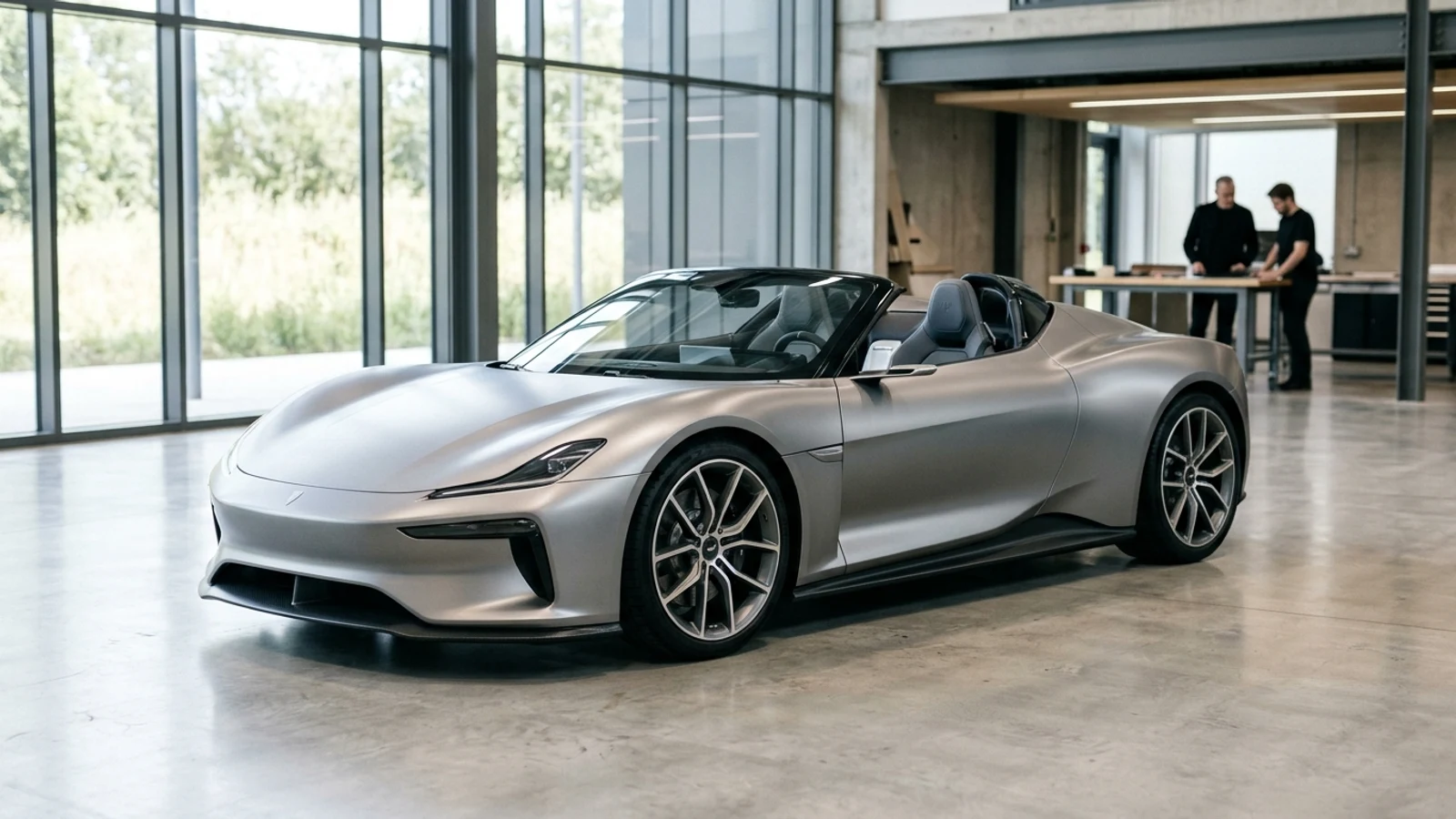
Porsche is also preparing for an electric future with its forthcoming 2028 718 Boxster EV. Based on a platform specifically designed for a two-seat sports car, the vehicle places its 800-volt battery pack behind the passenger cabin. This configuration results in a 40/60 front-to-rear weight distribution. Porsche claims the vehicle will sprint to 60 mph in less than 3.0 seconds. The model features a NACS charge port that supports both AC and DC charging, a first for the company’s electric vehicle lineup. Source
To bridge the gap between traditional sports car character and electric performance, the 2028 Boxster EV incorporates an E-Shift feature. Controlled by a steering wheel knob or paddles, the system simulates gear shifts and synthesizes engine sounds based on the 981-era flat-six. Although these auditory features are digital, Porsche engineers believe they add to the driving experience. The vehicle is designed to maintain the low seating position characteristic of the Boxster, ensuring that the transition to electric power does not compromise the expected sports car ergonomics. Source
Performance metrics for the 718 Boxster EV remain subject to final confirmation, but Porsche anticipates the model will feature the highest cornering and braking performance of any Boxster to date. The vehicle will offer rear-axle steering, and its curb weight is expected to align with the current 911 range, which spans from approximately 3350 pounds to 4000 pounds. While specific horsepower figures have not been released, the focus remains on delivering an agile, driver-focused experience that leverages the benefits of a low center of gravity. Source
The diversity of these developments underscores a broader transformation in the automotive industry. Whether through the mass adoption of hybrid powertrains, the implementation of steer-by-wire technology to improve interior utility, or the evolution of traditional sports cars into high-performance electric vehicles, manufacturers are rapidly adapting to changing consumer demands and regulatory environments. These advancements suggest that the next few years will continue to see significant innovation in both vehicle capability and user interface design. Source
Comparison of recent hybrid and electric vehicle performance highlights the distinct trajectories of different segments. High-performance luxury manufacturers are utilizing hybrid setups to significantly boost total power, while mainstream brands focus on maximizing efficiency for daily commuters. Concurrently, the integration of specialized technologies like folding steering wheels and high-speed synthetic sound systems reflects a focus on enhancing the overall ownership experience, ensuring that drivers can benefit from both technological progress and the legacy characteristics of their preferred brands. Source
The market remains dynamic, with ongoing updates to product lineups expected as companies like Genesis, Hyundai, and Mazda continue to refine their hybrid strategies. Consumers interested in these vehicles are encouraged to track official manufacturer announcements for confirmed specifications and release dates. As the industry advances, the integration of new charging standards, improved battery cooling, and sophisticated control systems will continue to define the next generation of light-duty and high-performance transportation options. Source

