
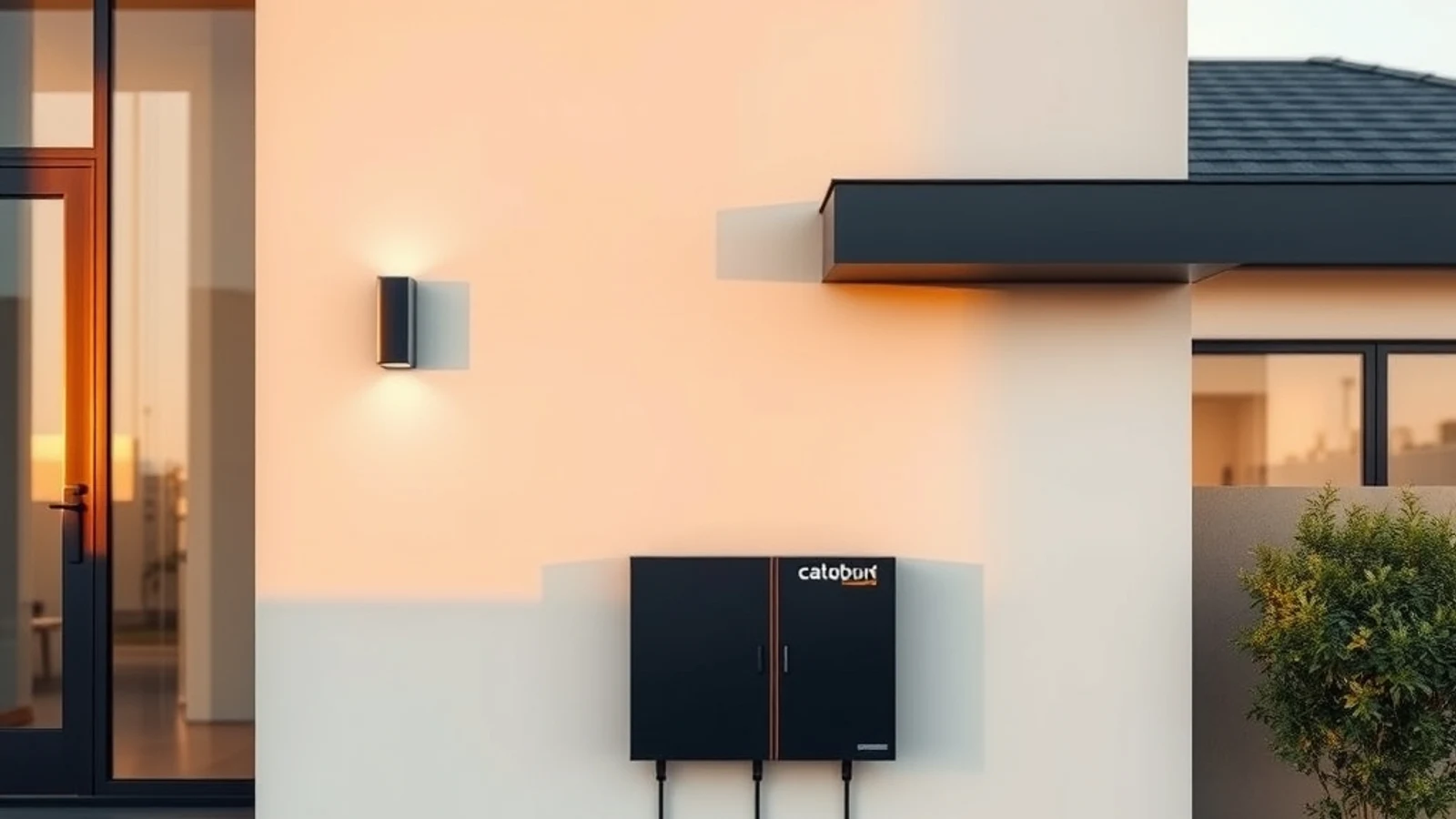
Briggs & Stratton is shifting its long-standing focus from gas-powered generators toward the electric storage market with the introduction of its new 16 kWh SimpliPHI battery. According to reports from Electrek, this move represents a strategic pivot for the company, which aims to provide an energy storage solution that scales alongside the increasing power requirements of homeowners. The new hardware builds upon previous collaborations with Texas-based EG4, moving beyond the capabilities of earlier, smaller stackable units in the product line. Source
The new 16 kWh battery pack is engineered for high-capacity applications, allowing users to scale their systems up to a total of 512 kWh. This capacity is substantial; as noted by Electrek, the average US home consumes approximately 865 kWh per month, meaning a 512 kWh installation could theoretically provide enough energy to sustain power for nearly 18 days following a storm. The system is intended for both residential backup needs and larger-scale energy independence applications where extended runtimes are necessary. Source
Technical Specifications and Installer Features
Technical specifications for the SimpliPHI 16 include an 8,000-cycle rating at 90% depth of discharge. The battery operates with a charge and discharge rate of 0.5C and maintains an end-of-life capacity of 70%. These metrics indicate the expected longevity and performance efficiency of the unit over its operational lifespan. Additionally, the product includes an onboard battery management system and a built-in Wi-Fi gateway, which are intended to simplify the configuration process for professional installers during deployment. Source
The hardware is designed for flexible installation, utilizing an IP65-rated enclosure that accommodates either indoor or outdoor mounting. Technicians can set up the unit on the ground or wall without the requirement of an additional external cabinet. Furthermore, the system incorporates an integrated circuit breaker, allowing service personnel to isolate the battery safely during maintenance activities. Automated inverter sensing technology is included, facilitating closed-loop communication with various leading inverter brands to ensure integration compatibility. Source
Compatibility is a focus for the new system, as the automatic inverter sensing supports a wide array of industry-standard equipment. The battery is designed to communicate directly with inverters from Sol-Ark, Solis, EG4, Growatt, Megarevo, and Victron. This broad interoperability ensures that installers have flexibility when selecting system components. By standardizing communication protocols, the company intends to reduce the complexity often associated with multi-brand hybrid power systems, according to statements regarding the company's evolving storage strategy. Source
Support for the new SimpliPHI 16 battery is underscored by a 12-year parts warranty. Crucially, the manufacturer reports that this coverage extends to labor and travel expenses, offering added security for the owner. A US-based technical support service is provided to assist with installation and ongoing operational queries. While the system is currently available for pre-order, specific pricing information for the new 16 kWh model was omitted from the manufacturer's initial announcement provided in the source report. Source
SimpliPHI 16 Battery Performance Data
To contextualize the performance metrics for potential buyers, the following table summarizes the core technical specifications and rating standards provided by the manufacturer for the SimpliPHI 16 energy storage unit. Source
| Feature | Specification |
|---|---|
| Energy Capacity | 16 kWh |
| Cycle Rating | 8,000 cycles |
| Depth of Discharge | 90% |
| Charge/Discharge Rate | 0.5C |
| End-of-Life Capacity | 70% |
| Enclosure Rating | IP65 (Indoor/Outdoor) |
| Warranty | 12-Year (Parts, Labor, Travel) |
Sequoya Cross, the vice president of energy storage at Briggs & Stratton, described the launch as a transformation in the company's approach to the energy sector. The integration of combined resources is intended to deliver high-quality storage components at competitive price points for professional installers. The company's goal appears to be the expansion of its market reach by providing scalable and reliable home battery hardware that caters to growing consumer demand for grid-independent power solutions. Source
For consumers considering a transition to home battery storage, the current market landscape involves navigating various solar installer options. Reports suggest that using a comparison service can assist homeowners in finding reliable contractors, potentially yielding cost savings between 20% and 30%. These services generally provide access to pre-vetted installers, unbiased advisor guidance, and competitive quotes, which may be helpful for those unfamiliar with the installation process or the specific requirements of large-scale residential storage projects. Source
It is important to note that the data provided represents manufacturer claims regarding expected battery life and operational efficiency. Potential buyers are encouraged to consult with authorized installers to determine if the 16 kWh units are appropriate for their specific household load requirements and existing inverter infrastructure. While the system supports massive scaling, the performance outcomes are dependent on the accurate installation and management of the battery array over its service life, backed by the provided 12-year support structure. Source
In summary, Briggs & Stratton is attempting to modernize its legacy of emergency power with a sophisticated, LFP-based storage platform. By focusing on installer-friendly features like automatic sensing and integrated circuit protection, the company aims to reduce deployment overhead. As the market for home solar and battery storage continues to expand in response to rising energy costs, this new high-capacity offering adds a significant option for users seeking a modular and durable solution for long-term backup power needs. Source

