
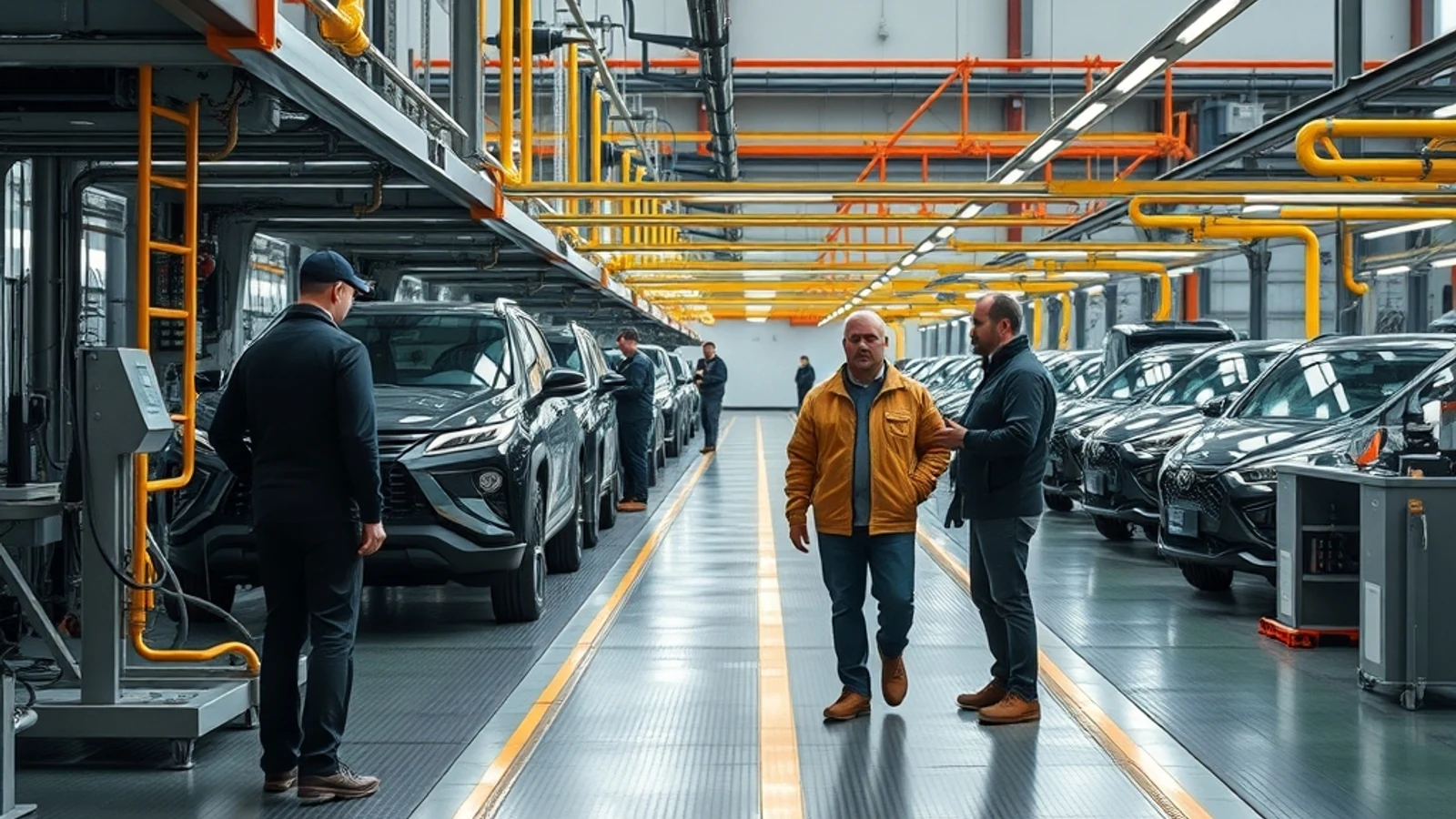
BYD has officially entered into exclusive negotiations to purchase the manufacturing plant currently owned by Ineos Automotive in Hambach, France. This facility, which was originally constructed by Mercedes for Smart vehicle production, holds historical significance as the site where Ineos began manufacturing its Grenadier model in 2022. Should the acquisition proceed, it would represent a notable shift in the regional automotive landscape, marking the first instance of a Chinese automaker acquiring an existing vehicle production site within Europe. Source
Shift in Manufacturing Strategy
The potential transaction arrives alongside a strategic pivot by Ineos Automotive, which intends to relocate the production of its Grenadier and Quartermaster models to the United States. Ineos reports that the US market accounts for approximately 70 percent of its total sales volume. The company has identified potential sites for this new production hub but has not yet confirmed a specific location. Ineos has established a target date of 2028 to commence vehicle manufacturing operations within the United States. Source
The primary drivers for this relocation include significant tariff barriers impacting vehicles manufactured in France for the US market. The Grenadier is currently subject to a 15 percent tariff upon entry into the United States, while the Quartermaster pickup faces a 25 percent import duty. According to Ineos, building these vehicles within the North American market is a logical step to avoid these costs. The company plans to continue operating the Hambach plant for the medium term during the transition period. Source
While the deal is underway, both companies have refrained from disclosing financial terms or a definitive closing date for the acquisition. The transaction remains subject to consultation with employee representatives, a procedural requirement in France that differs from the regulatory environment in China. BYD has not provided any specific guarantees regarding the retention of the approximately 1,000 workers currently employed at the Hambach facility, nor has it specified which vehicle models might be produced there following a potential takeover. Source
Ineos Automotive has invested approximately €540 million into the site since 2019 to adapt it for their production requirements. The facility currently maintains an annual production capacity of roughly 30,000 Grenadier units. For BYD, which has reported global passenger vehicle sales exceeding 3.5 million units in the first ten months of 2026, this capacity represents a modest addition to its manufacturing footprint. The acquisition is viewed as a strategic maneuver to navigate European Union regulatory and trade policies. Source
Regulatory and Market Factors
Current European trade policies impose a 17 percent countervailing duty on Chinese-built electric vehicles, in addition to the standard 10 percent car tariff. Furthermore, new regulations regarding imported hybrids and local content requirements for subsidies make the 'Made in Europe' label increasingly valuable for non-European manufacturers. BYD is currently working to scale up its primary European production facility in Szeged, Hungary, which began trial production earlier in 2026 and is slated for mass production in 2027. Source
The following table outlines the current status and regional production goals for the major automotive entities involved in these recent shifts within the European manufacturing market: Source
| Entity | Project/Location | Status | Target Year |
|---|---|---|---|
| BYD | Szeged, Hungary | Trial production underway | 2027 (Mass) |
| BYD | Hambach, France | Exclusive negotiations | TBD |
| Ineos | United States | Site selection phase | 2028 (Start) |
Market data highlights the competitive tension between major Chinese automakers in the European sector. Through October 2026, BYD registered 320,445 vehicles in the European market, representing a 133 percent increase year-over-year. During the same period, Chery Group registered 320,631 vehicles, an increase of 235 percent. As BYD faces a sales decline in its domestic Chinese market, maintaining growth within European borders has become a priority, prompting the search for additional local production capacity beyond the Hungarian project. Source
The acquisition of an existing facility like Hambach provides BYD with immediate access to established infrastructure, including paint shops and a developed local supply chain on the German border. This strategy mirrors efforts by other manufacturers to localize production as seen with Leapmotor’s activities in Spain. While the Hambach facility has limited annual output compared to BYD's global scale, its utility lies in satisfying EU criteria and establishing a permanent presence in France, circumventing the logistical and political challenges of ground-up construction. Source

