
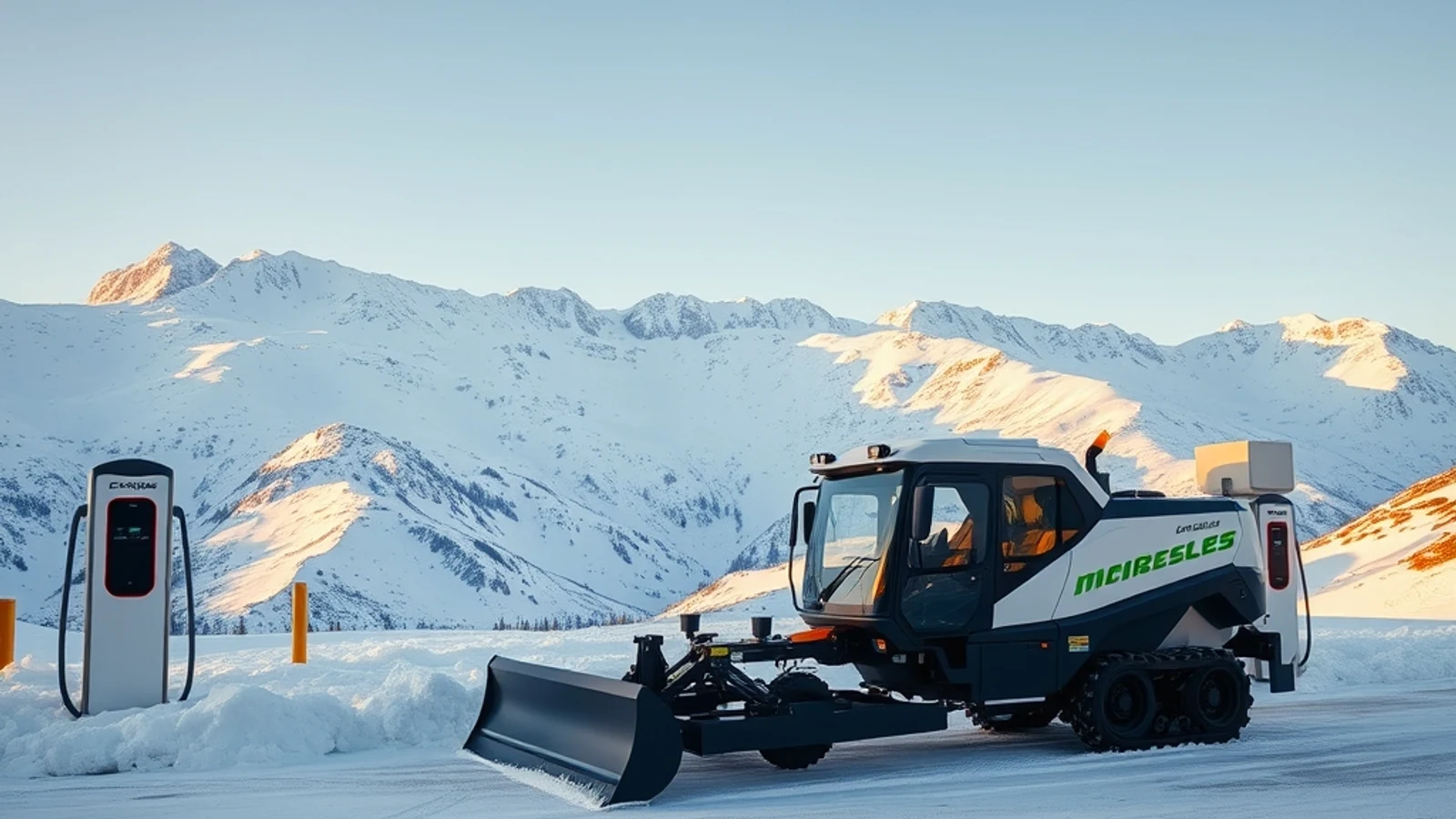
New Charging Infrastructure for Alpine Environments
Starting November 25, 2026, ChargePoint and Kässbohrer have launched a strategic partnership aimed at deploying electric vehicle charging infrastructure across ski resorts and indoor skiing facilities in Europe and North America. This collaboration enables resort operators to consolidate their charging needs through a single service provider. By integrating ChargePoint’s hardware, software, and operational support, ski venues can now manage charging solutions for both their specialized electric snow groomer fleets and general guest electric vehicles simultaneously. Source
The partnership addresses the unique logistical demands of mountain operations, where heavy-duty equipment operates under rigorous conditions. According to the announcement, Kässbohrer manufactures over half of the snow groomers sold worldwide, making them a dominant player in the industry. By connecting their global customer base directly with ChargePoint, the companies aim to streamline the transition to electric operations, encompassing everything from high-capacity snow grooming maintenance depots to public-facing charging stations in resort parking areas. Source
A central focus of this initiative is the PistenBully 100 E, an all-electric snow groomer capable of maintaining slopes with reduced environmental impact. The vehicle is engineered with a 196 kWh battery pack rated at 800 volts. Under standard grooming conditions, the machine provides approximately three hours of continuous operation before requiring a recharge. This battery capacity and performance profile align with the needs of smaller to moderately sized slopes, though longer operations may necessitate strategic access to the fast-charging infrastructure now provided by the partners. Source
Electric Snow Groomer Specifications
Technical specifications for the PistenBully 100 E highlight its versatility in power management. The groomer can accept AC charging up to 22 kW or utilize DC fast charging capabilities up to 150 kW. When connected to an appropriate DC fast charger, the machine can reach a full charge from zero in approximately one hour. This rapid turnaround time is intended to ensure that mountain operators can maintain operational efficiency even when rotating their electric fleets throughout the day and night. Source
To assist operators in evaluating the adoption of electric groomers and their charging requirements, the following specifications outline the capabilities of the PistenBully 100 E as reported by the manufacturer. These figures serve as a baseline for resorts planning their transition toward electric snow preparation. Operators should note that runtime is contingent upon specific grooming conditions, which may impact actual battery depletion rates during daily usage cycles on mountain terrain. Source
The following table details the key performance and charging metrics for the PistenBully 100 E electric snow groomer. | Feature | Specification | | :--- | :--- | | Battery Capacity | 196 kWh | | Operating Voltage | 800 V | | AC Charging Capacity | 22 kW | | DC Fast Charging Capacity | 150 kW | | Charge Time (0-100%) | ~1 Hour | | Max Speed | 17 mph | | Operational Runtime | ~3 Hours | Source
Beyond the fully electric 100 E model, Kässbohrer continues to offer the PistenBully 600 E+, a series hybrid diesel-electric snow groomer. This hybrid model utilizes a diesel engine as a generator, which allows for lower engine speeds and improved fuel efficiency compared to conventional diesel alternatives. According to the manufacturer, this hybrid configuration achieves a 20% reduction in carbon dioxide emissions, 20% lower fuel consumption, and 20% reduced noise levels compared to traditional slope preparation machines, providing an interim step toward full electrification. Source
While the framework for this partnership is effective immediately, the rollout of specific charging hardware at individual resorts remains in the planning stages. At this time, no specific list of resorts has been finalized, and details regarding the exact number of charger installations are considered to be confirmed as TBC (to be confirmed). Resort operators are currently invited to coordinate with both ChargePoint and Kässbohrer representatives to develop customized site plans that integrate with their specific terrain and infrastructure requirements. Source
The primary objective of this agreement is to create a more resilient energy management system for ski resorts. By lowering operating costs and improving overall energy efficiency, both companies aim to foster long-term sustainability within the winter sports sector. As electrification expands to heavy-duty machinery in harsh mountain climates, the ability to rely on a cohesive ecosystem—where the vehicle and the charging equipment are designed to interface seamlessly—is emphasized as a necessary factor for reliable, round-the-clock operations on the mountain. Source
The collaboration highlights a shift in how ski resorts view their energy footprint. By moving away from purely diesel-reliant fleets and toward electric vehicles that can leverage the same charging network available to tourists and guests, resorts are positioning themselves to modernize their maintenance operations. This cross-sector approach—linking fleet management for professional mountain operators with public-facing guest charging solutions—represents the core strategy behind the partnership initiated by ChargePoint and Kässbohrer in November 2026. Source
For guests visiting resorts, the partnership suggests a potential increase in accessible charging options within ski resort parking facilities. While specific implementation timelines depend on the individual choices of resort operators, the availability of ChargePoint’s network is designed to cater to both professional fleet vehicles and personal vehicles owned by skiers. This expansion into mountainous regions targets both North American and European markets, reflecting a broader strategy to grow ChargePoint's footprint in specialized commercial environments and luxury recreation spaces. Source
Future developments regarding the number of installed stations and the specific resort locations involved will be determined by individual facility contracts. As operators review their energy needs, they can work with ChargePoint to analyze load balancing and the installation of high-power hardware suitable for the cold-weather environments typical of global ski destinations. The partnership essentially acts as a facilitator, providing a structured pathway for resorts to adopt electrification at scale while relying on proven equipment for both snow grooming and transit. Source

