
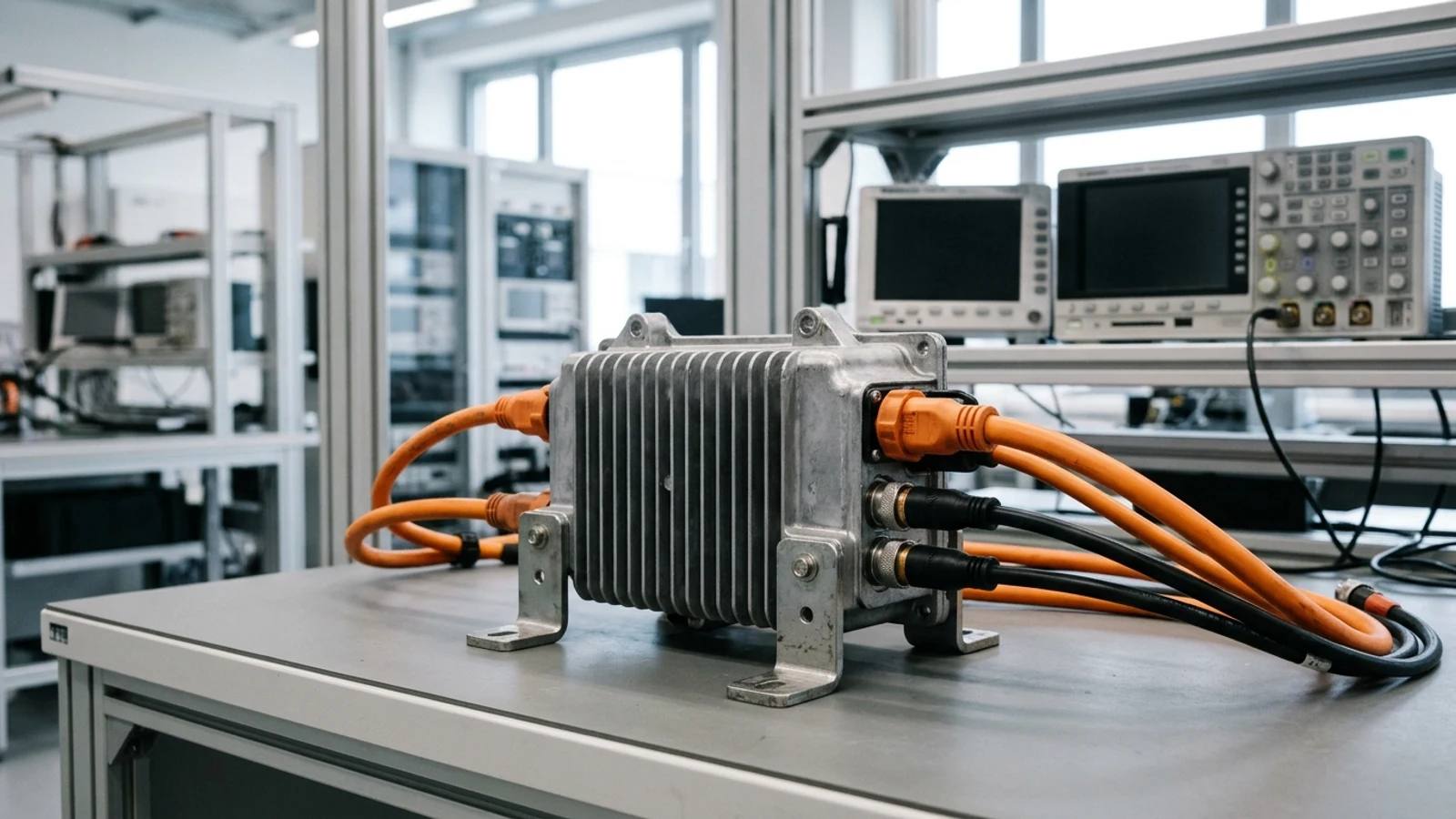
As of November 25, 2026, Huyssen Power has introduced a new 3kW DC-DC converter designed to support electrical systems in pure electric vehicles. The component is identified by the model number DD3P0360-24 and is engineered to adapt to various battery configurations. By providing a wide input voltage capability, the device is intended to assist in the integration of power systems across multiple vehicle applications, potentially reducing the necessity for engineers to design different converters for varying vehicle models. Source
Technical Specifications and Operational Capabilities
The technical specifications for the DD3P0360-24 indicate a rated input voltage of 360VDC, though it maintains an operational input range spanning 200V to 500VDC. This flexibility is designed to accommodate different battery voltage characteristics. At its specified rated input voltage, the converter supports a rated input current of 8.5A with an input voltage reporting accuracy of ±2V. The unit is designed to output a rated power of 3.0kW to support vehicle electrical demands. Source
Output performance is adjustable, with a rated output voltage of 27±0.2VDC, which can be further modified within a range of 0–32VDC. The system provides an output current range of 0–109A, offering configurable characteristics for vehicle integration. Additionally, the unit exhibits a voltage regulation accuracy of 1% and an output response time of 300 milliseconds. Engineers should note the output capacitive load specification, which ranges from 1,000 to 5,000μF. Source
Control and monitoring of the DD3P0360-24 are managed through digital processing technology utilizing CAN communication. This interface allows the converter to exchange operating data with other vehicle system components and receive switching commands from the CAN bus. Real-time control and monitoring are facilitated by this communication capability, which also includes a software-based on/off function to provide additional operational management options for vehicle power system designers. Source
Safety Features and Environmental Durability
The converter includes a suite of protection functions to ensure operational safety. According to the product documentation, these protections encompass input over-voltage and under-voltage, output over-voltage and over-current, output short-circuit, and over-temperature protection. The device is rated IP68 for water resistance, allowing it to function within an ambient temperature range of -40°C to +85°C. For storage, the unit is rated for temperatures between -40°C and 95°C, with an operating humidity range of 5% to 95% without condensation. Source
Thermal management of the unit is handled through integrated fan cooling. Because the device supports parallel operation and offers a range of electrical parameters, it is marketed as a flexible solution for various transportation sectors. Beyond standard passenger electric vehicles, Huyssen Power identifies application potential in specialized machinery including forklifts, cleaning vehicles, sightseeing cars, boats, ships, and various logistics vehicles. The company suggests that these diverse applications may benefit from the converter’s modular design. Source
The following table summarizes the core electrical and performance parameters for the Huyssen Power DD3P0360-24 DC-DC converter as described in the manufacturer specifications. Source
Manufacturer Context and Support
Huyssen Power, established in 2011, currently maintains production facilities in Shenzhen and Dongguan, China. The firm offers a wide portfolio of over 1,300 power supply models, including AC-DC power supplies, battery chargers, and industrial-grade converters. Their development strategy focuses on introducing two to three new models monthly, with services encompassing custom design and engineering validation. Final products undergo rigorous quality assurance including burn-in and automated testing before distribution to global markets. Source
For system integrators and engineers evaluating the DD3P0360-24, the product acts as a reference point for power conversion needs. The combination of its wide voltage input, adjustable output current, and CAN-compatible monitoring allows for integration into complex electrical architectures. Prospective buyers and design teams are encouraged by the manufacturer to consult their documentation regarding specific input/output configurations to ensure alignment with the voltage requirements of their individual power battery systems. Source
Designers and engineers must review the technical specifications in detail to match the converter with their unique project constraints, specifically regarding the capacitive load and communication protocols. The manufacturer provides additional customization services for clients with highly specific requirements. This process involves a structured sequence of requirement communication, prototype sampling, validation, and eventual mass production to ensure the equipment meets the necessary safety and operational standards required for electric vehicle applications. Source
The technical documentation emphasizes the role of modularization in simplifying system architecture. By standardizing the DC-DC conversion stage through the use of flexible, wide-range components, vehicle designers may reduce the total number of distinct parts required for different model lines. This approach is intended to streamline both the initial design phase and the long-term maintenance of the vehicle's electrical power management system, provided the unit’s operational range aligns with the battery pack voltage. Source
The company remains available for further inquiries regarding its power conversion solutions. Interested parties can access additional data regarding model compatibility and technical support via the Huyssen Power website. As the EV market grows, the availability of components capable of handling broad input voltage ranges continues to be an area of development for manufacturers looking to standardize their secondary power systems and improve the overall efficiency of energy conversion within electric-powered transportation platforms. Source

