
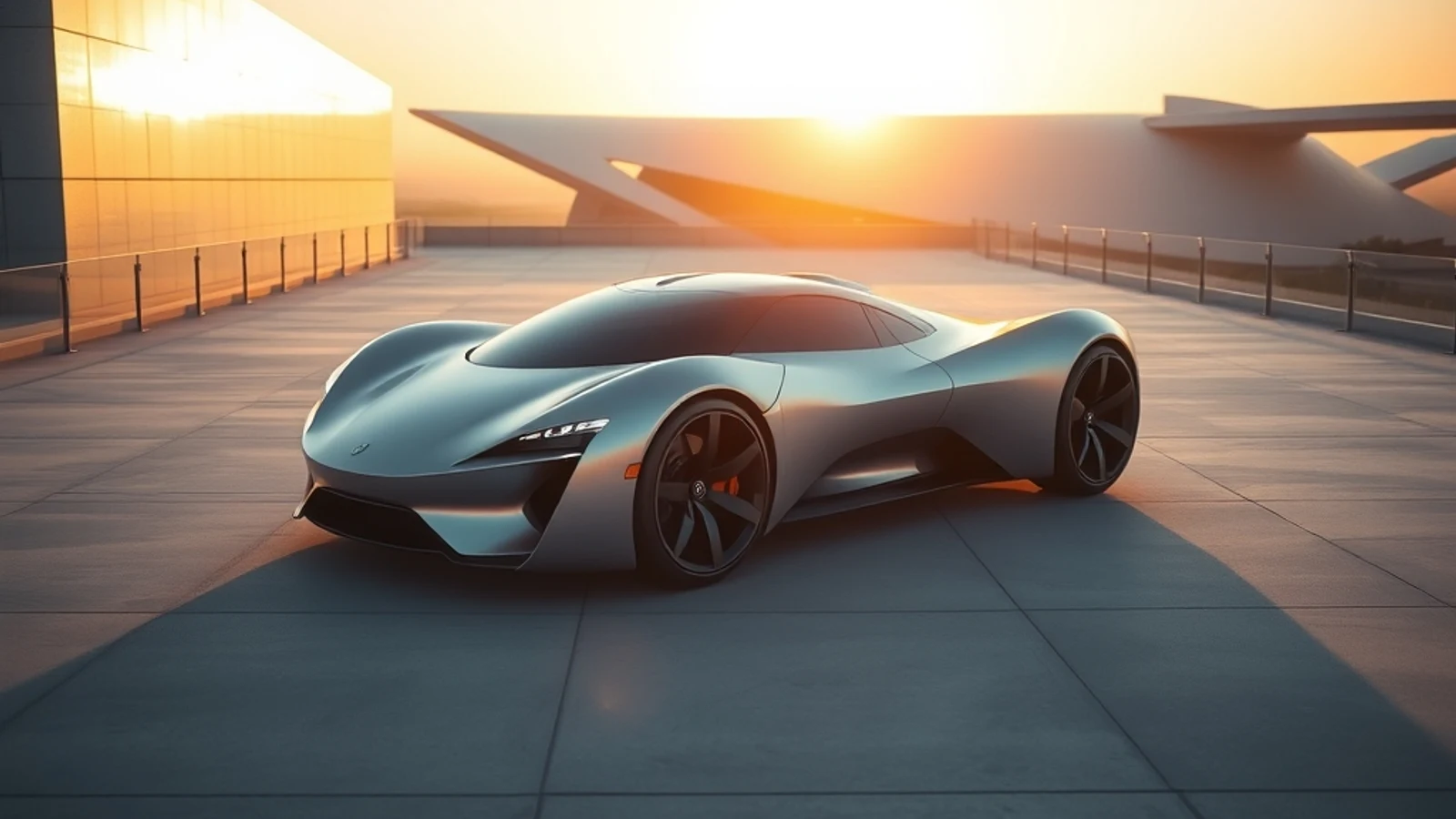
Production Status and Economic Factors
The long-anticipated production version of the Hyundai N Vision 74 concept will not be moving forward, according to statements from Hyundai Design Center leadership in November 2026. After years of speculation, the company has officially shelved the project as an independent vehicle. While the concept car had generated significant interest since its 2022 debut, Hyundai executives concluded that the business case for such a niche halo model did not meet the necessary criteria for full-scale assembly. Source
Simon Loasby, head of the Hyundai Design Center, confirmed the status of the vehicle during a media preview event. He emphasized that the decision was driven by the financial mathematics involved in the project. When evaluating the business case solely on the anticipated sales volume and the direct impact of the vehicle itself, Hyundai management determined there was no viable path forward. The complexity of the proposed hydrogen-fuel-cell-and-electric powertrain also posed significant logistical challenges for mass production. Source
Despite early expectations surrounding the vehicle, financial hurdles proved to be the deciding factor. Hyundai’s internal assessments indicated that the investment required to bring the N Vision 74 to market would not yield the necessary returns. The company had previously explored the project with serious intent, even developing production-ready clay models for both the interior and exterior designs. However, as of November 2026, the company has prioritized other product segments to better align with current market requirements and financial goals. Source
The following table outlines the timeline of the vehicle's development and the key markers regarding its production status as reported by the automaker. Source
Date Event July 2022 N Vision 74 debut as a concept vehicle. December 2023 Initial confirmation of potential production plans. August 2024 Appearance in investor presentation confirming interest. August 2026 Filing of new trademarks for the model name. November 2026 Confirmation that production is not moving forward. Source
The N Vision 74 concept featured a sophisticated dual-motor rear-wheel-drive setup paired with a hydrogen fuel cell and a 62.4 kWh battery capacity. Manufacturers claimed an output of 671 horsepower and a top speed of 155 mph. Performance projections included a 0 to 60 mph time of under 4.0 seconds, with an estimated range of 373 miles under combined usage. Despite these technical capabilities, the project remained a rolling lab rather than a consumer-ready production vehicle. Source
Design Legacy and Future Integration
While the dedicated N Vision 74 model will not reach the showroom, its design language is being integrated into future products. Hyundai leadership decided that the aesthetic cues developed for the concept should not be discarded. The company is actively applying these visual elements, including roof profiles, pillar designs, and side-view creases, to the next-generation Elantra sedan. This strategy allows the firm to maintain the brand-raising profile value of the original concept through its more utilitarian vehicle lineup. Source
The new Elantra models serve as the canvas for these design influences, with specific focus on the upcoming high-performance N variant. Engineers and designers have indicated that the width and aggressive styling cues popularized by the N Vision 74 will find a place in the N-spec Elantra, providing enthusiasts with a connection to the defunct concept. The company continues to monitor global market conditions for high-performance sedans as they prepare for the launch of these updated versions. Source
The financial context of the decision is partially rooted in the company's fiscal performance during 2025 and 2026. Hyundai reported a net profit decrease of 21.7% in the previous year, followed by a further decline of 24.2% during the first three quarters of 2026. These macroeconomic pressures, combined with the ongoing transition in electric vehicle adoption and global trade, made the justification of an expensive, low-volume halo car increasingly difficult for the executive team. Source
The shift away from the N Vision 74 does not signal an total abandonment of hydrogen technology for the manufacturer. Rather, it reflects a refinement of the company's portfolio strategy. While individual reports had suggested limited production runs of up to 100 or 200 units, these figures never materialized into formal sales programs. Current efforts are now concentrated on bringing the 2027-generation Elantra and its hybrid derivatives to market as planned. Source
Looking ahead, the N variant of the updated Elantra remains a central focus for the company's performance division. By leveraging existing production platforms, the automaker intends to offer a vehicle that delivers high-performance characteristics without the extreme economic burden of a ground-up supercar development. The lessons learned during the N Vision 74 project, particularly regarding design and platform integration, have influenced the current engineering direction for performance-oriented street cars. Source
In the absence of a production supercar, the concept remains an influential chapter in the company's recent design history. Enthusiasts and stakeholders are now shifting their attention to the upcoming performance variants of mass-produced models. The N Vision 74 concept will continue to serve as a symbolic benchmark for the design team, as they look to maintain a connection to the high-performance ethos the brand has cultivated over the past few years. Source

