
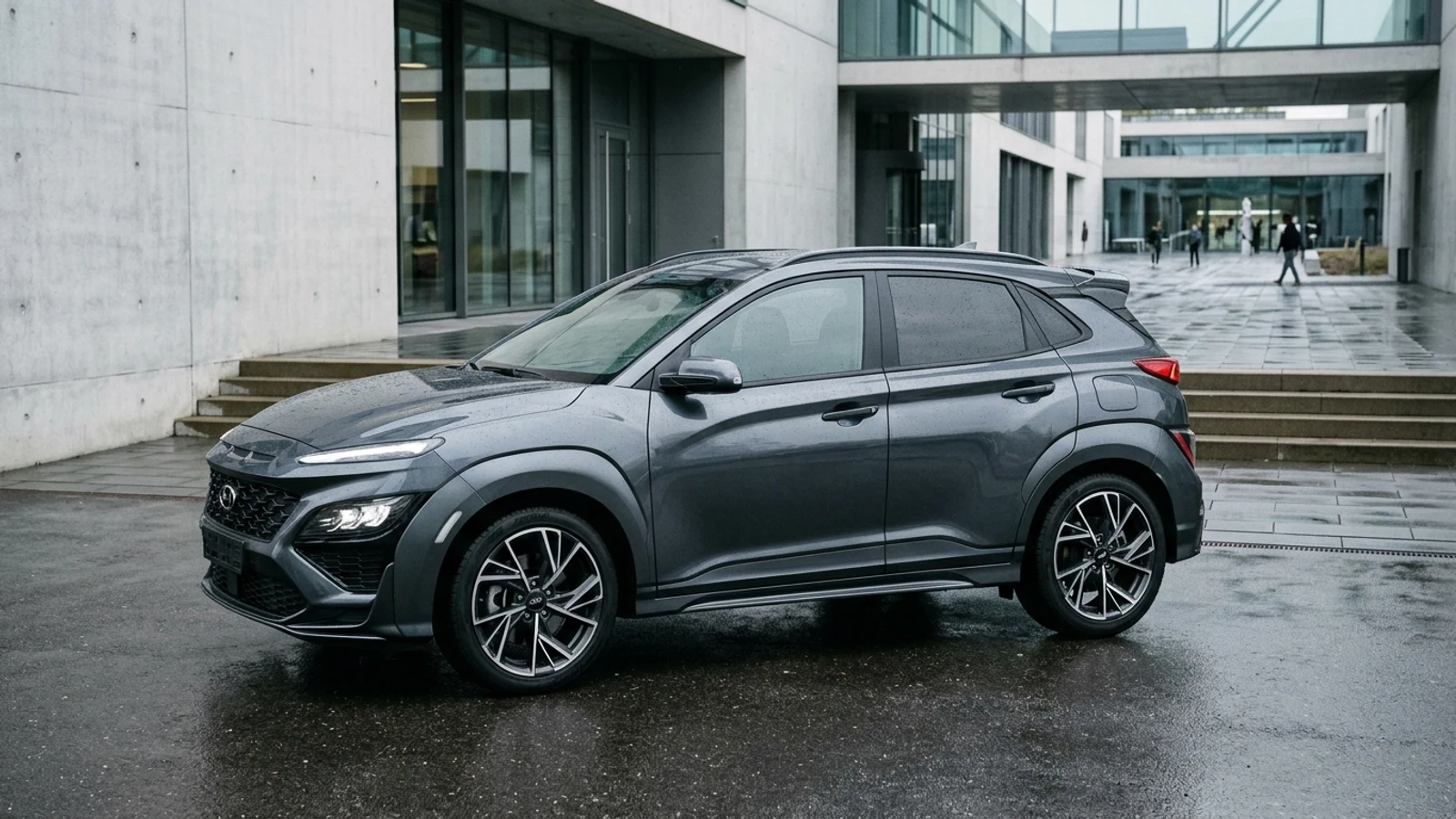
Hyundai is shifting its development strategy for the compact SUV segment by bypassing a standard mid-cycle refresh for the current Kona model. Instead, the company is moving directly toward a comprehensive redesign for the vehicle's third generation. Following the launch of the second-generation Kona in 2023, industry cycles typically dictated a minor update by this time. However, reports from Electrek indicate that Hyundai has opted for a complete structural and aesthetic overhaul for the upcoming platform instead of incremental changes. Source
Third-Generation Design and Prototype Development
The development process is already underway, as multiple disguised test vehicles have been observed throughout the United States, Europe, and South Korea over the past several months. Observers noted that these test mules exhibit a distinct silhouette compared to the current production model. The prototypes feature a higher ride height and a more pronounced, commanding stance that aligns with the design language found in larger Hyundai SUVs, such as the Santa Fe, Palisade, and Tucson. Source
Within this testing fleet, several distinct versions have been identified, including a standard trim level and a more ruggedly styled XRT variant. Most notably, footage captured by HealerTV in South Korea has confirmed the presence of an N Line variant on a transport carrier. While the prototype remains heavily camouflaged, the vehicle displays specific design identifiers associated with the N Line performance-inspired trim, including unique wheel designs and an integrated lower side skirt. Source
Beyond the visible exterior modifications, the Kona N Line is expected to incorporate a variety of exclusive design elements common to the N Line sub-brand. These components typically feature more aggressive, sporty front and rear fascia designs, along with specialized bumpers that distinguish the trim from the base model. The sighting of this early-stage prototype provides evidence that Hyundai plans to continue offering the N Line option as part of the expanded third-generation lineup upon its eventual release. Source
Market Strategy and Future Model Availability
The broader third-generation Kona is projected to make its official debut in 2027, with the manufacturer slated to market the vehicles as 2028 model year units. In the United States specifically, Hyundai skipped the 2026 model year for the electric variant of the current Kona. The company has stated that the electric version will return to the lineup with the arrival of this redesigned third-generation model for 2027, ensuring the portfolio maintains a mix of traditional internal combustion, hybrid, and fully electric powertrains. Source
The following table outlines the expected progression of the Kona model series based on the latest manufacturer and observation data reported by Electrek. Source
| Model/Version | Development Status | Projected Debut Year |
|---|---|---|
| Third-Gen Standard | Prototype Testing | 2027 |
| Third-Gen N Line | Prototype Testing | 2027 |
| Third-Gen XRT | Prototype Testing | 2027 |
| Third-Gen Electric | Prototype Testing | 2027 |
The decision to skip a mid-cycle refresh suggests an aggressive acceleration of Hyundai’s development timeline for its sub-compact SUV category. By moving straight to a third generation, the automaker is attempting to unify the design profile of the Kona with the larger SUV offerings in its current global portfolio. While the N Line is specifically being tested with athletic aesthetic cues, the core engineering and powertrain configurations remain consistent with the modular approach seen in the previous generation. Source
In addition to the N Line spotted on carriers, other prototypes have been observed being put through their paces on test tracks in Korea earlier in November 2026. These specific prototypes are suspected to be testing the electric powertrain configurations for the upcoming generation. As the release target of 2027 approaches, further detail regarding the specific battery capacities, charging performance, and trim-specific mechanical upgrades for the N Line is expected from the manufacturer through official channels. Source
The consistency of the camouflaged fleet across multiple international markets—including the US, Europe, and Korea—indicates that the third-generation Kona will be a global platform. This unified approach is consistent with the company's prior efforts to streamline production while catering to regional preferences through diverse trim variants like the XRT and N Line. With the 2027 debut window now the primary focus, testing will continue to refine the chassis, exterior design, and powertrain calibration of the new SUV. Source
Observers note that the higher ride height observed on current test mules may suggest an attempt to increase interior space or improve ground clearance, further aligning the vehicle with the capabilities associated with traditional crossover utility vehicles. The inclusion of the N Line in this early test phase serves as a strong indicator that the sport-oriented variant remains a core component of the product strategy, even as the brand undergoes a significant design language transition toward the more rugged aesthetics of the Santa Fe. Source
Finally, the integration of both gas-powered and fully electric options within the same platform will continue to be a primary feature of the next-generation Kona. By aligning the US electric relaunch with the global third-generation debut in 2027, Hyundai aims to re-introduce the model to the US market with a fresh, redesigned presence rather than an aging facelift. This strategy confirms that the company views the Kona as an essential vehicle for its long-term presence in the competitive small SUV market. Source

