
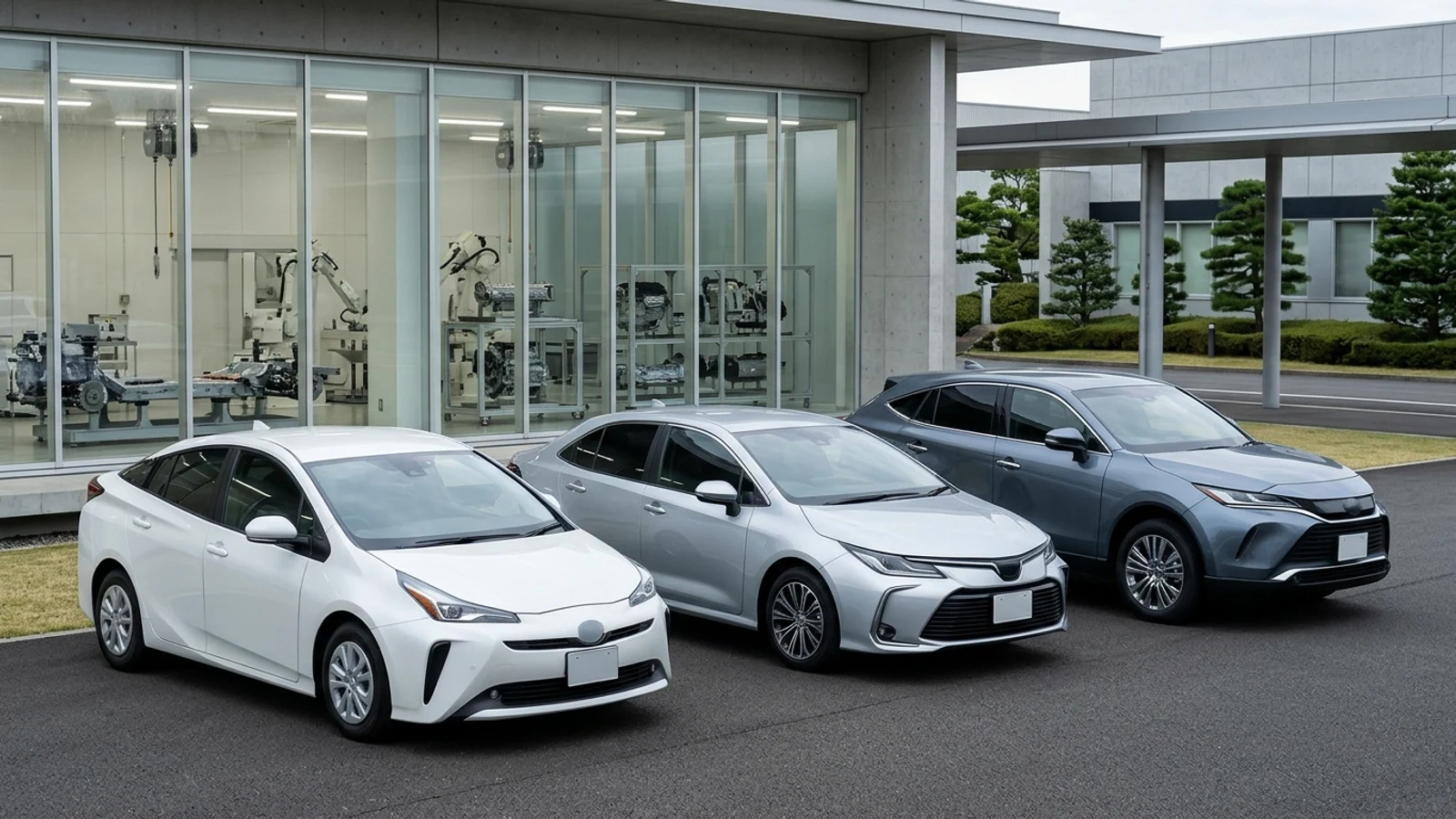
As fuel costs continue to influence consumer purchasing decisions, major Japanese automakers have expanded their hybrid offerings across various vehicle segments. The current market features a range of options, from subcompact crossovers to three-row SUVs, with varying levels of fuel efficiency and cost-saving potential. According to CarBuzz, while the newly announced Nissan Rogue E-Power Hybrid has been discussed, it remains unavailable for purchase as of November 2026, and therefore falls outside the scope of current retail comparisons. Source
Subcompact and Compact Segment Efficiency
In the subcompact crossover segment, the 2026 Toyota Corolla Cross Hybrid and the 2026 Subaru Crosstrek Hybrid stand as the primary competitors. The Corolla Cross Hybrid, which debuted in 2023, provides an EPA-rated 42 combined MPG, offering a notable increase over the 30 combined MPG found in the non-hybrid AWD variant. This improvement leads to an estimated annual fuel savings of $600 for the average driver. Furthermore, the Toyota model extends fuel range from 397 miles to 445 miles per tank. Source
The Subaru Crosstrek Hybrid, introduced for the 2026 model year, delivers 36 combined MPG, which represents a 7 MPG gain over the standard non-hybrid version. Drivers of the Crosstrek Hybrid can anticipate a total range of 598 miles per tank, marking a 117-mile improvement compared to the non-hybrid model. Although the Toyota Corolla Cross Hybrid offers a 6 MPG combined advantage over the Crosstrek Hybrid, the Subaru retains its signature Symmetrical all-wheel-drive system, which remains a key feature for specific consumer requirements. Source
Price sensitivity is a significant factor in the subcompact segment, with the Corolla Cross Hybrid starting at $29,795, compared to a $33,995 entry price for the Crosstrek Hybrid. In the compact sedan category, the competition features the Toyota Corolla Hybrid and the 2025 Honda Civic Hybrid. The Corolla Hybrid AWD achieves 48 combined MPG, while the Civic Hybrid Sedan delivers 49 combined MPG. These models offer significant annual savings of $500 and $550 respectively when compared to their non-hybrid counterparts. Source
Efficiency data highlights the competitive landscape for Japanese manufacturers in 2026. For drivers focused on total range and fuel economy, the Prius remains a benchmark, while the Civic Hatchback Hybrid offers a balance of sportier dynamics and fuel performance. Within the crossover segment, the RAV4, CR-V, Forester, and CX-50 hybrid models offer varying performance profiles. Specifically, the RAV4 AWD offers a range of up to 604 miles, whereas the Forester Hybrid achieves a 581-mile range per tank. Source
Regarding plug-in hybrid electric vehicles (PHEV), Toyota maintains a distinct advantage in the Japanese market segment. The Toyota Prius PHEV with front-wheel drive achieves 127 MPGe combined, while the base RAV4 PHEV offers 102 MPGe combined. Mazda has also entered the PHEV space with the CX-70 and CX-90 models, which utilize a 2.5-liter inline-four system. These larger vehicles reach 61 MPGe and 56 MPGe respectively, with lower all-electric ranges of 32 and 27 miles compared to the Toyota compact offerings. Source
Industry-Wide Cost Reduction Initiatives
Beyond model-specific performance, Japan's automotive industry is undertaking a collaborative effort to reduce manufacturing costs. Toyota, Nissan, and Honda have agreed to begin standardizing various vehicle components. As reported by Car and Driver, this initiative, announced by Japan Automobile Manufacturers Association chairman Koji Sato, aims to address competitive pressures from global rivals. The standardization process is scheduled to commence next year, initially focusing on parts that do not impact individual brand identity. Source
The initial scope of the parts standardization program includes three primary areas: unified quality criteria for steel, consistent protocols for plastics and resins, and a universal color-coding scheme for wiring harnesses. These areas were selected due to their high production costs and minimal impact on consumer perception. While discussions are currently focused on domestic Japanese suppliers, the plan includes expanding this cooperation to international suppliers over time as part of a long-term strategy. Source
The seven automakers currently involved in the broader sector discussions are Toyota, Nissan, Honda, Mazda, Subaru, Mitsubishi, and Suzuki. By homogenizing non-customer-facing components, these companies intend to reallocate saved capital into new technological innovations. This move reflects a shared sentiment of crisis within the Japanese automotive sector regarding the rising competitiveness of Chinese vehicle manufacturers. Koji Sato noted that this sense of necessity is the primary driver behind the immediate momentum for these industrial changes. Source
This collaborative effort marks a transition for the Japanese automotive landscape, shifting from independent supply chains for basic materials toward a unified standard for fundamental structural and electrical components. While the short-term focus remains on steel, plastics, and wiring, the Japan Automobile Manufacturers Association has established a long-term vision to expand these standardization protocols to cover a broader array of vehicle components throughout the entire vehicle architecture in future iterations of the agreement. Source
It is critical to observe that these developments are part of a reactive strategy to global market shifts. For the consumer, the impact of these changes will be internal to the production process rather than visible in the vehicle's exterior design or performance characteristics. As manufacturers align on these standardized criteria, the primary benefit remains the potential for long-term fiscal stability, allowing these Japanese brands to maintain their market positions against emerging international electric vehicle competitors. Source
In summary, while the immediate focus for car shoppers is the comparative efficiency of hybrid models like the Crosstrek and Corolla Cross, the industry is simultaneously preparing for significant underlying structural shifts. The data confirms that while Toyota currently leads in several segments regarding fuel economy and PHEV range, the broader alliance between major Japanese players signals a pivotal change in how vehicles will be engineered and manufactured moving forward to sustain their combined market relevance. Source

