
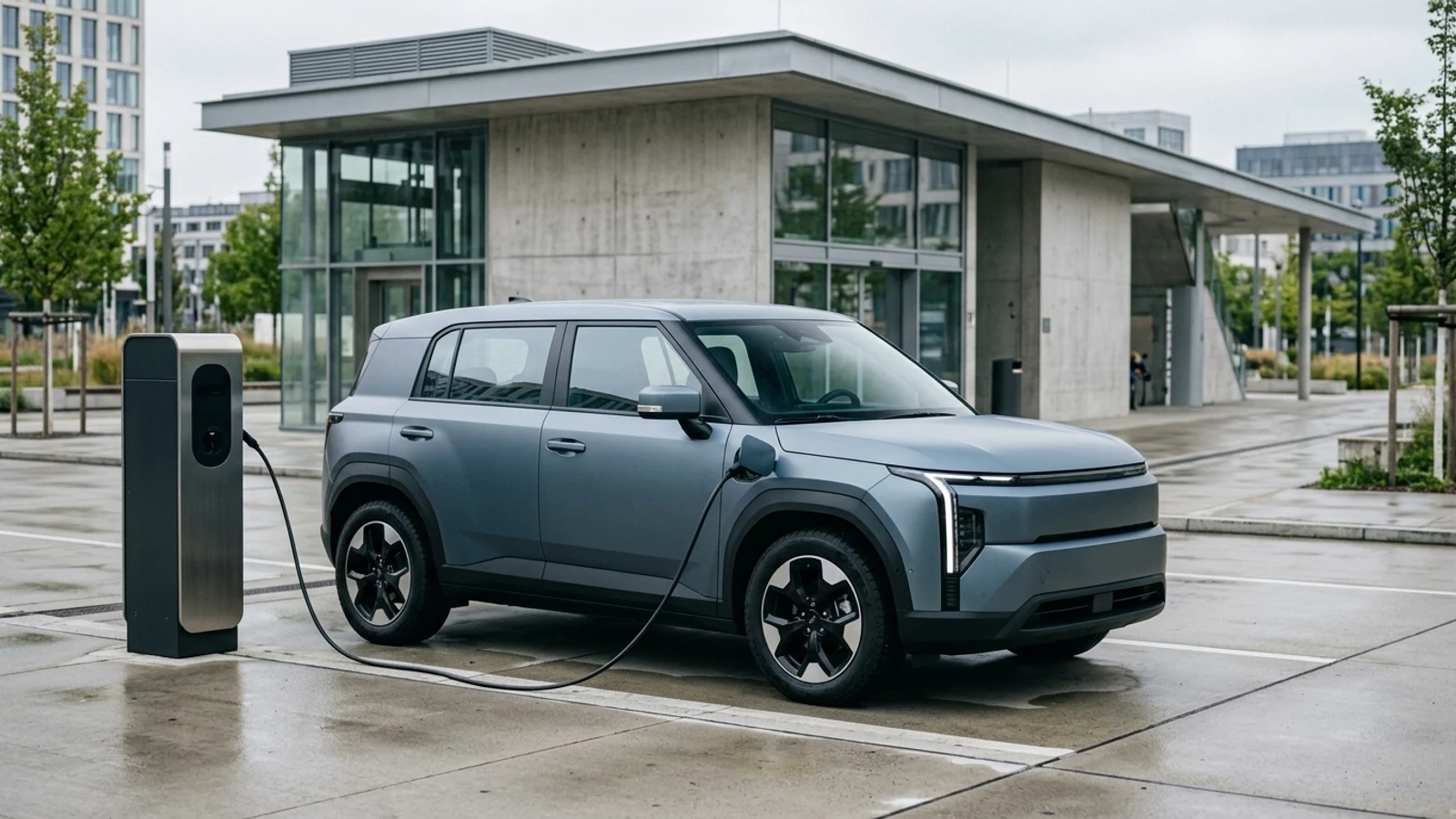
The 2027 Kia EV3 enters the United States automotive market as a subcompact electric SUV. Positioned as an affordable offering in the electric vehicle segment, the base model carries a manufacturer-suggested retail price starting at $31,385, which includes a destination fee of $1,495. A higher-tier GT-Line e-AWD version, as tested, is priced at $45,805. The vehicle is designed with a distinctive, boxy aesthetic featuring significant body cladding and a 25-inch combined display under the dashboard. Source
The EV3 is available with two different battery capacities: a 58.3 kWh unit or an 81.4 kWh lithium-ion battery. These batteries power either front-wheel-drive or all-wheel-drive electric motor configurations. In the front-wheel-drive setup, the vehicle produces 201 horsepower and 209 pound-feet of torque. The all-wheel-drive configuration increases output to 261 horsepower and 284 pound-feet of torque. Performance testing indicates a zero-to-60 mph time of 5.8 seconds for the GT-Line trim, with a maximum top speed of 106 mph. Source
Performance and Charging Specifications
Regarding driving range and efficiency, the EPA-estimated range for the vehicle spans from 221 miles to 321 miles, depending on the specific configuration and battery size. The GT-Line e-AWD trim tested yields an estimated range of 280 miles. Drivers should note that ECO mode can extend the range up to 300 miles under certain conditions. The vehicle utilizes a regenerative braking system, which can be adjusted via an appendage on the steering column to control deceleration without requiring the physical brake pedal. Source
The EV3 is equipped with a North American Charging Standard port, facilitating connection to the Tesla Supercharger network. However, compatibility is restricted to Generation 3 and Generation 4 Superchargers. Older Generation 2 stations are not compatible with this vehicle. During extended travel, charging behavior is optimal when remaining between 20% and 80% of total capacity. Maintaining a charge level beyond 80% results in a significantly reduced charging speed, potentially increasing total travel time on long road trips. Source
For trip planning, the onboard navigation system can route journeys that include charging stops. A 250-mile trip, for example, may require approximately 40 minutes of additional time compared to a gas-powered vehicle, accounting for necessary stops. While Tesla-branded charging stations provide integrated information regarding local amenities such as restaurants or shopping, the Kia navigation system provides more limited details about the surrounding area while the vehicle is stationary during a 20-minute charge session. Source
The vehicle's cabin design emphasizes ergonomic space and user-friendly technology. A steering-mounted tool provides quick access to drive modes, including a Sport setting that enhances motor response. The interior features dual screens under a 25-inch panel and a specific steering column appendage that manages gear selection, including Forward, Neutral, Reverse, and Park. Storage options include a small front trunk (frunk) intended primarily for charging adapters, and interior compartments designed for mobile device charging. Source
Regarding driver assistance, the EV3 utilizes lane-centered adaptive cruise control rather than full hands-free driving technology. If the driver removes their hands from the steering wheel for more than 15 seconds, the vehicle issues an audible alert to prompt the driver to resume control. This differs from other market competitors that offer hands-free features. The rear seating area is described as relatively compact, serving as a boulevard cruiser rather than a high-performance track hatchback. Source
Vehicle Trim and Performance Comparison
The cargo capacity is expanded by toppling the rear seats to accommodate larger items like racquet bags. A clever design choice includes placing the rear door handles in the C-pillar. The following table summarizes the key performance specifications for the available trims and powertrains identified in the manufacturer's release information. Source
| Feature | FWD Trim | AWD Trim (GT-Line) | :--- | :--- | :--- | | Horsepower | 201 hp | 261 hp | | Torque | 209 lb-ft | 284 lb-ft | | 0-60 mph | Not Specified | 5.8 seconds | | EPA Range | 221-321 miles | 280 miles | | Top Speed | 106 mph | 106 mph | Source
The utility and design approach reflects a shift toward suburban use rather than specialized track performance. While the vehicle shares branding with traditional Kia products, the EV3’s classification as an electric niche vehicle is emphasized by its debut alongside the 2027 Seltos. The manufacturer suggests that while practical alternatives exist in the combustion-engine space, the EV3 provides a competitive entry for buyers whose preferences are limited exclusively to the battery-electric vehicle segment. Source
Safety and convenience features are integrated into the overall software suite, though the report indicates that software sophistication in the EV3 is secondary to its design-heavy utility. The lack of a spare tire is noted, with sub-floor storage currently occupied by charging equipment. Buyers are advised to consider the charging infrastructure requirements, specifically the need to identify compatible Generation 3 or 4 Tesla stations when planning long-distance routes in the United States. Source
In summary, the 2027 Kia EV3 functions as an entry-level electric SUV offering specific utility benefits and a distinctive styling language. It requires a nuanced understanding of its charging limitations and hardware capabilities to maximize ownership utility. As an EV-only shopping option, it occupies a distinct space between smaller electric hatchbacks and larger, more expensive all-wheel-drive performance vehicles currently found on the market. Source

