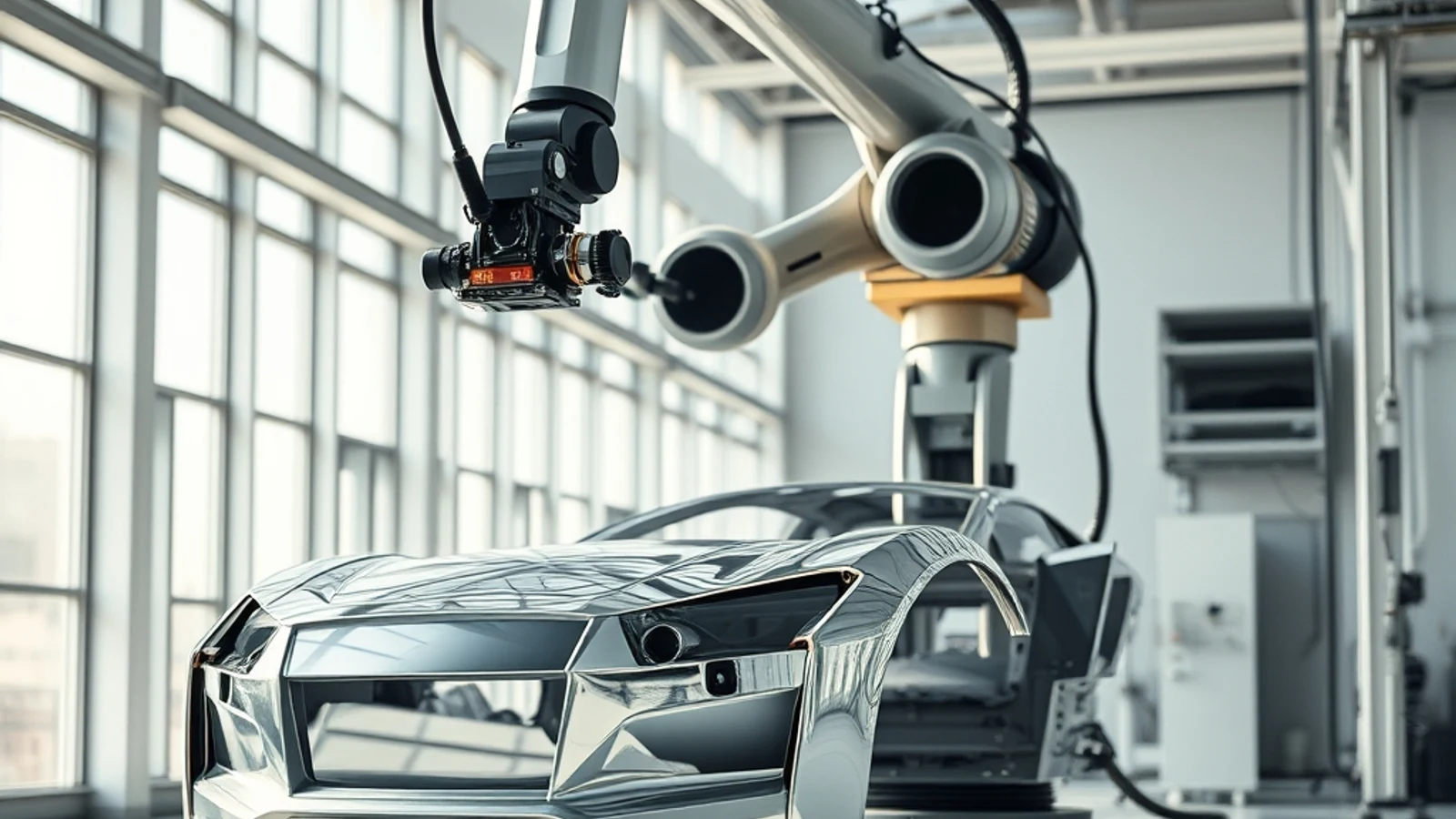
Automotive manufacturing traditionally relies on complex, resource-intensive factory systems that prioritize high-volume production. Retooling these large-scale facilities to create unique body panels for limited-production vehicles is often a prohibitively expensive endeavor for original equipment manufacturers. A California-based company, Machina Labs, aims to address this industrial challenge through its robotic manufacturing process. The company is actively courting automotive clients by promising improved speed, manufacturing flexibility, and significant cost-savings compared to conventional metalworking techniques. Source
Robotic Platform Capabilities
Founded in 2019, Machina Labs previously focused its operations on the aerospace and defense sectors. To transition into the automotive sphere, the company has launched a dedicated division called Machina Rebellis. The central offering of the company is the RoboCraftsman platform, which is described as a factory in a box. This modular system is capable of being packed into two transportable shipping containers, allowing for potential deployment directly to manufacturer production sites in the future to expedite localized component creation. Source
The RoboCraftsman platform utilizes a pair of large robotic arms controlled by proprietary software to manipulate metal. This system can perform two primary functions: re-striking pre-stamped panels to add custom designs or fully forming new body panels from raw sheetmetal. The software enables the company to switch between different design projects rapidly. Furthermore, the platform integrates scanning technology to verify the integrity of the completed panel and perform finishing tasks such as trimming, heat treatment, and surface refinement. Source
Prototyping and Production Efficiency
Machina Labs demonstrated the potential of this technology using a show vehicle called the Lassen. This prototype is based on a Toyota Tacoma and features unique fenders, a hood, and a tailgate. The design house Callum collaborated with Machina to finalize the aesthetics of these components. By utilizing the RoboCraftsman platform, the team transitioned from initial sketches to finished metal body panels in approximately two and a half weeks, a process that typically requires four to six months using traditional automotive manufacturing methods. Source
The Lassen prototype serves as a technical proof of concept for the company's dual manufacturing capabilities. The hood and tailgate represent the re-striking process, where pre-stamped panels are embossed with custom patterns. For instance, the hood includes a topographical map, while the tailgate features bold, embossed script. These specific re-striking tasks can be completed in mere minutes. Conversely, the fenders were fully formed from sheet metal, requiring several hours to complete, which is slower but allows for entirely new panel geometries. Source
Machina Labs reports that its system works with both steel and aluminum sheet metal. The company envisions the RoboCraftsman platform as an ideal solution for production runs numbered in the hundreds or thousands. This capacity could support large automakers in producing special-edition models or enable aftermarket firms to supply unique body kits. Additionally, manufacturers can leverage this technology to produce panels for pre-production vehicles, a phase in the product development cycle that historically consumes significant time and financial resources. Source
The company’s initial interest in the automotive industry was sparked by the development of the Anvil, a prototype truck based on the Ford F-150 Lightning. While described as a relatively crude early project, the Anvil successfully demonstrated the capacity of the metalworking machines to produce unique body panels. This demonstration attracted the attention of Toyota, which has since invested in Machina Labs through its venture capital division, Woven Capital. The technology has matured significantly since the initial Anvil project concluded. Source
Over the past decade, high-end automotive brands have capitalized on the market for personalization, leading to a rise in one-off and limited-production supercars. These vehicles are frequently hand-built and sold at high prices to exclusive clienteles. Machina Labs asserts that the RoboCraftsman platform offers a path to democratize this level of customization. By reducing the reliance on costly, permanent tooling, the company claims that automakers could offer personalized body details on more ordinary, mass-market vehicle models. Source
The operational timeline differences between traditional methods and Machina's robotic process are significant for vehicle development cycles. As documented in the provided analysis, the robotic system offers distinct advantages in agility when iterating on design changes or creating limited-run bodywork. The following comparison highlights the time requirements for creating prototype body panels as reported by the company at its Chatsworth, California facility during the debut of the Lassen show vehicle. Source
| Manufacturing Method | Estimated Production Time (Prototype) |
|---|---|
| Traditional Methods | 4 to 6 Months |
| Machina RoboCraftsman | 2.5 Weeks |
As the company continues to pitch its technology to major OEMs, the Lassen serves as a tangible example of the precision and adaptability of the RoboCraftsman system. The ability to switch between designs—such as a topographical map or a corporate logo—demonstrates the versatility available to designers. With its base in California and the backing of institutional investors like Woven Capital, Machina Labs remains focused on integrating its robotic metal-forming units into the broader automotive manufacturing ecosystem. Source
Future implementation of the RoboCraftsman platform may involve direct installation at automotive manufacturing sites. This strategic shift is intended to further shorten the supply chain by allowing panels to be formed on-site rather than transported from external fabrication shops. As the technology moves beyond prototypes like the Anvil and Lassen, the success of the division depends on its ability to scale production and prove its reliability for high-volume, professional-grade automotive manufacturing environments. Source