
Technical Specifications and Design
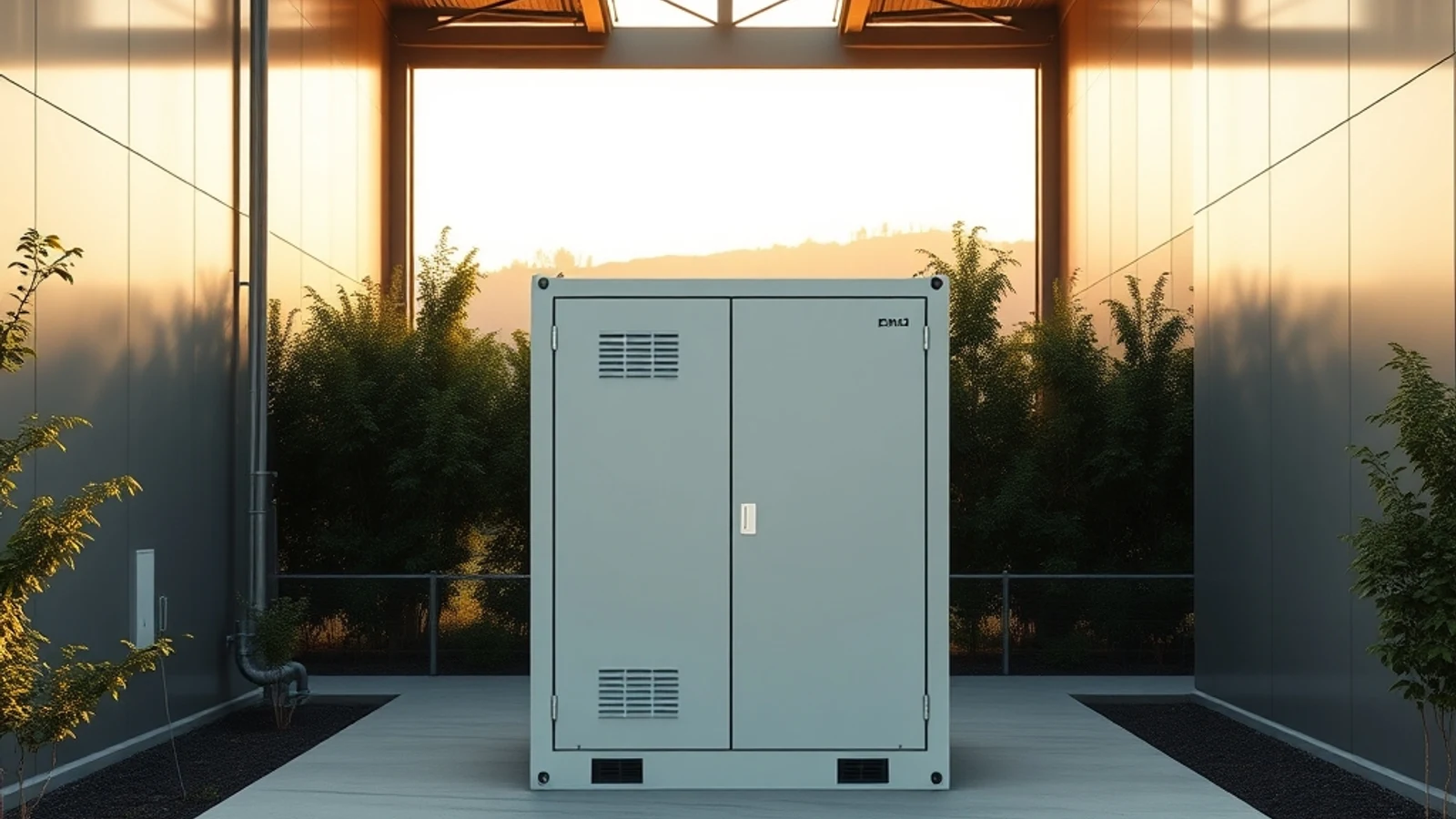
Canadian company Moment Energy has introduced Nova, a new modular battery energy storage system designed for commercial and industrial applications. The system utilizes retired electric vehicle battery packs, repurposing them for stationary energy use. Each individual Nova unit provides a storage capacity of 500 kilowatt-hours (kWh) and a power output of 200 kilowatts (kW). The system is intended to assist businesses in managing electricity costs, mitigating peak demand, and providing backup power during grid instability. Source
The physical footprint of each Nova unit is approximately 2.94 meters by 1.80 meters, or roughly 9.7 feet by 5.9 feet. These units are designed for outdoor deployment alongside the facilities they serve, featuring liquid cooling systems and integrated safety monitoring. The hardware is rated to operate in ambient temperatures ranging from -25 degrees Celsius to 50 degrees Celsius, which is equivalent to -13 degrees Fahrenheit to 122 degrees Fahrenheit. Monitoring systems track heat, smoke, and flammable gases to ensure safe operation. Source
A notable feature of the Nova platform is its ability to integrate battery packs from various electric vehicle models, even if those packs have experienced different rates of degradation. Moment Energy employs a proprietary battery management system that utilizes artificial intelligence to track the state of health and performance of each individual pack. This allows the system to adjust charge and discharge limits dynamically per pack, helping to maintain overall system efficiency despite the variances inherent in second-life battery materials. Source
The Nova system utilizes a modular architecture that supports the replacement of individual battery packs as they age. This design avoids the need for full system removal when specific modules reach the end of their operational life, potentially extending the total lifespan of the installation to over 20 years through periodic maintenance and capacity augmentation. For larger project requirements, individual Nova units can be linked together to create storage installations reaching capacities in the tens of megawatt-hours. Source
Certification and Market Availability
Moment Energy reports that the Nova platform is the first energy storage system built with retired EV batteries to achieve both UL 1973 certification for the batteries and UL 9540 certification for the complete system. Furthermore, the unit has undergone testing for UL 9540A, a standard that evaluates fire propagation and thermal runaway risks in stationary battery systems. The company’s manufacturing facility, Megafactory 1, has also attained UL 1974 certification for the sorting and grading of used batteries. Source
The company has confirmed that the Nova system is manufactured in North America and has been independently verified as compliant with Foreign Entity of Concern (FEOC) sourcing requirements. This verification is intended to assist project developers in qualifying for the federal Investment Tax Credit in the United States for 2027 and subsequent years. The system is currently open for orders, with Moment Energy projecting that the initial shipment of units will commence in the first quarter of 2027. Source
Production of the Nova units is currently underway at Moment Energy's Megafactory 1, which is located in the Vancouver area of British Columbia. By focusing on domestic manufacturing and standardized modular designs, the company aims to address challenges related to battery supply chains and regulatory compliance. The shift toward repurposed EV batteries for stationary infrastructure is presented by the manufacturer as a strategy to utilize existing battery materials, thereby reducing the reliance on new battery production for energy storage applications. Source
The following table outlines the key technical specifications for the Nova unit as reported by Moment Energy and associated industry sources. Source
The successful deployment of Nova systems across various commercial sectors, including manufacturing, hospitals, and airports, remains a benchmark for the company’s performance targets. While the modular design and AI-based management software are intended to optimize long-term reliability, the manufacturer notes that long-term system economics will be influenced by factors such as maintenance costs, the frequency of battery pack replacement, and the evolving technological landscape of the broader energy storage sector. Source
Commercial interest in second-life battery systems is growing alongside rising electricity demand from data centers and other energy-intensive industries. Moment Energy’s approach of utilizing repurposed EV battery packs provides an alternative to conventional lithium-ion storage solutions. The ability of the Nova system to perform in varying North American climates and comply with strict US federal sourcing standards positions it as a specific solution for developers seeking to maximize tax credit eligibility in 2027. Source
The Nova system supports both grid-forming and grid-tied operations, allowing for versatile integration with on-site solar production or general grid management. The transition from automotive usage to stationary energy storage is facilitated by the screening processes implemented at Megafactory 1, where every module is tested for physical integrity, internal resistance, and state of health before being selected for inclusion in a Nova assembly. Source
As the industry evaluates the long-term feasibility of second-life storage, the initial deliveries scheduled for Q1 2027 will provide the first significant real-world data points on performance and reliability. The manufacturer continues to emphasize the importance of independent safety certifications and compliance frameworks as essential elements for the widespread adoption of repurposed batteries in commercial infrastructure projects across North America. Source

