
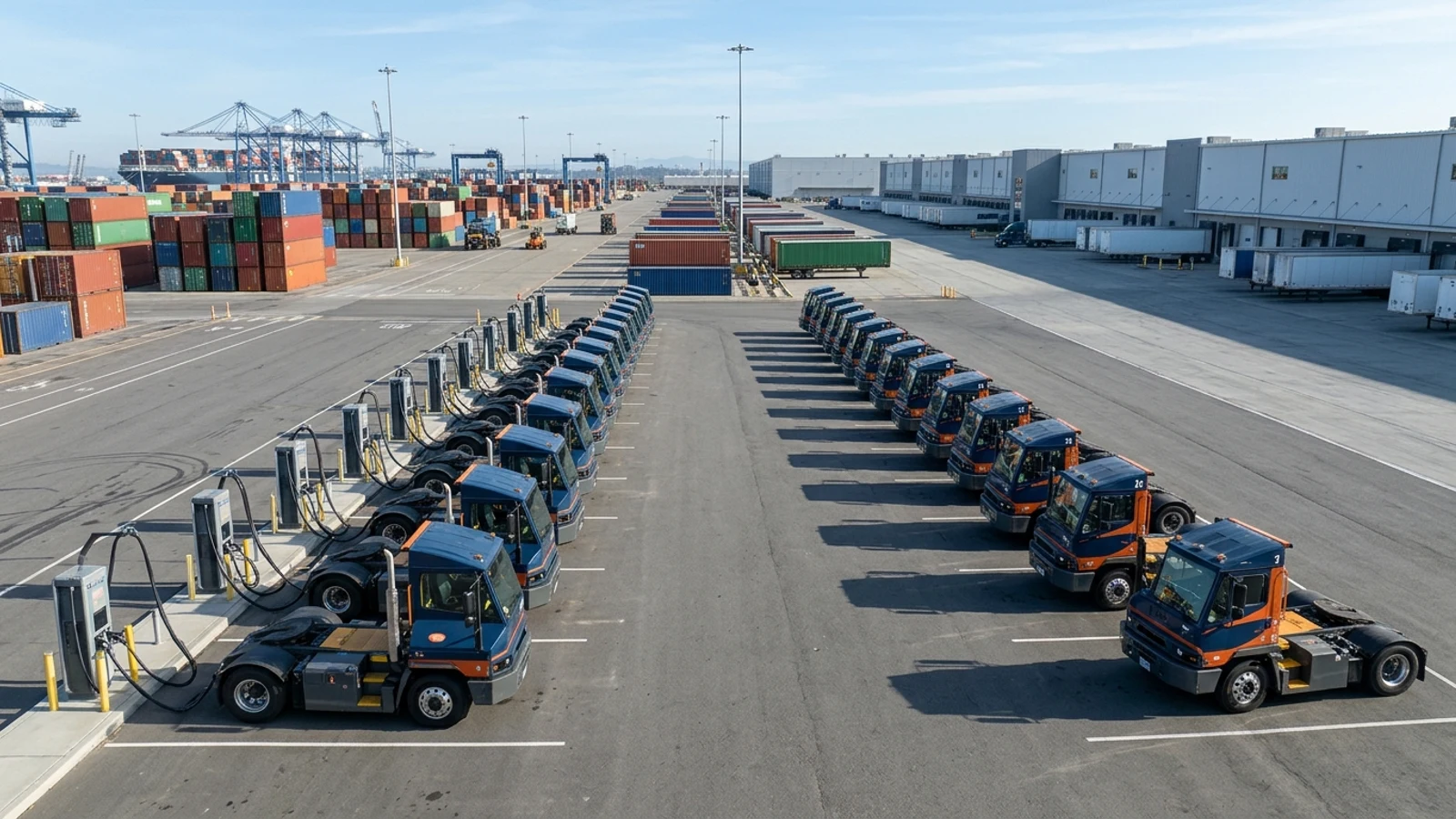
Toronto-based logistics provider National Shunt Service, Ltd., commonly referred to as NSSL, has significantly scaled its commitment to zero-emission operations within its trailer-moving services. After the company took delivery of its initial electric yard tractor in 2024, it accelerated the transition of its fleet. This strategic shift toward electric terminal trucks has recently garnered industry recognition, resulting in the company being named a recipient of the 2026 Canadian Clean Fleet Awards. Source
The company's expansion involves the integration of various electric yard tractor models, specifically those manufactured by Orange EV. NSSL currently operates both the e-Triever and Husk-e electric terminal trucks. These vehicles are deployed across multiple customer locations, including distribution centers, warehouses, and manufacturing facilities in Canada. The firm reports that the adoption of these electric platforms has been driven by both operational experience and positive internal assessments of the technology. Source
Fleet Growth and Operational Metrics
NSSL has provided specific figures regarding the growth of its electric fleet size over the 2026 calendar year. In June 2026, the company operated 27 electric terminal trucks across its Canadian sites. By November 2026, that figure increased to 42 active units. Looking forward, the organization has established a clear growth target, aiming to expand its total electric truck count to 50 vehicles by the conclusion of the first quarter of 2027. Source
To monitor the performance and efficiency of its electric fleet, NSSL utilizes telematics data provided by Geotab. According to Darren Fitzgerald, chief commercial officer at NSSL, this data collection is essential for managing the fleet effectively. The company uses these analytics to track various performance indicators, including vehicle utilization rates, idle time, and total energy consumption. This oversight allows for a comprehensive understanding of how the electric units perform compared to historical yard tractor operations. Source
Beyond general fleet tracking, the telematics data serves a proactive function regarding equipment health. Fitzgerald stated that the analytics platform allows NSSL to identify potential maintenance requirements and technical issues before they lead to service interruptions or vehicle downtime. By maintaining this level of monitoring, the company aims to ensure that its electric terminal trucks remain reliable for high-utilization environments within warehouses and distribution centers, thereby supporting continuous operations for their customers. Source
Market Adoption and Strategic Integration
The electrification of the NSSL fleet is also influencing the company's external business strategy. According to executive leadership, the transition to zero-emission yard tractors has become a central component of customer engagement. NSSL reports that it proactively introduces the topic of fleet electrification in discussions with its clients. If a customer is not specifically inquiring about the potential for battery-electric solutions, NSSL representatives are instructed to initiate the conversation themselves. Source
The following table outlines the reported growth trajectory of the National Shunt Service, Ltd. electric truck fleet as established by the firm's updates throughout 2026 and their forward-looking projections for the following year. Source
The shift toward electric vehicle adoption for terminal services appears to be a consistent part of NSSL's long-term operational plan. As the company continues to gain experience with battery-electric technology, the focus remains on leveraging data-driven insights to refine efficiencies and scale the fleet. The 2026 Canadian Clean Fleet Awards recognition serves as an industry acknowledgement of NSSL's role in normalizing the use of zero-emission commercial vehicles within the heavy-duty logistics sector in Canada. Source
The company's reliance on telematics is underscored by the complexity of managing mixed-use industrial fleets. By collecting granular data on energy consumption and utilization, NSSL is not only optimizing its current operations but is also building a foundation for future capacity planning. This analytical approach provides the evidence required to assess the feasibility of scaling further, ensuring that each new electric vehicle procurement aligns with the actual operational demands of their various warehouse and distribution sites. Source
The sustained growth of the fleet size from 27 units in the summer of 2026 to 42 units in November 2026 indicates a rapid acceleration in the company's investment strategy. With the target set for 50 units by the end of the first quarter of 2027, NSSL remains committed to adding at least eight additional electric tractors to its inventory within a few months. This pattern of steady acquisition highlights the company's continued confidence in the viability of electric terminal tractors. Source
The inclusion of both Orange EV e-Triever and Husk-e models suggests that NSSL is utilizing a range of equipment to meet specific site requirements. As these electric trucks operate in diverse environments such as factories and distribution hubs, the diversity of the fleet allows the company to test which configurations are most effective for various shunt operations. The emphasis remains on efficiency and uptime, both of which are central to the service delivery model NSSL provides to its partners. Source
The commitment to decarbonization and the normalization of battery-electric, zero-emission commercial trucks in the Canadian market remains a primary goal for NSSL. By documenting their successes and data-driven outcomes, the company is positioning itself as a leader in the adoption of sustainable yard tractor technology. The ongoing efforts of the firm will continue to be a benchmark for other logistics companies looking to transition their equipment toward carbon-neutral alternatives in the coming years. Source

