
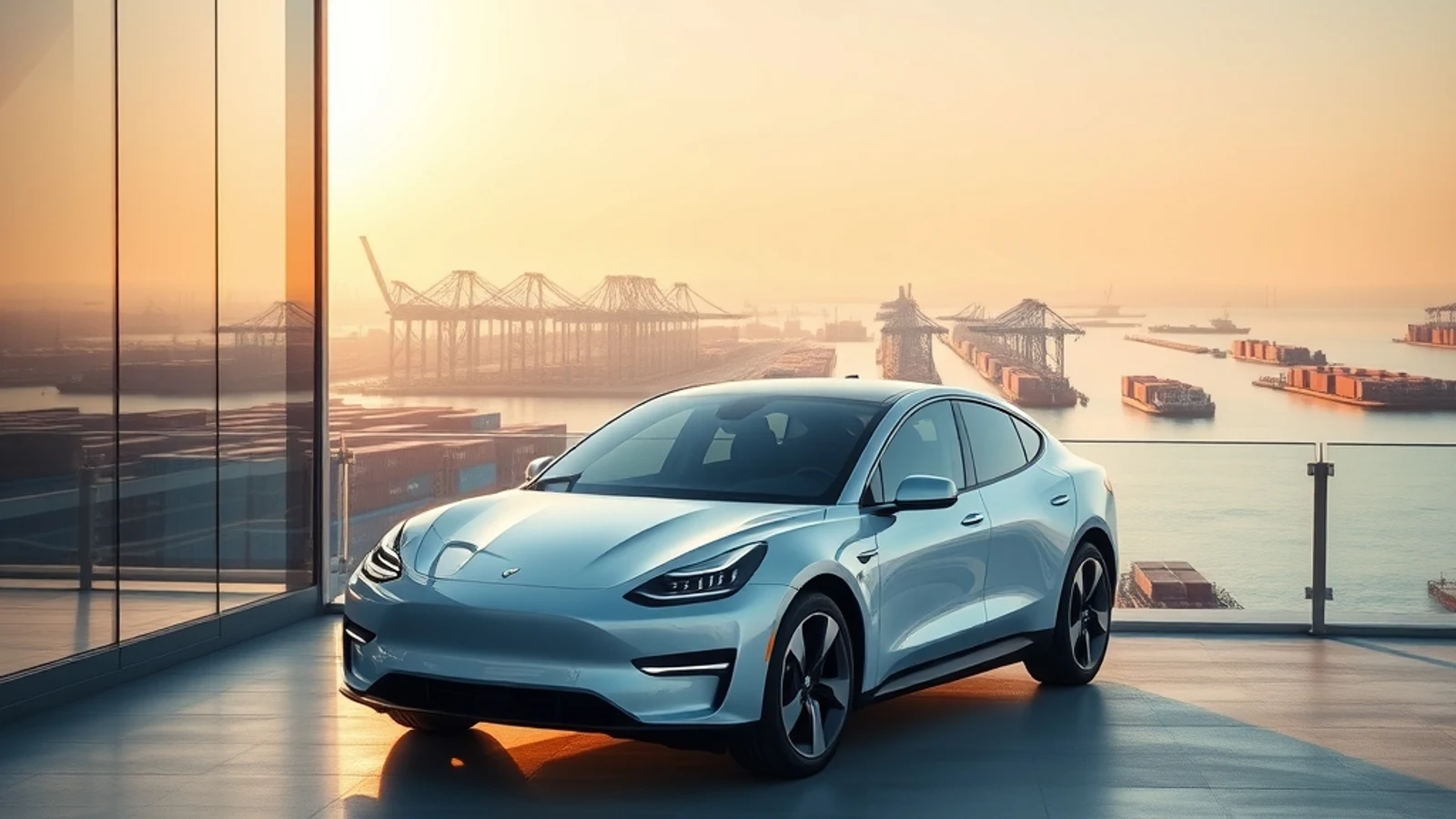
Volkswagen has unveiled a strategic initiative to transform its Chinese manufacturing facilities into a major export hub, with the objective of shipping approximately 300,000 vehicles annually from China to international markets by 2030. This decision arrives as the company grapples with a challenging period of declining domestic sales, significant manufacturing capacity reductions, and intense competition from domestic Chinese electric vehicle manufacturers. Volkswagen reports that it is actively leaning into this model rather than resisting the changing competitive environment. Source
The planned distribution strategy for these exports excludes the United States, at least in the initial phases of the rollout. Instead, Volkswagen intends to focus its export efforts on markets in Mexico, South America, the Middle East, Africa, and Southeast Asia. This shift toward utilizing lower-cost Chinese manufacturing capacity is intended to stabilize the company's global positioning. Among the specific models earmarked for this export strategy are budget-friendly sedans, including the Volkswagen Jetta VA3. Source
Operational data from the first nine months of 2026 highlights the urgency behind this new strategy. Volkswagen's joint ventures in China experienced a sharp downturn, recording 1.2 million new vehicle sales, a 35% decrease compared to the previous year. The financial performance also deteriorated significantly, shifting from a profit of approximately $815 million in the prior period to a loss exceeding $120 million for the monitored window. This fiscal pressure is compounded by broader challenges including high energy costs. Source
To address these multifaceted obstacles, the company is also exploring technical partnerships. Volkswagen is considering integrating technology stacks from Xpeng into as much as 75% of its core European vehicle portfolio. This potential integration follows comments from Martin Sander, the head of sales for Volkswagen Group, who acknowledged that the severe market decline in China presents an industry-wide challenge. He noted that locally developed electric models are starting to influence the market, though external pressures remain high. Source
Beyond market competition, Volkswagen is managing internal and regional complications. These include persistent software development difficulties and major labor disputes involving the IG Metall union within Europe. CFO Arno Antlitz described the 300,000-vehicle export target as conservative during the company's third-quarter financial results call. Antlitz indicated that these international shipments are viewed as a necessary mechanism to offset the weakening commercial performance currently observed in the Chinese domestic automotive sector. Source
Market Performance and Strategic Projections
The following table outlines the current performance indicators and forward-looking export projections reported by Electrek for Volkswagen in the Chinese market as of November 2026. Source
| Metric | Figure | Notes |
|---|---|---|
| Sales Volume (Jan-Sept 2026) | 1.2 million units | 35% decline year-over-year |
| Previous Year Profit | ~$815 million | Reported comparison figure |
| Recent Period Loss | >$120 million | Financial downturn indicator |
| 2030 Export Target | 300,000 units | Labeled as conservative by CFO |
The company's reliance on Chinese manufacturing represents a pivot toward a more cost-effective production model. While the strategy targets specific emerging and regional markets, the potential for expanding these efforts remains open to internal review. The mention of the Jetta VA3 signifies an interest in maintaining a footprint in the budget sedan category. Analysts continue to watch whether these production pivots will adequately counter the loss of market share experienced in the Chinese home market during 2026. Source
Furthermore, the integration of Xpeng's technology is a critical component of the company's broader response to the electrification of its European lineup. By leveraging external tech stacks, Volkswagen aims to resolve recurring software issues while improving the competitiveness of its electric vehicles. The company's leadership remains focused on managing the transition through a combination of volume exports, technical modularity, and strategic reallocation of manufacturing assets to better align with global market demands and internal fiscal constraints. Source
The timeline for these changes is anchored in the 2030 long-term vision, although the shift in production focus is active immediately following the third-quarter report. Volkswagen's decision to shift manufacturing from domestic focus to an export-driven model is framed as a necessity for survival in a high-cost environment. The company continues to monitor labor conditions in Europe and energy-related inflation, which remain primary variables in the success of the overarching global supply chain and manufacturing shift. Source
The current plan for 300,000 exports is explicitly characterized by leadership as a conservative baseline. This suggests potential for future increases if the initial deployment of Chinese-made units to Mexico, South America, and other identified regions meets internal adoption benchmarks. The exclusion of the United States market from the current phase appears to reflect existing logistical or regulatory priorities. Future adjustments to this strategy will depend on the evolution of software integration outcomes and global trade conditions. Source
Strategic Implications and Future Outlook
In closing, the shift to utilize Chinese facilities for global distribution represents a fundamental change in Volkswagen's approach to global automotive manufacturing. By responding to local market failure through international scaling, the firm hopes to maintain capacity usage levels despite the ongoing domestic decline. The ultimate impact of these changes on European manufacturing operations, where labor disputes currently exist, remains a significant subject of organizational focus for the remainder of the decade. Source

