
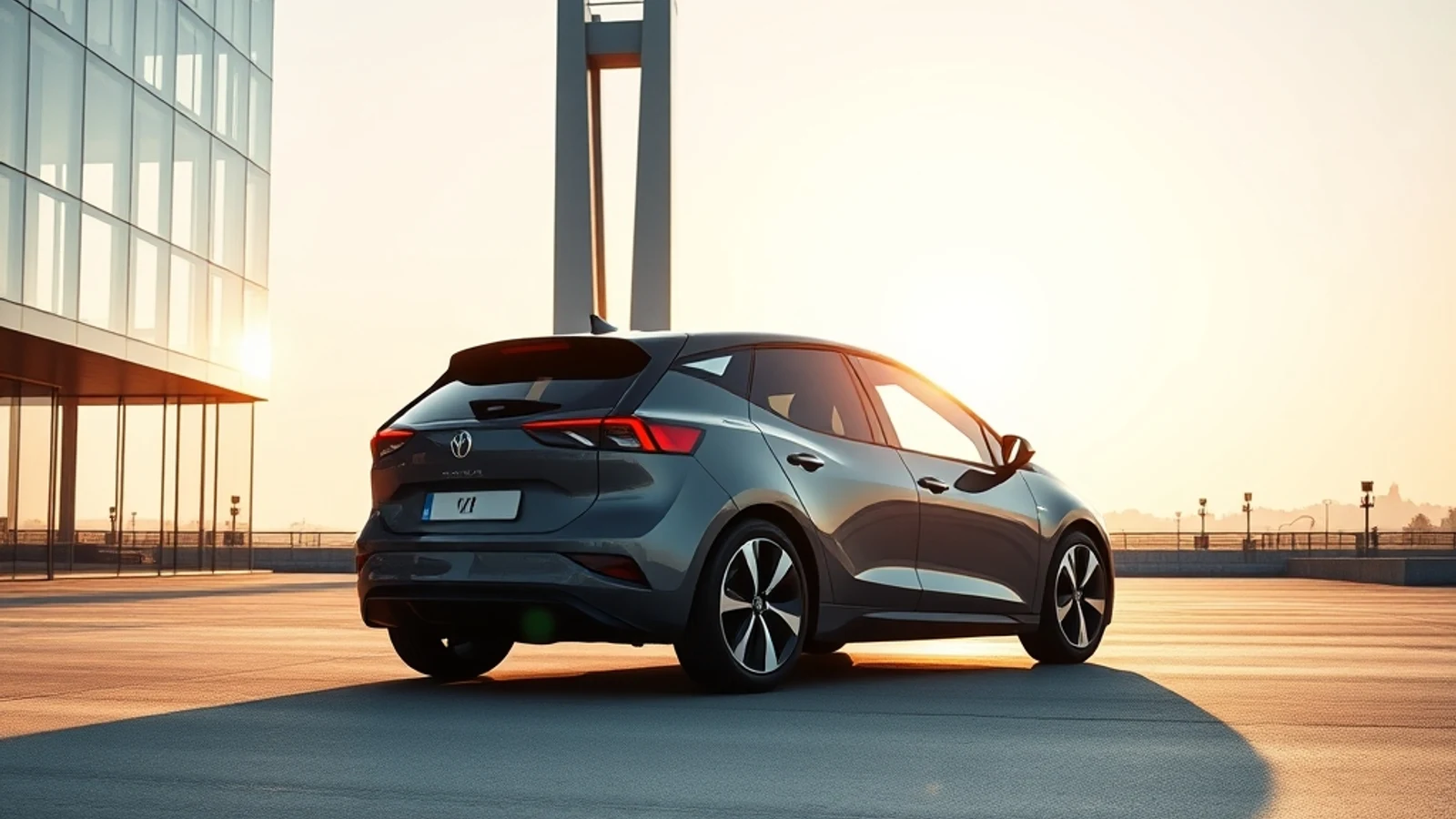
Volkswagen has introduced the ID. Polo GTI Clubsport concept, a high-performance, two-door electric vehicle designed for track use. Revealed as part of the manufacturer's 50th-anniversary celebration of the GTI brand, the vehicle incorporates significant mechanical and aerodynamic upgrades compared to the standard, five-door ID. Polo GTI. The automaker has confirmed the car will be displayed at the upcoming Essen Motor Show in Germany, which runs from November 27 through December 6, 2026. While the concept demonstrates the potential of Volkswagen's electric performance architecture, the company has stated there are no current plans to move this specific vehicle into mass production. Source
The ID. Polo GTI Clubsport concept utilizes the powerful APP550 electric motor, a unit typically reserved for larger Volkswagen Group vehicles such as the ID.7 and the ID. Tiguan. In this compact application, the motor drives the front wheels and provides 362 horsepower, a substantial increase over the 223 horsepower found in the standard ID. Polo GTI. This powertrain upgrade, according to Car and Driver, allows the vehicle to achieve a 0-62 mph sprint in a claimed 4.7 seconds. Additionally, the motor generates 406 pound-feet of torque, nearly doubling the output of the base model. Source
To manage the increased power, the concept includes an electronically regulated front differential lock, known as VAQ, which distributes torque between the front wheels to improve traction during high-performance driving. According to Electric Cars Report, the vehicle also utilizes a 52 kWh battery pack adapted to support higher power delivery of up to 290 kW for short durations. The chassis has undergone significant modifications, including a 15 mm suspension drop, adjusted camber, and performance-tuned adaptive suspension to enhance cornering precision and track-day stability. Source
Aerodynamic performance is a core focus of the Clubsport design. Unlike the production model, the concept features a two-door silhouette with significantly widened bodywork. The front end is equipped with an expansive motorsport-style splitter, while the rear features a custom diffuser and a large, floating carbon-fiber wing designed to generate downforce. These components are complemented by air ducts integrated into the flared wheel arches, which are 50 mm wider at the front and 100 mm wider at the rear to accommodate high-grip tires and a wider track. Source
The cabin has been stripped of its standard features to prioritize weight reduction and track functionality. Recaro racing bucket seats equipped with five-point red harnesses replace the standard seating, and the rear seat bench has been removed to accommodate a Tornado Red roll cage. The standard infotainment system has been deactivated, and the interior surfaces are finished with glare-free ArtVelours microfleece. These modifications represent a transition from a street-oriented commuter to a dedicated racing environment, developed with input from the company's junior employees. Source
The following table compares key performance metrics between the standard ID. Polo GTI and the Clubsport Concept as documented by the manufacturer and reported by industry sources. Source
The inclusion of ceramic brakes is a major departure from the production vehicle's braking setup. These components are designed to handle the thermal demands of intensive track driving and are integrated into a one-box braking system. The engineering team had to perform extensive modifications to the engine bay, including repositioning high-voltage cabling, the charging module, and the air conditioning compressor, to accommodate the physical size of the larger APP550 drive unit and the newly developed subframe required for the front-wheel-drive configuration. Source
While industry commentators have noted that the Clubsport concept could potentially influence future performance-oriented variants of the ID. series, Volkswagen has provided no confirmation of a production timeline or retail strategy. The vehicle exists as a one-off study intended to highlight the scalability of the MEB+ modular electric platform. Enthusiasts and potential buyers continue to speculate whether a toned-down, production-ready Clubsport model will arrive in the future, though such a model would likely revert to a five-door layout and feature a more conventional interior. Source
The charging performance of the concept is limited by the system requirements of the 52 kWh battery. According to The Irish News, the vehicle supports DC charging at speeds of up to 105 kW. While the range of the production ID. Polo GTI is rated at 264 miles, developers have not disclosed specific range estimates for the Clubsport concept, noting that the increased power consumption required for track performance is likely to reduce overall range compared to the consumer version. Source
Volkswagen's commitment to the GTI badge remains a central theme of its 2026 product strategy. By introducing four distinct GTI-branded variants within the calendar year, the company aims to bridge its combustion-engine heritage with its electric future. The Clubsport concept, while not available for purchase, serves as a testbed for technology that could define the next generation of performance hatchbacks. This initiative follows the release of the ID.3 GTI and other commemorative models designed to celebrate five decades of the nameplate. Source
The ID. Polo GTI Clubsport concept is clearly positioned for a European audience, given the production ID. Polo GTI is not sold in the United States. Consequently, the concept will be shown in Essen, Germany, where it is intended to illustrate the brand's engineering prowess to a regional market that has historically supported the hot hatch segment. The absence of an announcement regarding a North American release underscores the distinct market strategies employed by the Volkswagen Group for its performance electric vehicles. Source
Finally, the concept represents a collaborative effort involving young company employees, highlighting a push for training and development within the Volkswagen design and engineering teams. This involvement extended to both the aesthetic details, such as the exterior livery and cabin materials, and the technical implementation of the high-performance powertrain. By engaging personnel early in their careers to work alongside senior designers, the company intends to foster internal innovation while maintaining the core identity of the GTI brand across its transition to electric mobility. Source

