
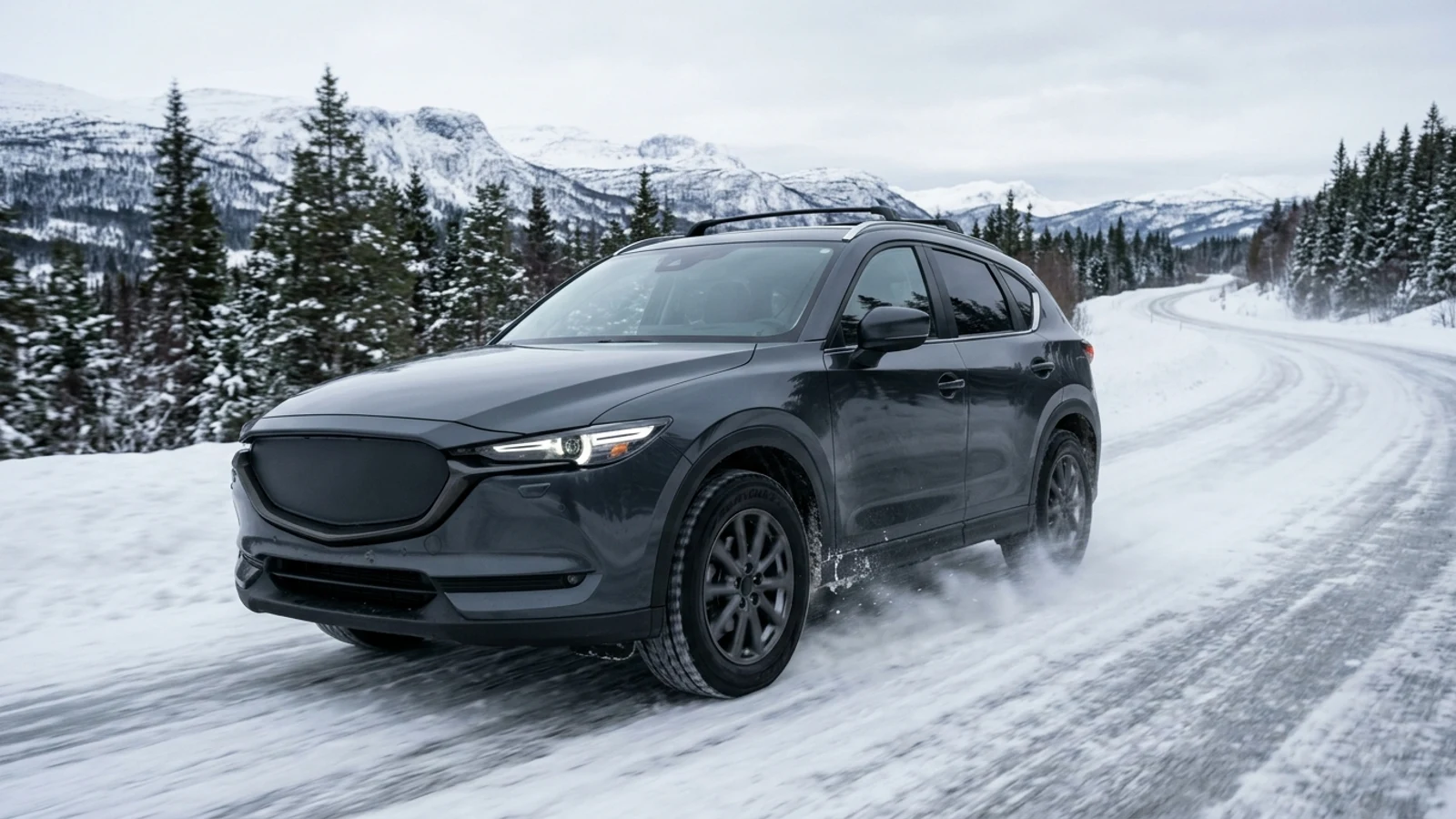
When assessing a vehicle's performance during winter conditions, the most vital components are tires and ground clearance. According to Car and Driver, tires are the sole point of contact between a vehicle and the road, making them the primary factor in determining grip levels during acceleration, turning, and braking on ice or snow. While all-wheel drive systems can assist a vehicle in gaining momentum on slippery terrain, such systems do not enhance braking effectiveness, emphasizing the critical importance of tire choice. Source
For optimal performance, vehicles should be equipped with tires rated for severe snow service, identified by the three-peak mountain snowflake icon (3PMSF). This designation signifies that the tire has undergone testing to prove it delivers at least 110 percent of the traction performance of a standard reference all-season tire. While various all-weather and all-terrain tires carry this marking, not every tire on the market does, and Car and Driver notes that winter tires remain the preferred choice for snowy conditions. Source
Vehicle Selection and AWD Performance
Several vehicles currently on the market include these specialized tires as factory equipment. The Mazda CX-50, in its Meridian Edition trim, comes standard with snow-rated all-terrain tires. Similarly, the Ford F-150 Tremor offers factory tire options that carry the 3PMSF icon. Other notable examples include the Lexus GX Overtrail, which incorporates these tires for improved performance in off-road and varied terrain, and specific high-performance variants of the Mustang Mach-E, such as the Rally and the upcoming 2027 Trail. Source
Beyond SUV and truck options, other vehicle classes provide all-wheel drive alternatives for winter motorists. The Subaru Impreza, now exclusively available as a hatchback, includes standard all-wheel drive. According to data provided by Edmunds to the Orange County Register, this system provides constant power to all four wheels, distinguishing it from front-wheel-drive-based systems. While the Impreza lacks Subaru's X-Mode traction control, it remains an affordable option for those seeking all-weather capability in a compact package. Source
Midsize sedans and minivans also feature all-wheel drive configurations. The Toyota Camry, in its 2025-introduced generation, offers all-wheel drive on all trims, coupled with a hybrid powertrain. For families, the Toyota Sienna is the only hybrid minivan currently available with an all-wheel-drive system on every trim level. The Woodland Edition specifically offers increased ground clearance and a 3,500-pound towing capacity, which serves as a highly capable, efficient option for diverse winter transport requirements. Source
Electric vehicle shoppers also have options, such as the Tesla Model 3. Although all-wheel drive is not standard on the base model, the midlevel Premium All-Wheel Drive and Performance trims include it. These versions incorporate a Slippery Surface mode designed to improve traction and a Stuck Assist feature to help dislodge the vehicle from loose surfaces. Luxury seekers can choose the BMW 330i xDrive, which utilizes Dynamic Traction Control to help the vehicle traverse snow and slush. Source
Essential Winter Driving Preparation
Effective winter preparation must occur long before a storm arrives, according to AAA's director of automotive, David Bennett. Drivers should switch to a winter-formula windshield washer fluid, which contains additives to prevent the liquid from freezing at lower temperatures. Additionally, coolant levels should be inspected to prevent engine overheating. Owners should refer to their manuals, but generally, this fluid requires replacement every two to three years, or between 30,000 and 40,000 miles of operation. Source
The vehicle's battery is also a critical component during cold months, as cold temperatures increase the effort required to turn the engine over. Because standard automotive batteries typically last between three and five years, drivers should have them tested if they are approaching this age. Additionally, drivers should check their headlight and taillight functionality at least once a month. This can be accomplished by performing a walk-around inspection, including checking brake, turn signal, and reverse light operation. Source
Maintaining the exterior of the vehicle is equally important for long-term health and short-term visibility. Washing and waxing the car before the onset of winter can help protect the paint from salt damage, which can lead to rust on bare metal. Once roads are treated, regular washing—including the undercarriage—is necessary. Drivers are also encouraged to clear all snow from the roof, hood, trunk, and windows before driving to avoid blinding themselves or other motorists. Source
In the event of a breakdown, an emergency kit is recommended. Essential items include a blanket, water, non-perishable snacks, a phone charger, a first aid kit, a flashlight, and gloves. Adding non-clumping kitty litter to the kit can assist if the vehicle becomes stuck, as pouring it in front of and behind the tires provides necessary traction to regain movement. If stranded, AAA advises that staying with the vehicle is safer than walking along the road and makes the vehicle easier for responders to locate. Source

